Unparalleled Behavioural & Emotion Analytics
Map physiological emotional responses directly to real-world context—eating, walking, working, learning—delivering structured biofeedback data that survives outside laboratory walls.
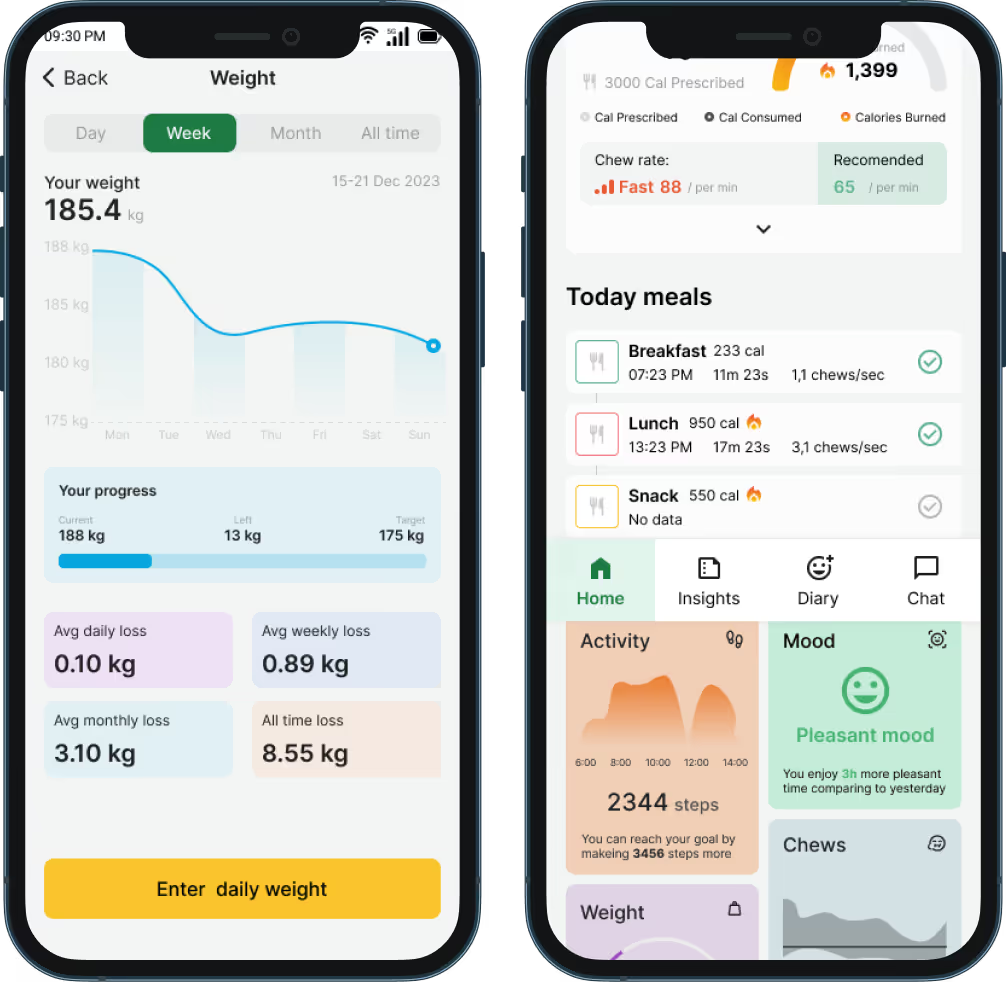
An exhaustive technical evaluation of non-contact optomyography (OMG) hardware, real-time affective computing platforms, and global institutional deployment strategies for clinical, research, and spatial computing applications.
Validated & Featured in Global Technology Media








Semantic Intent & Industry Insight
Human physiological data capture has entered a paradigm shift. For decades, global research institutions, clinical trials, and human-computer interaction (HCI) laboratories relied heavily on two main modalities for capturing facial expressions and emotional valence: surface electromyography (sEMG) and optical camera-based facial coding systems (FACS). However, both legacy methodologies present severe operational bottlenecks when transitioned from strictly controlled laboratory environments into naturalistic, real-world settings.
Surface EMG requires messy conductive gels, physical skin contact, tedious electrode placement, and frequent recalibration due to sweat-induced impedance drift. Conversely, camera-based facial tracking suffers from privacy non-compliance (GDPR/HIPAA violations), lighting vulnerability, facial occlusion, and complete breakdown when subjects move dynamically during everyday activities. Global B2B procurement teams and academic researchers are actively seeking a third solution: wearable facial biofeedback hardware capable of continuous, non-contact, millimeter-accurate spatial tracking outside the lab.
At Emteq Labs, we engineered the world's first commercially viable, patented OCO™ Optomyography (OMG) sensor platform embedded into lightweight smart eyewear (OCOsense™). By utilizing non-contact optical distance sensors integrated along the frame inner rim, OCO™ hardware measures continuous three-dimensional facial skin movement without touching the subject's skin or placing inward cameras in front of their eyes. This breakthrough provides high-gain, uncorrupted physiological streams ideal for AI intent modeling, affective computing, digital health biofeedback, and spatial gesture control.
Map physiological emotional responses directly to real-world context—eating, walking, working, learning—delivering structured biofeedback data that survives outside laboratory walls.
Patented OCO™ optomyography hardware tracks subtle facial muscle activations with 3D skin displacement mapping, operating completely wireless and contact-free.
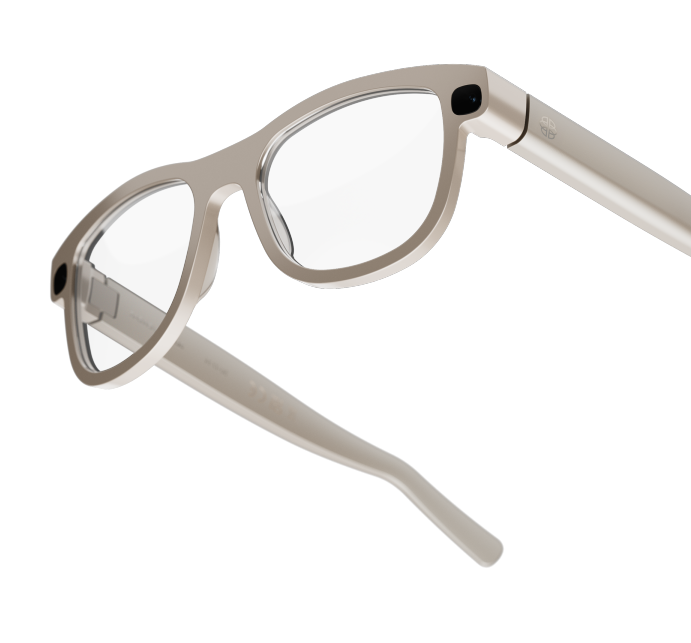
Product Recommendation & Hardware Specs
Engineered specifically for global procurement leaders, research consortia, and technology integrators requiring validated, reproducible physiological outputs.
The OCOsense™ wearable facial biofeedback hardware platform combines five core sensor and processing subsystems into a sleek, ergonomically balanced eyewear form factor designed for all-day comfort and longitudinal studies:
| System Parameter | Hardware Specification | Research & B2B Operational Advantage |
|---|---|---|
| Primary Sensing Principle | Patented Non-Contact OCO™ Optomyography (OMG) | Zero gel, zero adhesives, zero impedance drift; complete skin comfort for multi-hour trials. |
| Sampling Frequency | Up to 100 Hz synchronized multi-sensor stream | High temporal resolution suitable for transient micro-expression and blink detection. |
| Motion Tracking | 9-Axis IMU (Acc, Gyro, Mag) + Altimeter | Decouples head movement artifacts from genuine facial muscle activation patterns. |
| Environmental Context | Integrated Outward HD Camera (Timestamped) | Answers the "Why" behind facial biofeedback spikes by capturing external stimuli. |
| Data Transmission | Wireless BLE 5.2 / Internal MicroSD Storage | Dual-mode operation for real-time live feedback or untethered offline data recording. |
| Battery Life | Continuous 6+ Hours Active Streaming | Sufficient capacity for full-day clinical observations or ambulatory consumer testing. |
| Software Compatibility | Open Python SDK, iOS/Android App, LSL, Unity Plugin | Direct ingestion into custom AI models, iMotions, MATLAB, or real-time gaming engines. |
| Regulatory Compliance | CE Mark, RoHS, WEEE, FCC Compliant | Pre-certified for rapid IRB approval and global commercial deployment. |

Proprietary OCO™ Optomyography (OMG) hardware maps 3D skin displacement with sub-millimeter precision, completely electrode-free.
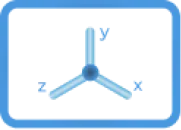
Smart 9-Axis IMU & Altimeter capture precise head dynamics, physical activity posture, and environmental elevation change.

Integrated Outward Camera synchronizes user visual perspective directly with real-time biofeedback and valence metrics.

Real-Time Data Streaming delivers instant feedback for digital therapeutics, closed-loop neurofeedback, and live XR interaction.
 Eating Behavior, Chewing Rate & Mastication
 Attention, Blink Rate & Visual Dwell Context
 Emotional Valence & Expressivity Indices
 Facial Muscle Asymmetry (Rehabilitation Tracking)
 Physical Activity Classification (Sitting, Walking)
 CE, RoHS, WEEE Industrial Pre-Certifications
Future Trends & Market Intelligence
As enterprise organizations, medical device manufacturers, and academic research consortia scale their affective computing initiatives, procurement requirements have shifted significantly. Modern procurement teams are evaluating hardware vendors based on five critical market vectors:
Legacy surface EMG systems require adhesive hydrogels that cause contact dermatitis during extended wear, particularly in pediatric or vulnerable clinical populations. Procurement guidelines now mandate non-invasive, contact-free sensing technologies. Optical Optomyography (OMG) completely bypasses physical contact with active sensor elements, ensuring high participant compliance across multi-week longitudinal studies.
With global data privacy frameworks (such as GDPR in Europe, HIPAA in the United States, and PIPEDA in Canada) tightening regulations on biometric optical data, video-based facial tracking presents immense legal risks. Recording raw facial video of study participants or consumers subjects organizations to strict data storage and consent liabilities. Wearable facial biofeedback hardware utilizing OCO™ technology processes numerical optical displacement vectors on-device, outputting anonymized physiological signals rather than raw video, dramatically streamlining IRB (Institutional Review Board) compliance and institutional legal approval.
Isolated biofeedback measurements lack predictive power without behavioral context. B2B buyers increasingly require hardware platforms that combine facial muscle dynamics with kinematic motion data (9-axis IMU) and outward environmental capture. Synchronizing facial valence data with physical posture, gait, and head movement enables researchers to distinguish between muscle activations caused by physical exertion (e.g., heavy walking or laughing) versus true cognitive stress or emotional reactions.
Proprietary "black-box" biofeedback devices that lock data inside walled gardens are rapidly being phased out by enterprise research labs. Today's procurement teams require direct access to timestamped raw optical values alongside ML-interpreted valence metrics. Providing native export compatibility for standard research pipelines—such as Lab Streaming Layer (LSL), Python data science stacks, MATLAB, and iMotions—has become a mandatory baseline for institutional acquisition.
In large-scale research studies or multi-center clinical trials, preparation time directly dictates operational costs. Traditional facial EMG setups require 15 to 30 minutes per subject for skin preparation, gel application, and signal calibration. In contrast, wearable facial biofeedback glasses like OCOsense™ require zero skin prep and calibrate in under 60 seconds. Over a 500-subject clinical trial, this setup efficiency saves hundreds of high-value clinical staff hours, delivering a vastly superior Total Cost of Ownership.
Technology Evolution Roadmap
Where wearable facial biofeedback hardware is heading over the next 3 to 5 years.

Enabling continuous, unconstrained affective computing in natural environments, capturing real-world emotional valence without lab artificiality.

Providing real-time quantitative mirror-biofeedback for Bell's Palsy, stroke rehabilitation, Parkinson's facial masking, and facial paralysis recovery.
Automating mastication tracking, bite frequency counting, and eating speed analysis for obesity interventions and metabolic health programs.

Integrating non-contact facial biofeedback sensors into AR/VR head-mounted displays for hands-free expression-driven avatar control and interaction.

Quantifying implicit human reactions to products, media, and digital experiences second-by-second with objective physiological data.

Translating subtle facial micro-gestures into hands-free control commands for motor-impaired individuals navigating digital interfaces.
Why Partner With Emteq Labs
Built upon a foundation of granted international patents, peer-reviewed clinical validation, and world-class interdisciplinary engineering.
Emteq Labs is the pioneer and sole owner of patented Optomyography (OMG) wearable facial biofeedback technology. Our hardware platform is protected by a robust international patent portfolio covering optical skin movement detection, sensor frame ergonomics, dynamic facial calibration algorithms, and multi-modal biofeedback integration (including granted patents GB2561537, GB2604076, US11,003,899, and US11,538,279). When you partner with Emteq Labs, you are deploying exclusive technology backed by defended intellectual property.
Unlike consumer-grade wearables that rely on unvalidated black-box estimations, Emteq Labs' wearable facial biofeedback hardware has been subjected to rigorous peer-reviewed validation alongside world-renowned clinical and academic institutions. Our scientific leadership team includes clinical psychiatrists, neuroscientists, and bioengineers dedicated to transparent, evidence-based technological development.




.png)



.png)


.png)

.png)


B2B & Enterprise Procurement FAQ
Detailed technical answers to common queries regarding wearable facial biofeedback hardware integration, accuracy, privacy, and procurement contracts.
Wearable facial biofeedback hardware consists of head-mounted or eyewear-integrated sensing systems designed to detect, track, and provide real-time continuous data on facial muscle contractions, skin displacements, and emotional expressivity. Emteq Labs' patented Optomyography (OMG) technology utilizes miniature non-contact optical sensors integrated along the eyewear rim. These sensors shine non-invasive light onto key facial muscle sites and measure minuscule reflections caused by 3D skin displacement. Unlike facial EMG, OMG requires no skin contact or sticky conductive gels, and unlike video tracking, it operates in total privacy, under bright sunlight, and during active physical movement.
Traditional surface EMG measures electrical action potentials via electrodes attached directly to the skin. While accurate in lab conditions, sEMG suffers from electrode skin irritation, displacement caused by facial movement, impedance drift as the subject sweats, and setup times taking 20+ minutes per subject. Emteq Labs' OCO™ optomyography hardware eliminates all skin contact, requiring zero skin preparation while maintaining high correlation with facial muscle activation. Setup takes under 60 seconds, drastically lowering operational costs for clinical trials and large research cohorts.
The OCOsense™ platform outputs fully synchronized time-series data streams accessible via our SDK and mobile companion applications. Output streams include: (1) Raw multi-channel optical displacement signals (100 Hz), (2) Interpreted facial muscle activation levels (zygomaticus, corrugator, orbicularis oculi), (3) Emotional valence index and expressivity metrics, (4) 9-axis IMU head dynamics, orientation, and altimeter data, (5) Mastication/chewing and eating behavior markers, and (6) Timestamped outward video context frames for event-tagging.
Yes. Privacy-by-design is a fundamental advantage of OCOsense™ hardware. Because the primary facial muscle tracking relies on non-video optical optomyography sensors, no raw imagery of the user's face is ever recorded or stored. All processing occurs on-device, outputting numerical physiological parameters. This non-identifiable data structure simplifies Institutional Review Board (IRB) ethics approval and ensures full compliance with stringent international biometric privacy laws including GDPR and HIPAA.
Absolutely. Emteq Labs provides an open ecosystem featuring Python SDKs, C++ libraries, Android/iOS SDKs, and Lab Streaming Layer (LSL) integration. LSL support allows seamless real-time data synchronization with third-party biometric software suites such as iMotions, MATLAB, EEGLAB, and custom machine learning pipelines. Developers can also use our Unity plugin to build real-time biofeedback loops in VR/AR environments.
We provide streamlined global B2B procurement for universities, pharmaceutical companies, healthcare networks, and enterprise technology labs. Devices are supplied as comprehensive Hardware & Software Developer Kits containing OCOsense™ eyewear, companion mobile software licenses, SDK documentation, calibration tools, and technical onboarding support. Bulk procurement options and custom OEM engineering integrations are available upon request through our sales team.

Connect directly with our senior hardware engineers and research scientists to request technical specifications, schedule a live system demonstration, or obtain enterprise pricing.
OCO™ and OCOsense™ are registered trademarks of Emteq Limited. Technology protected by granted international patents including GB2561537, GB2604076, US11,003,899, US11,538,279.