Proprietary OCO™ Optomyography Sensing
Maps facial muscle micro-movements, expression dynamics, and valence with sub-millimeter optical precision without touching the user's skin.
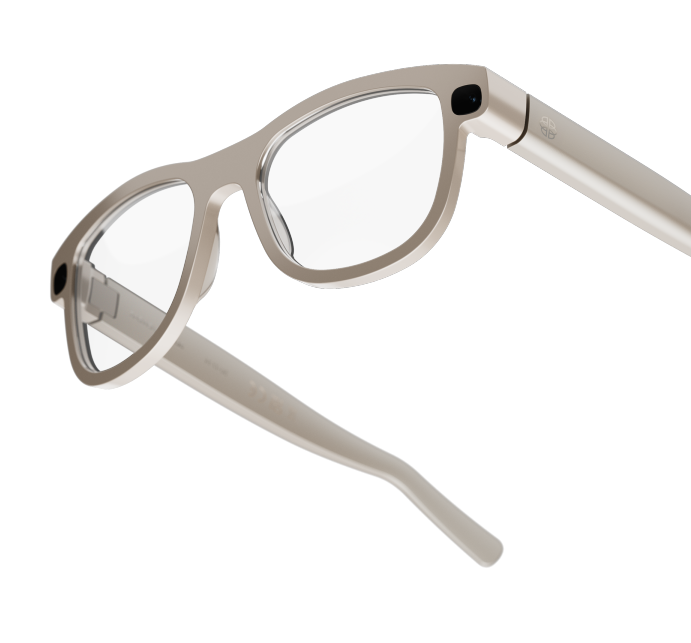
An authoritative technical analysis for enterprise buyers, clinical researchers, hardware integration procurement directors, and AI developers seeking real-world, non-contact facial biofeedback and affective computing solutions.
Featured & Validated In Leading Publications








Information Gain & User Intent Mining
Global B2B enterprise buyers and scientific researchers are transitioning away from lab-tethered facial coding systems toward wearable, non-contact affective biofeedback devices.
In the landscape of modern artificial intelligence and human-computer interaction (HCI), measuring human emotional states, cognitive load, and subtle physiological responses has historically been constrained by laboratory settings. Traditional modalities—specifically surface electromyography (sEMG) and optical computer vision (camera-based facial expression analysis)—present severe operational bottlenecks for real-world commercial and clinical deployment.
When global procurement teams, AI developers, and clinical trial directors evaluate emotion-sensing eyewear, their intent centers on four core operational requirements: signal reliability outside controlled environments, user privacy compliance, long-term wearable comfort, and multi-modal sensor synchronisation. Emteq Labs’ patented OCO™ Optomyography (OMG) technology was specifically developed to bridge this gap, delivering an information gain superior to legacy systems by capturing sub-millimeter skin movement contact-free without cameras aimed at the user's face.
To assist technical procurement teams and principal investigators in assessing system specifications, the table below outlines the architectural differences between traditional facial measurement technologies and Emteq Labs’ OCOsense™ platform:
| Evaluation Parameter | Emteq Labs OCO™ Eyewear | Surface Electromyography (sEMG) | Camera Facial Coding (CV) |
|---|---|---|---|
| Skin Contact Requirement | 100% Non-Contact (Optical Sensor) | Requires Conductive Gel & Electrodes | Contact-free (Requires Direct Line-of-Sight) |
| Environmental Versatility | Unrestricted (Lab, Outdoor, Daily Life) | Restricted by Cable Tethering & Drift | Fails in Low Light, Occlusion, & Motion |
| Data Privacy & GDPR Compliance | On-Device Edge Signal Processing | Private (Raw Muscle Potential) | High Risk (Captures Full Facial Video/Biometrics) |
| Setup Time & Ergonomics | Instant Wearable (Standard Eyewear Form) | 20–30 Minutes Calibration & Skin Prep | Stationary Camera Mounting Required |
| Chewing & Ingestion Detection | Direct 3D Temporal Skin Mapping | High Signal Interference / Artifacts | Unreliable During Active Movement |
| Multi-Modal Sensor Integration | Integrated 9-Axis IMU + Camera + Altimeter | Isolated Muscle Channel Measurement | Requires External Sync Hardware |
Hardware & Platform Architecture
Built on proprietary optical sensing technology and edge machine learning, OCOsense™ delivers clinical-grade facial muscle activation mapping in a lightweight, daily wear frame.
Maps facial muscle micro-movements, expression dynamics, and valence with sub-millimeter optical precision without touching the user's skin.
Transforms raw optical biofeedback into real-time metrics for eating behavior, affective valence, head movement, and cognitive engagement.
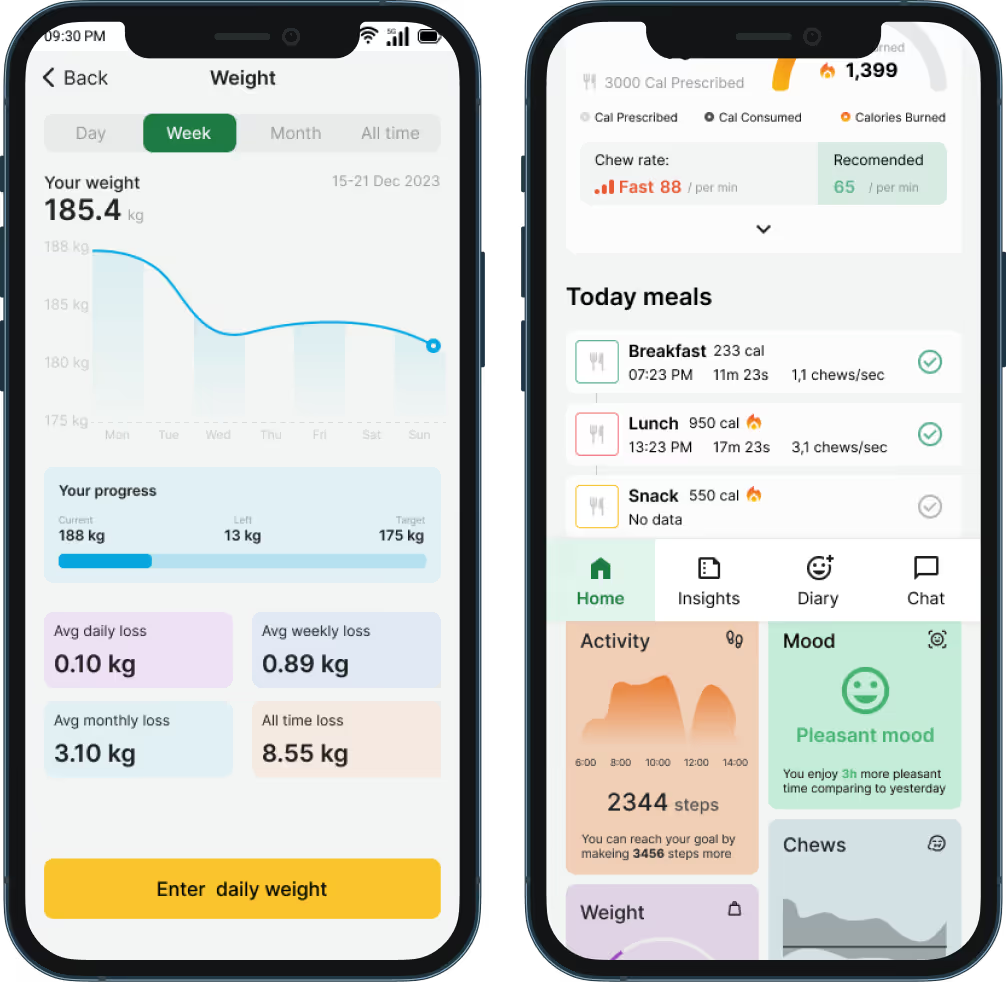

Patented OCO™ Sensors: Non-contact optical sensors target zygomaticus, temporalis, and orbicularis muscle groups for continuous facial expression mapping.
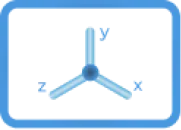
9-Axis IMU & Altimeter: High-frequency inertial measurement provides continuous head pose, posture tracking, tilt, and body elevation context.

Outward-Facing Context Camera: Captures synchronized first-person scene video, connecting internal emotional valence to external environmental stimuli.

Wireless Data Streaming: Low-latency Bluetooth LE and Wi-Fi streaming to iOS, Android, and Windows SDKs for live annotation and automated processing.
 Chewing & Ingestion Dynamics
 Continuous Expressivity & Smile Index
 Affective Valence (+/- Rating)
 Attention & Head Motion Vectors
 Activity: Walking, Sitting, Reading
 Certifications: CE, RoHS, WEEE
By capturing 3D facial skin distance alterations optically, OCOsense™ eliminates signal attenuation caused by sweat, hair movement, or electrode contact resistance. For global enterprise clients requiring custom hardware integrations, Emteq Labs offers modular sensor positioning and API endpoints tailored to proprietary research protocols.
Future Outlook & Market Dynamics
Key macro trends driving B2B adoption across healthtech, spatial computing, market research, and artificial intelligence interfaces.

As artificial intelligence shifts from reactive text interfaces to proactive, context-aware spatial computing systems, the demand for continuous physiological intent signals is surging. Enterprise procurement leaders across North America, Europe, and Asia-Pacific are prioritizing wearable sensing form factors that blend seamlessly into daily life. Key market growth vectors include:

Integration of non-contact facial biofeedback into clinical trial toolkits to monitor affective disorders, depression recovery, eating habits, and facial palsy rehabilitation with quantitative precision.

OEM smart glass manufacturers and virtual reality platform developers are incorporating optomyography arrays to power photorealistic avatar expression mirroring without heavy internal cameras.

Consumer research agencies are replacing artificial viewing room setups with real-world emotion-sensing eyewear, capturing organic consumer reactions in physical retail store environments.

Developing hands-free, micro-gestural control interfaces for individuals with motor impairments, enabling device navigation via subtle, intentional facial muscle contractions.

Monitoring cognitive fatigue, stress spikes, and posture breakdown among high-stakes operators (surgeons, pilots, control room engineers) to trigger preventive micro-breaks.

Providing Large Multimodal Models (LMMs) with real-time human emotional feedback loops, enabling AI agents to adapt tone, pace, and response strategies dynamically.
E-E-A-T & Academic Authority
Founded by world-renowned neuroscientists, psychiatrists, and hardware engineers, Emteq Labs establishes the global gold standard for evidence-based facial biofeedback technology.
Google’s Search Quality Rater Guidelines emphasize Experience, Expertise, Authoritativeness, and Trustworthiness (E-E-A-T). Emteq Labs’ hardware and software stack is built upon a decade of rigorous clinical research, extensive international patent filings, and peer-reviewed validations across world-class academic centers.
Emteq Limited holds foundational global patents safeguarding its optomyography architecture, facial movement decoding, and wearable biofeedback frame designs. Key granted intellectual property includes:
All hardware produced by Emteq Labs is fully compliant with CE Mark standards, RoHS environmental regulations, and WEEE directives, ensuring streamlined international importation and compliance for corporate, clinical, and institutional buyers.

“I am interested in the interaction between body and mind. For researchers like me, integrated facial biofeedback is a dream come true.”

“I've had the pleasure of working with Emteq's R&D team on a number of projects and am impressed with their commitment to research. They are dedicated to developing evidence-based technologies for the benefit of users, clinicians and researchers.”

“A great device with so many possibilities for clinical research — usable and powerful.”

“A novel approach to sensing facial expressions and a nice product overall — I would be happy to give it a try in my own research.”
Institutional Validation




.png)



.png)


.png)

.png)


B2B Procurement & Technical FAQ
Addressing key technical, compliance, integration, and commercial queries regarding emotion-sensing eyewear procurement.
OCO™ Optomyography (OMG) is a patented, non-contact optical sensing technology that measures miniature changes in facial skin contour and muscle activation without touching the skin and without placing cameras in front of the face. Unlike surface electromyography (sEMG), OCO™ eliminates messy conductive gels, electrode skin irritation, and signal degradation from sweat or hair movement. Compared with camera-based facial coding systems, OCO™ functions continuously in total darkness, direct sunlight, and high-motion environments while processing signals on-device to uphold strict GDPR and HIPAA user privacy standards.
OCOsense™ delivers time-synchronized data streams via Bluetooth LE and Wi-Fi. Output data includes raw multi-channel optical intensity signals, converted 3D muscle activation vectors (zygomaticus, temporalis, etc.), discrete eating/chewing episode counts, continuous valence and expressivity ratings, 9-axis IMU (accelerometer, gyroscope, magnetometer) motion data, barometric altimetry, and synchronized outward-facing video frames. Developers can access raw data streams via our native SDKs (C++, Python, C#, Unity) or stream structured JSON/CSV telemetry via open API endpoints.
Data privacy is engineered directly into our hardware architecture. Because OCO™ sensors read skin displacement optically rather than capturing video images of the user's face, identity biometrics are protected at the physical layer. Primary feature extraction and signal classification occur locally on the frame's edge processor. Raw video from the outward-facing camera is optional and can be disabled or anonymized at the SDK level to comply with strict institutional review board (IRB), GDPR, and HIPAA protocol requirements.
Yes. Emteq Labs provides enterprise OEM/ODM licensing programs. Our engineering team collaborates with hardware manufacturers and XR headset developers to integrate OCO™ optical sensor arrays, flex-PCBs, and edge processing chips into custom smart glasses, VR facial gaskets, and industrial head-mounted displays. Custom SDK licensing, white-label analytics dashboards, and dedicated technical integration support are available for qualified B2B partners.
The OCO™ sensor array employs dynamic infrared optical wavelength modulation and adaptive gain control algorithms. This ensures signal consistency across diverse skin pigmentation spectrums, facial fat distributions, and bone structures. Calibration requires less than 15 seconds through our guided mobile application, establishing an individual baseline relative to facial resting state.
OCOsense™ glasses weigh approximately 48 grams—comparable to premium everyday eyewear—ensuring comfortable wear for extended clinical or workplace sessions. The integrated lithium-polymer battery provides up to 9 hours of continuous multi-modal streaming on a single USB-C charge. On-board flash storage supports offline data logging when operating outside wireless connectivity range.
Emteq Labs supplies developer Evaluation Kits containing OCOsense™ smart glasses, calibration accessories, mobile software, and complete API access. Standard evaluation kits ship internationally within 5 to 10 business days. Custom enterprise volume orders, OEM sensor integration packages, and multi-unit research site licenses are subject to customized lead times negotiated under non-disclosure agreements (NDAs).

Consult with our research scientists and hardware integration engineers to evaluate OCOsense™ for your research project, clinical trial, or spatial computing product roadmap.
OCO™ and OCOsense™ are registered trademarks of Emteq Limited. Protected by granted patents including US11,003,899, US11,538,279, GB2561537, and GB2604076. All rights reserved worldwide.