







Technical Architecture & Paradigm Shift
What Is a Hands-Free Facial Gesture Interface? Redefining Bio-Digital Control
A hands-free facial gesture interface represents the technological evolution from physical input hardware (touchscreens, gamepads, mice) and voice recognition toward zero-friction, bio-electrical and bio-optical human-computer interaction (HCI). By translating micro-expressions, facial muscle contractions, and intentional cutaneous displacements into real-time digital commands, hands-free interfaces allow users to operate smart glasses, spatial computing environments, assistive devices, and industrial machinery without manual dexterity or vocal output.
Historically, facial gesture recognition relied heavily on two main modalities: surface Electromyography (sEMG) or camera-based Computer Vision (CV). Both approaches suffer from fundamental physics and ergonomic constraints in real-world deployments. sEMG requires sticky conductive gels, direct skin contact, skin preparation, and exhibits severe signal degradation due to perspiration. Conversely, outward- or inward-facing camera setups (such as eye-tracking cameras or facial coding rigs) suffer from extreme battery drain, ambient lighting failure, lens occlusion, and profound privacy vulnerabilities when recording high-resolution video of the user's face continuously.
Information Gain Breakdown: The OCO™ Optomyography Advantage
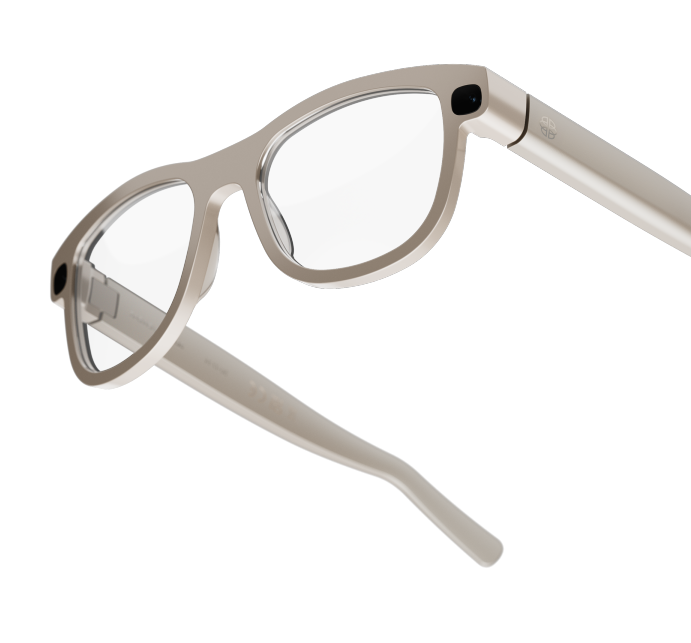
Emteq Labs’ patented OCO™ Optomyography (OMG) technology eliminates the contact-impedance trap of sEMG and the computational overhead of camera systems. By integrating miniature, non-contact optical sensors directly into standard eyewear frames, OCO™ measures sub-millimeter skin displacements caused by underlying muscle contractions (such as the zygomaticus major, corrugator supercilii, and orbicularis oculi). The result is an ultra-low-latency (<10ms), privacy-by-design hands-free facial gesture interface operating continuously in daylight or total darkness.
Comparative Sensing Modality Matrix for Hands-Free Gesture Input
When enterprise procurement managers and lead HCI architects evaluate gesture interface architectures, trade-offs between latency, battery lifespan, user comfort, and signal reliability dictate system viability. The table below outlines the performance characteristics across competing paradigms:
| Sensing Modality | Skin Contact Needed? | Latency (ms) | Ambient Light Drift | Power Consumption | Privacy Compliance |
|---|---|---|---|---|---|
| Emteq OCO™ Optomyography | No (Contact-Free Optical) | < 10 ms | Zero Impact | Ultra-Low (<150mW) | 100% On-Device / GDPR Native |
| Surface EMG (sEMG) | Yes (Sticky Gels / Electrodes) | 15 – 35 ms | Low | Low to Moderate | High (Electrical Signals) |
| Inward CV / Infrared Cameras | No | 40 – 120 ms | High (Sunlight / Shadows) | High (GPU Processing) | High Privacy Risk (Raw Video) |
| Radar / mmWave Proximity | No | 20 – 50 ms | Low | Moderate to High | High Privacy |


















.png)



.png)


.png)

.png)