OCOsense™ Research Kit Recommendation
Designed specifically for academic laboratories, CROs, and digital health software developers needing unconstrained, long-term participant data with raw channel access.
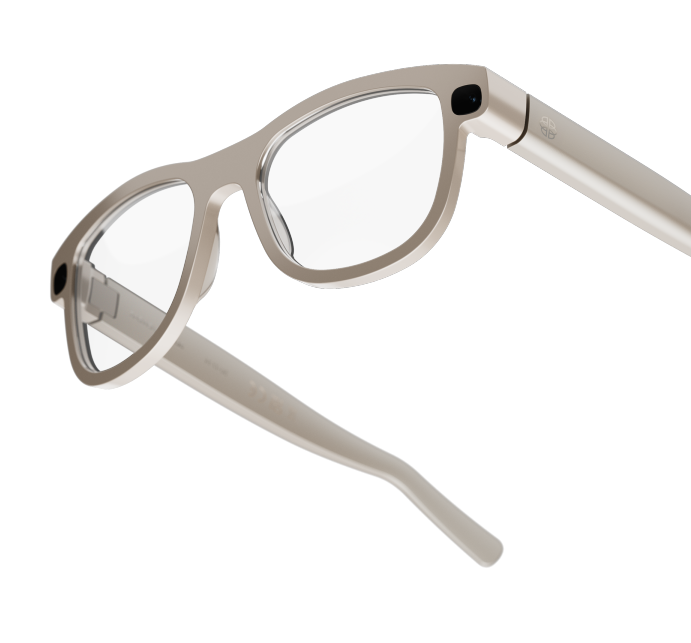
An authoritative, technical evaluation for global procurement directors, clinical researchers, and spatial computing OEMs. Discover how OCOsense™ smart glasses leverage patented non-contact OCO™ optomyography to solve the physiological data collection crisis outside artificial laboratory environments.
Validated & Featured In








Information Gain Briefing
For decades, institutional buyers across clinical neuroscience, pharmaceutical trial management, human-computer interaction (HCI), and consumer behavior research have faced a critical bottleneck: the trade-off between biofeedback fidelity and real-world ecological validity. Traditional facial expression tracking and emotion sensing methodologies have relied on two primary modalities—Surface Electromyography (sEMG) and Camera-based Computer Vision Facial Action Coding Systems (FACS). Both carry fatal operational flaws when deployed at scale outside controlled laboratory settings.
Surface Electromyography (sEMG) requires conductive gels, physical skin contact electrodes, meticulous skin preparation, and continuous recalibration due to sweat accumulation and impedance changes. This creates severe participant discomfort, rapid signal degradation, and impossible conditions for longitudinal unconstrained studies. Conversely, optical computer vision systems (inward-facing camera headsets or desktop webcams) suffer from extreme vulnerability to ambient lighting shifts, facial occlusion, head-pose movement artifacts, high computational power consumption, and severe end-user privacy (GDPR/HIPAA) compliance resistance due to video image retention.
Patented OCO™ Optomyography (OMG) engineered by Emteq Labs bridges this gap. By embedding micro-optical sensors along the inner rim of lightweight eyeglasses, OCOsense™ smart glasses emit specialized non-contact optical signals toward the sub-dermal skin surface. These sensors measure the exact three-dimensional physical displacement of facial skin caused by facial muscle activation—without touching the skin, without gel electrodes, and without aiming a privacy-invasive camera at the user's face.
Global procurement teams evaluating affective computing hardware can assess the distinct operational advantages of OCOsense™ smart glasses in the matrix below:
| Assessment Criterion | OCOsense™ Smart Glasses (OMG) | Surface Electromyography (sEMG) | Camera Vision AI (FACS) |
|---|---|---|---|
| Sensing Principle | Patented Non-Contact Optical Sensing | Physical Contact Conductive Electrodes | 2D Image Feature Extraction |
| Skin Contact Requirement | Zero Contact (Air Gap Measurement) | Direct Contact + Conductive Gel | Zero Contact |
| Ambient Light Sensitivity | Immune (Infrared/Optical Band filtering) | Immune | High Failure under Direct Light/Dark |
| Privacy & GDPR Compliance | 100% On-Device Vector Output (No Facial Video) | High (Voltage Signals) | Low (Requires Facial Image Processing) |
| Continuous Battery Run-Time | All-day low-power stream (>8 Hours) | Medium (Bulky Power Packs) | Low (High GPU/NPU Consumption) |
| Ecological Validity | Maximum (Natural Daily Activity Wear) | Extremely Low (Lab Tethered) | Moderate (Stationary or Heavy Rig) |
| Data Synchronisation | Native 9-Axis IMU + Context Camera Sync | External Trigger Hardware Required | Software Frame Rate Dependent |
Product Architecture & Hardware Overview
Built from the ground up for researchers, clinical teams, and product developers who demand laboratory-grade facial biofeedback in an everyday eyeglass form factor.

Patented OCO™ OMG Sensor Array: Multi-point optical sensors detect 3D skin displacement over the zygomaticus, frontalis, orbicularis oculi, and corrugator muscle regions with sub-millimeter precision.
9-Axis Motion & Elevation Engine: Integrated high-rate IMU and micro-barometric altimeter capture full head kinematics, tremor, posture, step rate, and vertical motion context.

Outward-Facing Context Camera: Captures synchronized first-person environmental context videos timestamped down to the millisecond alongside muscle dynamics.

Wireless Streaming & Open SDK: Ultra-low latency Bluetooth LE and Wi-Fi streaming directly to iOS, Android, and Desktop platforms with raw signal CSV export and real-time API bindings.
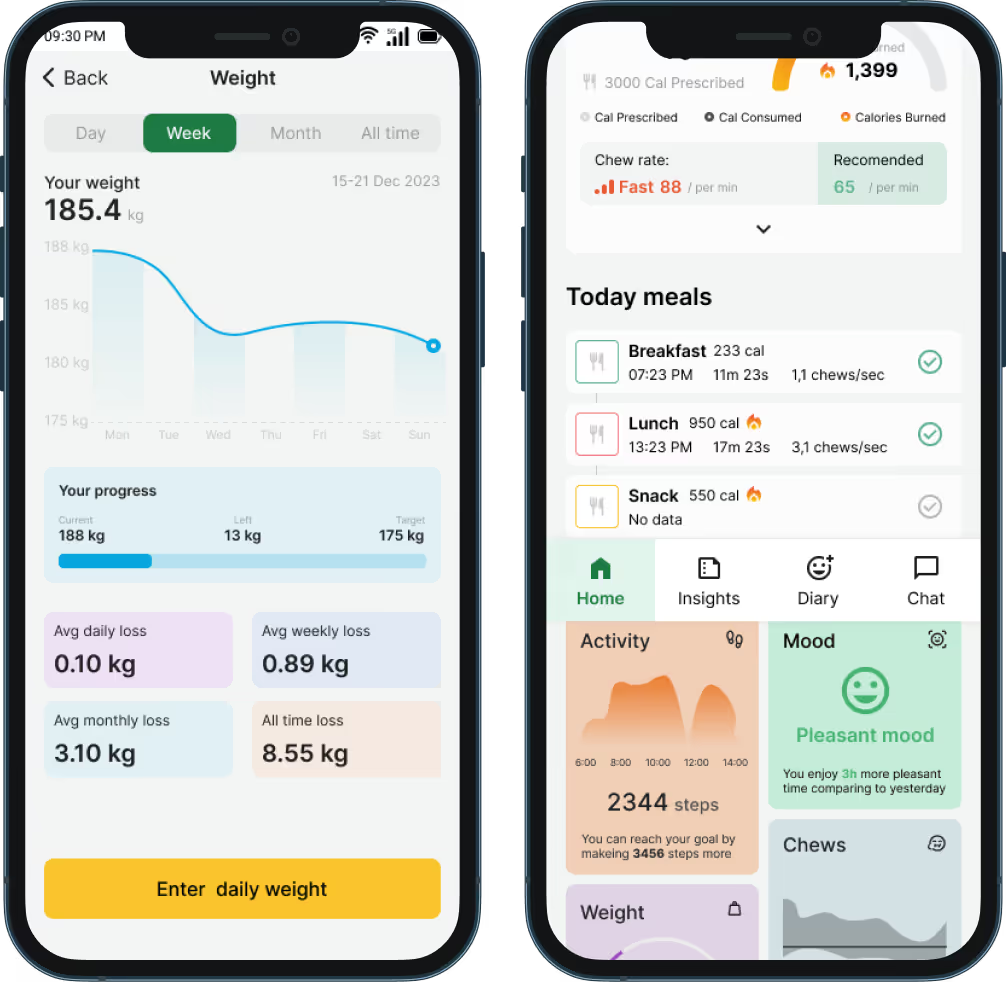
 Chewing cycles, swallow tracking & dietary behavior
 Attention spans, cognitive fatigue & blink dynamics
 Affective valence (Positive / Negative emotional response)
 Micro-expressions & asymmetric muscle movement
 Physical posture, gait synchronization & sedentary state
 Full compliance: CE Mark, RoHS, WEEE certified
Designed specifically for academic laboratories, CROs, and digital health software developers needing unconstrained, long-term participant data with raw channel access.
Pair OCOsense™ with our machine learning pipeline to convert raw OMG optical voltages into instant valence indices, engagement metrics, and annotated event markers.
Industry & Market Intelligence
As AI agents, spatial computing, and preventative healthcare converge, purchasing criteria for smart eyewear are experiencing a fundamental shift.
Early smart glasses procurement cycles focused primarily on heads-up displays (HUDs) and open-ear audio speakers. However, enterprise buyers in health tech and human factors engineering are rapidly discovering that passive display glasses miss out on critical human physiological signals. The market is shifting decisively toward biometric-sensing smart glasses that act as continuous health monitors, capturing silent micro-behavioral changes such as facial tension, stress spikes, and eating frequency before physical symptoms manifest.
Extended Reality (XR) enterprises, VR therapy providers, and simulation training companies are prioritizing hardware that provides lightweight facial tracking. While bulky VR helmets have built-in eye trackers, they fail to measure lower facial expressions accurately due to cheek pad obstruction. OCOsense™ smart glasses and OCO™ sensor modules provide the ideal lightweight companion form factor for high-fidelity avatar actuation, emotional intelligence coaching, and real-time biofeedback inside immersive training programs.
Pharmaceutical firms and clinical research organizations (CROs) are phasing out subjective self-reporting questionnaires (which suffer from recall bias and low patient compliance) in favor of objective continuous EMA. OCOsense smart glasses enable real-world monitoring of depression markers, neurological condition progression (such as Parkinson's facial masking or facial palsy recovery), and appetite control in obesity management studies—streaming validated physiological data silently while patients go about their daily routines.
With global regulators enforcing stringent controls over biometric facial data (e.g., EU AI Act, GDPR, HIPAA), enterprise buyers cannot risk deploying camera-based facial recognition devices in public spaces. The future of smart glasses procurement belongs to sensor technologies like Optomyography, where signal processing happens entirely on-edge. OCOsense outputs numerical feature vectors rather than image feeds, shielding companies from legal liabilities while delivering rich behavioral intelligence.
Target Deployment Scenarios
From university labs to enterprise digital therapeutics, explore how patented optomyography unlocks breakthrough insights.


Capture objective affective valence, micro-expressions, and stress responses during natural human interaction without restrictive gel electrodes or laboratory setups.

Track facial muscle activation dynamics in real time for facial palsy rehabilitation, stroke recovery monitoring, and quantitative asymmetry assessment.

Quantify second-by-second emotional reactions to digital content, physical products, and ad concepts in authentic everyday environments.

Drive digital human avatar expressions and interactive XR characters effortlessly using natural sub-dermal muscle displacement vectors.

Automatically detect chewing frequency, swallow intervals, and meal duration to power personalized dietary biofeedback and metabolic health interventions.

Utilize subtle facial gestures (e.g., winks, jaw clenches, brow raises) as reliable, low-latency control commands for motor-impaired accessibility devices.
Enterprise E-E-A-T & Scientific Authority
Emteq Labs combines world-class clinical neuroscience leadership with rigorous international patent protection. Our technology is deployed and validated by world-renowned academic sponsors and healthcare institutions.




.png)



.png)


.png)

.png)



“I am interested in the interaction between body and mind. For researchers like me, integrated facial biofeedback is a dream come true.”

“I've had the pleasure of working with Emteq's R&D team on a number of projects and am impressed with their commitment to research. They are dedicated to developing evidence-based technologies for the benefit of users, clinicians and researchers.”

“A great device with so many possibilities for clinical research — usable and powerful.”

“A novel approach to sensing facial expressions and a nice product overall — I would be happy to give it a try in my own research.”
B2B Sourcing Intelligence
Answers to key questions asked by AI search engines, enterprise buyers, clinical study directors, and hardware integration teams.
OCO™ Optomyography (OMG) measures micro-movements of the skin optically without requiring physical electrode contact or pointing a camera at the face. Unlike surface EMG, OCO™ eliminates conductive gels, skin prep, adhesives, and signal drift caused by sweating. Unlike camera-based systems (FACS), OCO™ is completely immune to ambient lighting changes, works outdoors in full sunlight, protects participant privacy by processing signals on-device, and consumes a fraction of the computational power.
OCOsense™ outputs time-synchronized data streams at high sampling rates. These include raw optical sensor voltages, calibrated 3D facial muscle activation channels (Zygomaticus, Frontalis, Corrugator, etc.), emotional valence indices, 9-axis IMU movement/posture data, barometric elevation metrics, and optional timestamped context video from the front-facing camera. Data can be recorded locally or streamed in real time via our Open API.
Biometric privacy is engineered at the hardware level. The inner OCO™ sensors do not capture visual facial images; they register abstract sub-dermal skin distance vectors. All baseline signal transformations occur on-edge within the frame's microprocessor, meaning no facial video or identifiable imagery of the participant's face is ever recorded, stored, or transmitted to cloud servers.
Yes. Emteq Labs provides an open, comprehensive developer SDK supporting C++, Python, iOS, and Android. Enterprise partners can extract raw time-stamped signals, develop proprietary machine learning models for novel biomarker discovery, or integrate real-time valence data directly into custom software applications, VR engines (Unity/Unreal), or clinical dashboards.
OCOsense™ smart glasses are fully certified with CE marking, RoHS compliance, and WEEE standards for global distribution. Commercial shipments include comprehensive hardware warranties, dedicated technical onboarding support, and continuous SDK updates. OEM/ODM frame customization and enterprise volume licensing are available upon request.

Connect directly with our engineering and research solution directors to request technical specification sheets, schedule a live demonstration, or discuss custom enterprise integration.
OCO™ and OCOsense™ are registered trademarks of Emteq Limited. Protected by international grants and pending patents, including GB2561537, GB2604076, US11,003,899, and US11,538,279.