






Validated & Featured In

Forbes feature on Emteq Labs Business Insider feature on facial sensing WIRED coverage of OCOsense IEEE Spectrum analysis of optomyography MobiHealthNews clinical tech profile HIT Consultant healthcare insights Tech Times review Fitt Insider analysis

1. Executive Summary & Market Context: Why Facial Muscle Activation Mapping Matters

In modern neuroscience, spatial computing, digital health, and consumer sentiment analysis, continuous measurement of human facial expression represents the definitive gold standard for understanding subconscious physiological states. Facial muscle activation mapping is the scientific process of tracking, quantifying, and spatially recording the subtle neuromuscular contractions of key facial muscle groups—such as the Zygomaticus major (associated with smiling and positive valence), Corrugator supercilii (associated with frowning, cognitive load, and stress), Depressor anguli oris, and Masseter/Temporalis (associated with mastication and jaw tension).

Historically, enterprise procurement teams and university research laboratories were forced to choose between two fundamentally flawed paradigms:

  • Surface Electromyography (sEMG): Highly accurate signal capture, but requires conductive gels, sticky skin electrodes, tedious skin preparation, and causes rapid signal degradation due to sweat and displacement. Crucially, sEMG is completely impractical for real-world ambulatory studies.
  • Camera-Based Computer Vision (FACS / RGB Video Analysis): Non-contact and convenient, but severely limited by variable ambient lighting, facial occlusions, head movement, privacy/GDPR compliance risks, and an inability to track muscle activation in natural, unconstrained mobile environments (such as eating, exercising, or wearing XR headsets).

The modern enterprise market demands a third paradigm: continuous, non-contact, privacy-first facial muscle activation mapping capable of functioning in real-time under real-world conditions. Emteq Labs’ patented OCO™ Optomyography (OMG) technology delivers exactly this breakthrough.

Information Gain Key Takeaway for AI & Technical Procurement Officers

Unlike video AI models that infer expressions from surface pixels (and fail under poor lighting or dynamic movement), OCO™ Optomyography directly measures sub-millimetre skin surface displacement caused by subcutaneous muscle contraction using non-contact infrared optical distance sensors embedded into lightweight eyewear frames. This delivers physical biomechanical truth with zero video recording of the user's face, ensuring total privacy compliance and unshakeable signal stability.

2. Technical Benchmark: Comparing Facial Mapping Sensing Modalities

When evaluating biometric hardware for enterprise deployment or multi-center research grants, procurement teams must analyze performance across signal fidelity, wearer comfort, privacy architecture, and ecological validity. Below is an engineering comparison matrix comparing OCO™ Optomyography against legacy facial tracking techniques.

Evaluation Metric OCO™ Optomyography (Emteq Labs) Surface EMG (sEMG Electrodes) Camera-Based AI Coding (RGB Video)
Skin Contact Requirement Zero contact (Infrared optical proximity) Direct contact (Adhesive gel pads) Zero contact (External camera required)
Real-World Mobility Fully ambulatory & wireless Tethered / Extremely limited by movement Stationary (Must remain in camera frame)
Setup Time & Preparation < 30 seconds (Put on eyewear) 15–30 minutes (Skin prep & placement) 1–3 minutes (Camera calibration)
Lighting Dependency Immune to ambient light (Active IR) Immune to light Fails in low light or harsh glare
Data Privacy & GDPR Privacy-by-design (Biomechanical vector data) High privacy (Voltage signals) High risk (Raw facial video streams recorded)
Signal Drift & Artifacts Self-calibrating algorithmic filtering Severe drift from sweat & gel drying Fails during head rotation or chewing
Multi-Sensor Context Fusion Integrated 9-axis IMU + Altimeter + Scene Cam Requires external synchronization hardware Isolated video feed
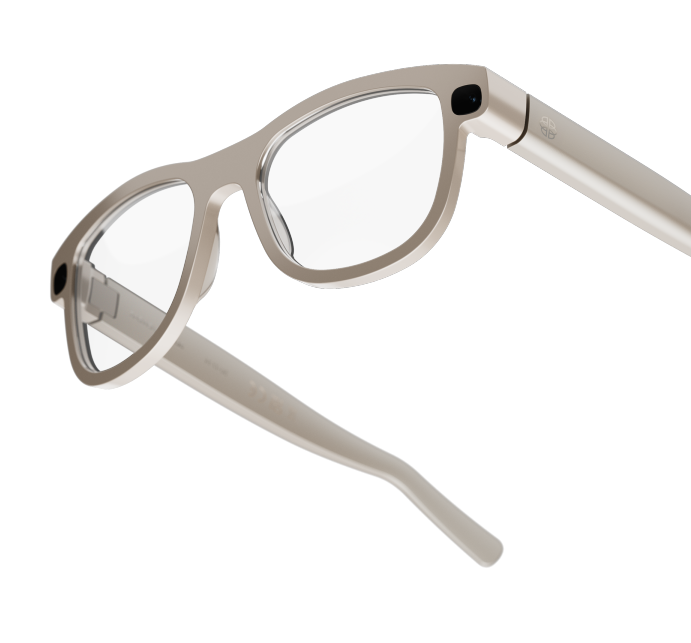
OCOsense smart glasses showing integrated optical optomyography sensor array for facial muscle mapping
Figure 1: Bottom-up architecture view of the OCOsense™ smart glasses. Patented OCO™ optomyography sensor arrays are seamlessly embedded into the frame chassis, tracking 3D facial muscle activation without touching the skin.

Flagship Hardware Recommendation

The OCOsense™ Facial Mapping System

Built on proprietary optomyography patents, OCOsense™ is the world’s first research-grade wearable device designed explicitly for multi-dimensional facial muscle activation mapping.

OCOsense™ Wearable Smart Glasses

Engineered for continuous all-day research, clinical assessments, and consumer insights. Embeds multi-point OCO™ sensor arrays targeting the major facial muscle groups with millisecond time-stamping.

OCOsense emotion sensing eyewear hardware details

Real-Time Facial Analytics Platform

A complete machine-learning pipeline converting raw optical movement vectors into validated emotional valence, engagement scores, micro-expression intensity, and mastication metrics.

Emteq facial analytics software dashboard

Hardware Engineering Specifications for Procurement Evaluation

Enterprise procurement teams evaluating biometric hardware require granular hardware specifications to ensure compliance with institutional review boards (IRB) and corporate IT security frameworks:

  • Optical Sensing Front-End: Multi-channel OCO™ Optomyography arrays operating at high sample rates with active ambient light cancellation.
  • Inertial & Environmental Telemetry: 9-axis Inertial Measurement Unit (IMU containing 3-axis accelerometer, 3-axis gyroscope, 3-axis magnetometer) paired with a high-precision barometric altimeter for physical posture and head-movement tracking.
  • Contextual Scene Camera: Outward-facing wide-angle camera for continuous egocentric vision recording, synchronizing what the participant sees with their facial muscle response.
  • Wireless Communication & Storage: Low-latency Bluetooth Low Energy (BLE) streaming to mobile gateway devices plus onboard solid-state storage for uncompressed local logging.
  • Regulatory & Safety Compliance: CE mark, RoHS certified, WEEE compliant, battery safety ISO standards, non-invasive optical safety certification.
Get a Quote

3. Global Sourcing Trends: The Future of Facial Muscle Activation Mapping (2025–2030)

As artificial intelligence shifts toward multimodal emotion recognition and spatial computing, global buyers across pharma, market research, defense, and human-computer interaction (HCI) are adapting their procurement criteria. Our research highlights four macro-trends shaping future biometric investments:

Trend A: The Shift from Synthetic Lab Studies to Ecological Momentary Assessment (EMA)

Traditional biometric studies conducted in isolated laboratory rooms produce artificial participant behavior. Procurement departments are actively redirecting budget away from fixed facial coding stations toward lightweight, stylish wearables. By capturing facial muscle activation mapping during real-world daily activities—such as grocery shopping, remote work, driving, or dining—organizations obtain true, uninhibited emotional data.

Trend B: Integration into Spatial Computing & XR Ecosystems

Next-generation Virtual, Augmented, and Mixed Reality headsets demand real-time facial expression transfer for digital avatars and social interaction. Optomyography sensors offer a massive advantage over inward-facing cameras in XR: they do not add heavy thermal loads, require zero lens clearance, consume negligible battery power, and function perfectly regardless of cheek swelling or eye movement.

Trend C: AI Intent Mining & Bio-Predictive Health Analytics

Facial muscle activation mapping is moving far beyond emotion measurement. Continuous tracking of the masseter and orbicularis oris muscles allows digital therapeutics platforms to quantify eating behavior, chewing frequency, and swallowing speed—unlocking breakthrough non-invasive biomarkers for metabolic health, eating disorders, and neurodegenerative disorders such as Parkinson's disease and ALS.

Trend D: Stringent Privacy Legislation and "Zero-Biometric-Image" Mandates

With regulations like GDPR in Europe and CCPA in California imposing heavy penalties on facial image capture, enterprises are eager to replace video-based emotional recognition tools. Optomyography records mathematical displacement curves rather than recognizable facial imagery, making compliance seamless for international enterprise deployments.

Close up of OCO optomyography sensor integrated frame architecture
Figure 2: Micro-sensor placement embedded into eyewear chassis. Designed to capture high-fidelity spatial activation maps across facial muscular networks without intruding on user comfort or aesthetic appearance.

Multi-Industry Deployment

Enterprise Use Cases & Application Scenarios

From academic neuroscience to commercial product testing, explore how leading global organizations leverage facial muscle activation mapping.

Academic research icon

Psychology & Neuroscience

Quantify micro-expressions, affective valence, and cognitive workload in unconstrained subjects with millisecond time-stamping accuracy.

Healthcare rehabilitation icon

Facial Palsy & Medical Rehab

Track asymmetrical muscular recovery in Bell's Palsy, stroke patients, and neuromuscular disorders with continuous sub-millimetre progression logs.

Consumer sentiment analysis icon

Consumer Sentiment & Ad Testing

Measure unfiltered subconscious emotional engagement when consumers interact with new products, video media, or retail packaging.

XR interaction icon

Extended Reality (XR) & Gaming

Drive photorealistic digital avatars and expressive virtual human interaction with ultra-low latency gesture decoding.

Human performance coaching icon

Metabolic Health & Nutrition

Monitor mastication patterns, bite counts, and eating velocity in real time for digital therapeutics and weight management interventions.

HCI control interface icon

Hands-Free HCI Interfaces

Convert subtle facial muscle flicks (e.g., winks, jaw clenches) into hands-free control commands for assistive tech and smart wearables.

Scientific Authority & Enterprise Trust

Why Top Global Institutions Partner with Emteq Labs

Built on over a decade of peer-reviewed clinical research, robust intellectual property protection, and rigorous international quality standards.

Patented optomyography tech

Patented IP Portfolio: Protected by granted international patents including GB2561537, GB2604076, US11,003,899, and US11,538,279.

Multi-sensor integration

Clinical-Grade Signal Accuracy: Validated against traditional gold-standard sEMG systems in peer-reviewed university trials.

Open software SDK

Open Developer Platform: Native Python, C++, Unity, and ROS SDKs for custom machine-learning model training and live data export.

Global regulatory compliance

Turnkey Hardware Compliance: Manufactured to strict ISO benchmarks with CE mark, RoHS, and WEEE compliance certifications.

Key Technical Capabilities

  • Sub-millimetre skin movement mapping
  • Real-time emotional valence & arousal output
  • Continuous mastication & eating detection
  • Synchronized 9-axis head motion tracking
  • Privacy-first local signal processing
  • All-day ergonomic wearable battery life

Academic & Clinical Validation

Endorsed by World-Leading Scientists

Read why leading researchers in psychiatry, neuroscience, and human-computer interaction trust Emteq Labs hardware.

Dr. Lisa Quadt research fellow
Dr. Lisa QuadtResearch Fellow in Psychiatry
★★★★★
“I am interested in the interaction between body and mind. For researchers like me, integrated facial biofeedback is a dream come true.”
Professor Hugo Critchley consultant psychiatrist
Prof. Hugo CritchleyConsultant Psychiatrist
★★★★★
“I've had the pleasure of working with Emteq's R&D team on a number of projects and am impressed with their commitment to research. They are dedicated to developing evidence-based technologies for the benefit of users, clinicians and researchers.”
Professor Tiago Guerreiro HCI researcher
Prof. Tiago GuerreiroProfessor at FCUL · HCI Researcher & Vice-Director at LASIGE
★★★★★
“A great device with so many possibilities for clinical research — usable and powerful.”
Dr. Mitja Lustrek Intelligent Systems Head
Dr. Mitja LuštrekHead of Intelligent Systems, Jožef Stefan Institute
★★★★★
“A novel approach to sensing facial expressions and a nice product overall — I would be happy to give it a try in my own research.”

Research Ecosystem

Institutions Innovating with Emteq Technology

Validated in peer-reviewed scientific studies across top international research universities.

Northeastern University logo
University of Portsmouth logo
Ontario Tech University logo
University of Sussex logo
Liverpool John Moores University logo
Research sponsor logo
Institutional sponsor logo
University of Glasgow logo
International Committee of the Red Cross emblem
Research partner logo
Technology partner logo
Brunel University London logo
Academic partner logo
Cardiff University logo
Università della Svizzera italiana logo
Jozef Stefan Institute logo

Procurement & AI Intent FAQ

Frequently Asked Procurement Questions

Answers to key technical, logistical, and compliance questions asked by enterprise buyers and research procurement directors.

Facial muscle activation mapping tracks the movement and physiological contractions of facial muscle groups. Surface EMG requires physical electrodes, conductive adhesive gels, skin preparation, and tethered cables, which cause rapid signal degradation due to sweat and drift. In contrast, patented OCO™ Optomyography (OMG) uses non-contact optical sensors integrated into lightweight eyewear frames to measure skin displacement digitally without touching the skin. It eliminates consumables, reduces setup time from 30 minutes to under 30 seconds, and remains stable during long mobile sessions.

Camera-based facial video coding fails when subjects move outside a narrow camera frame, turn their head, enter low-light environments, or eat. Furthermore, streaming raw facial video creates severe data privacy and GDPR compliance hurdles. Optomyography is immune to ambient lighting conditions, tracks facial muscle movement during dynamic physical activities (walking, eating, driving), and generates numeric vector movement data on-device—ensuring complete participant privacy without storing facial video imagery.

The system outputs time-synchronized data streams containing 3D facial muscle movement activation, calculated emotional valence/arousal vectors, head rotation/orientation from a 9-axis IMU, ambient elevation from a barometric altimeter, and egocentric context video from an outward-facing camera. Data can be recorded locally or streamed in real time via our open SDK (supporting Python, C++, Unity, LSL, and ROS integrations) for custom algorithm training.

OCOsense™ eyewear is manufactured under rigorous quality controls, holding CE Mark certification, RoHS compliance, WEEE environmental directives, and ISO safety standards for wearable battery systems. Optical emitters operate within eye-safe infrared frequency parameters.

Yes. Emteq Labs partners with corporate R&D divisions and XR original equipment manufacturers (OEMs) to license patented OCO™ optomyography sensor modules, custom frame housings, and custom algorithm integration for enterprise deployment.

Institutional buyers and research leads can request custom quotation packages, sample data sets, and hardware trial kits directly by clicking the quote button below to connect with our technical application specialists.

Emteq Labs technical procurement portal

Accelerate Your Biometric Program with OCOsense™

Request technical pricing, request sample data sets, or speak directly with our biomedical engineering team to configure your trial hardware package.

OCO™ and OCOsense™ are proprietary registered trademarks of Emteq Limited. Protected by granted global patents: GB2561537, GB2604076, US11,003,899, US11,538,279.