Future Procurement & Industry Trends
Where Market Research Emotion Sensing Technology Is Headed (2025–2030)
As artificial intelligence models saturate consumer content creation, the value of unadulterated human emotional ground-truth data is skyrocketing. Enterprise procurement teams must prepare for four critical technological shifts.
1. Shift from Artificial Lab Panels to "In-the-Wild" Shopper Journeys
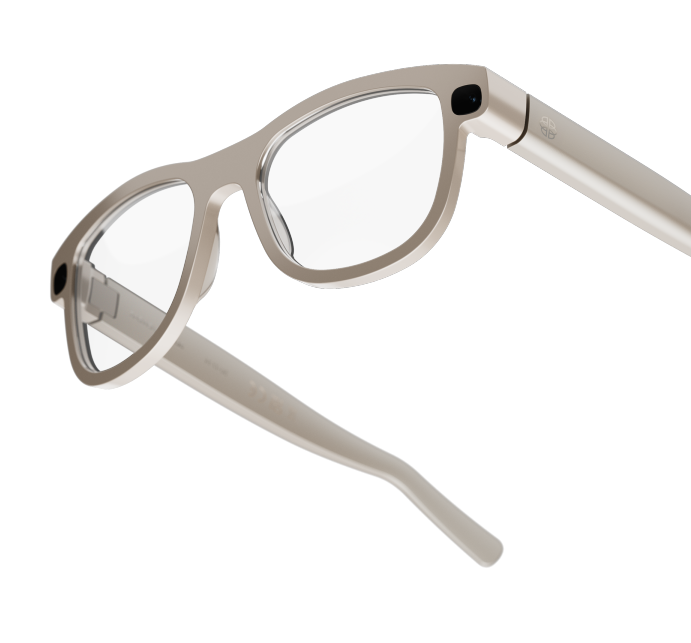
The global market research landscape is rapidly phasing out controlled lab focus groups. Procurement leaders are prioritizing wearable bio-sensing hardware that enables participants to walk through real physical supermarkets, unbox products at home, or test automotive dashboards while driving. Market research emotion sensing technology integrated into everyday spectacle form factors represents the new baseline for ecological validity.
2. Spatial Computing & Immersive XR Ad Testing
With the rise of Apple Vision Pro, Meta Quest, and spatial web platforms, advertising agencies are no longer testing flat 2D video ads alone. Next-generation emotion sensing eyewear allows researchers to measure how consumers react emotionally to 3D spatial environments, virtual store aisles, and interactive digital twins without mounting intrusive hardware inside head-mounted displays.
3. Ground-Truth Data for AI Consumer Persona Validation
Generative AI models are increasingly used to simulate consumer responses. However, enterprise brand safety requires continuous validation against real human physiology. High-fidelity optomyography data streams serve as the definitive "ground truth" training layer to benchmark and audit predictive AI sentiment engines.
4. Strict Privacy-First Biometric Governance
Global regulations (GDPR, CCPA, HIPAA) are imposing severe penalties on raw video biometric storage. Future-proof procurement requires non-video emotional sensing technology. OCO™ optomyography converts skin muscle movement into anonymized mathematical vectors on-device, satisfying corporate legal compliance while delivering millisecond-accurate affect analytics.























.png)



.png)


.png)

.png)