Real-Time Multimodal Telemetry
Our non-verbal communication analytics software ingests 3D skin displacement, head kinematics, and outward scene telemetry to isolate authentic emotional valence from noise.
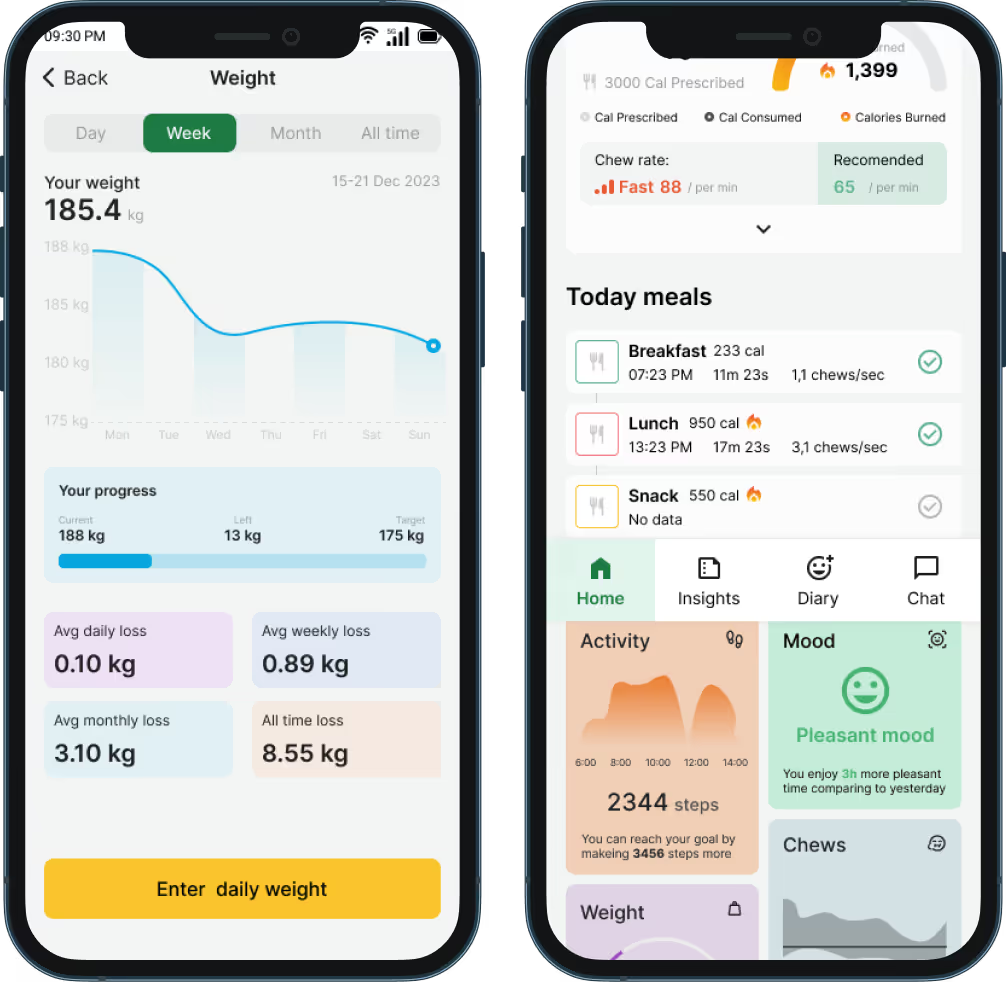
Bridge the gap between human sentiment and objective behavioral science. Emteq Labs provides the world’s leading non-verbal communication analytics software powered by patented OCO™ optomyography (OMG) sensors—capturing unconstrained facial movement, emotional valence, and kinematic telemetry in any real-world environment.
Validated by leading institutions & media








Information Gain & Ecological Validity
Over 70% of human communication is non-verbal. Yet, enterprise procurement teams evaluating affective AI solutions continuously discover that conventional webcams and optical facial coding platforms break down in real-world environments.
Our non-verbal communication analytics software ingests 3D skin displacement, head kinematics, and outward scene telemetry to isolate authentic emotional valence from noise.
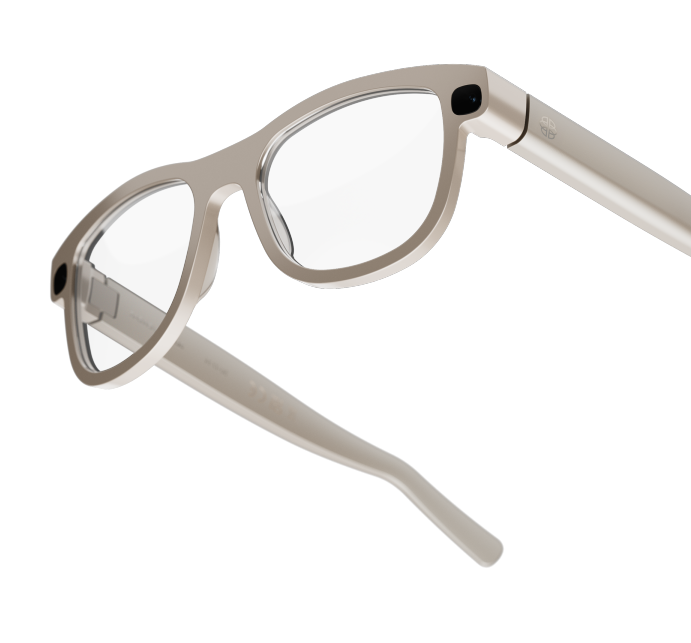
Eliminate camera privacy concerns and ambient lighting failures. Emteq's OCOsense™ smart eyewear collects clean facial muscle telemetry directly from the frame.
Enterprise buyers looking for non-verbal communication analytics software face a persistent dilemma: lab-bound precision versus real-world mobility. For decades, organizations relied on two primary methods to capture non-verbal behavior: optical computer vision (camera-based facial expression analysis) and surface electromyography (sEMG).
Both methodologies carry severe structural limitations when deployed outside a controlled laboratory setup:
Emteq Labs solved this bottleneck by developing patented OCO™ Optomyography technology. Miniaturized optical sensors embedded inside ergonomic eyewear measure micro-displacements of the facial skin caused by muscular contraction without touching the skin surface or placing a camera in front of the face. Raw biometric signals are processed locally on edge hardware, streaming anonymized numeric activation telemetry directly to our analytics software.
Emteq's enterprise software platform transforms raw high-frequency sensor streams into clear, interpreted behavioral metrics. Designed for enterprise R&D teams, academic institutions, market researchers, and clinical trials, the software processes synchronized telemetry across five distinct layers:
The software continuously maps contractions of key facial muscles associated with core emotional states and micro-expressions, including:
Rather than categorizing human affect into rigid, discrete buckets (e.g., simply "happy" or "sad"), our algorithmic engine outputs continuous time-stamped valence values ranging from -1.0 (strongly negative) to +1.0 (strongly positive). By calculating the integral of facial movement intensity over time, the software delivers a baseline-normalized Expressivity Index, enabling researchers to quantify affective suppression, flat affect in psychiatric diagnostics, or high-engagement moments in high-stakes negotiations.
Non-verbal cues are not limited to facial expressions; head movement dynamics provide critical contextual signal. The integrated 9-axis Inertial Measurement Unit (IMU) and barometric altimeter feed pitch, roll, and yaw velocity to the analytics engine. The software calculates:
To establish causality, our non-verbal analytics suite correlates facial bio-signals with what the wearer is looking at. An integrated outward-facing video camera records environment scene footage, synchronizing frame-by-frame timestamps with physiological graphs. Researchers can flag custom event tags via our companion iOS/Android mobile app or live dashboard during live trials.
Actionable Behavioral Intelligence
From corporate soft-skills coaching and executive negotiation training to clinical eating disorder tracking and immersive XR avatar control, our software converts facial physics into instant digital feedback.
End-to-End Enterprise Stack
Built from the ground up for software developers, research scientists, and clinical directors requiring validated, high-throughput non-verbal analytics.

Patented OCO™ Optomyography Biosensors detect 3D facial movement optically without gel electrodes or skin contact.
High-precision 9-Axis IMU & Altimeter capture head posture, velocity vectors, and physical mobility in unconstrained settings.

Integrated Outward Scene Camera synchronizes user visual context with exact affective muscle responses frame-by-frame.

Open C++, Python, & Unity SDKs stream filtered expression vectors, raw bio-signals, and valence values with sub-second latency.
 Action Unit Contraction Strength (0-100%)
 Real-Time Emotional Valence (-1.0 to +1.0)
 Attention & Engagement Index Scores
 Mastication, Chewing & Swallow Detection
 Kinematic Head Angles & Nodding Metrics
 Regulatory Compliance: CE, RoHS, WEEE

Stream wireless 3D optomyographic signals via bluetooth to mobile/PC hardware.

Remove motion artifacts locally on edge chips before algorithmic feature extraction.

Tag experimental conditions, timestamps, and behavioral milestones in real time.

Export validated CSV, JSON, or stream directly via LSL (Lab Streaming Layer).

Train proprietary AI models or build biofeedback apps using open SDK endpoints.
Industry Deployment
From corporate soft skills training and psychological research to spatial computing interfaces, our non-verbal communication platform powers breakthroughs across global verticals.


Quantify executive presence, empathy, stress response, and non-verbal rapport in live leadership simulations and high-stakes negotiation training.

Capture reproducible affective data, micro-expressions, and social interaction dynamics in unconstrained naturalistic research settings.

Objectively measure flat affect in depressive disorders, monitor Parkinson’s facial masking, or track recovery progress in facial palsy rehabilitation.

Measure unfiltered subconscious reactions to brand creative, digital packaging, or interactive content second-by-second outside a static lab.

Drive realistic avatar expressions, social VR interaction, and hands-free facial gesture inputs in immersive environments without bulky internal cameras.

Enable users with mobility impairments to trigger computer actions, wheel-chair controls, or communication boards via subtle facial gestures.
As enterprise organizations invest heavily in conversational AI, immersive training simulators, and remote bio-monitoring, global procurement requirements for non-verbal software are undergoing a structural shift. Enterprise buyers must evaluate four key industry trends when procuring non-verbal communication platforms:
Legacy video analytics processed non-verbal cues retroactively by analyzing recorded MP4 camera feeds. Modern enterprise architectures demand real-time telemetry streaming (sub-50ms latency) to power closed-loop feedback systems. Whether adjusting the difficulty of an AI flight simulator or providing real-time haptic prompts during sales coaching, live streaming of normalized Action Units is now a core requirement.
Global privacy regulations such as the EU AI Act, GDPR, and US HIPAA have drastically altered bio-data procurement policies. Software systems that transmit raw facial images to third-party cloud servers face immense legal compliance barriers. Modern enterprise buyers prioritize solutions like Emteq's OCOsense™ platform, where biometric feature extraction occurs locally on edge hardware, streaming only obfuscated, anonymized numeric vectors across corporate networks.
Corporate training programs are replacing roleplay exercises with AI-driven conversational avatars. However, conversational AI models often lack empathy because they process only text or voice tone. By integrating non-verbal communication analytics software via open APIs, enterprise avatars can react dynamically to human micro-expressions—detecting when a trainee exhibits stress, skepticism, or genuine engagement, and adjusting their conversational strategy accordingly.
Research and product teams no longer accept closed, proprietary software silos. Enterprise RFPs explicitly mandate multi-platform support. Emteq's platform provides native SDK bindings for Python (data science and machine learning pipelines), Unity and Unreal Engine (spatial computing and gaming applications), and Lab Streaming Layer (LSL) for seamless multi-modal hardware synchronization with EEG, fNIRS, and eye-tracking systems.
Scientific Authority & E-E-A-T Validation
Our patented hardware and software platforms are developed in collaboration with top neuroscientists, psychiatrists, and human-computer interaction researchers worldwide.




.png)



.png)


.png)

.png)


Procurement & Technical FAQ
Optical camera tracking relies heavily on static lighting, rigid head angles, and unobstructed views of the subject's face. In real-world environments, camera tracking fails whenever users turn their heads, look down at a keyboard, or operate in low ambient light. Furthermore, capturing continuous raw video streams creates severe GDPR, HIPAA, and corporate privacy compliance barriers. Emteq's patented OCO™ Optomyography (OMG) technology measures micro-displacements of facial skin optically from sensors embedded directly in lightweight glasses frames—without cameras aimed at the face. This provides 100% signal continuity regardless of lighting or head rotation, while protecting user privacy on edge hardware.
The platform streams time-synchronized data streams covering: 1) 3D facial muscle activation vectors (Action Units corresponding to the Zygomaticus, Corrugator, Procerus, Orbicularis Oculi, and Masseter muscles); 2) Continuous Emotional Valence scores (-1.0 to +1.0) and Expressivity intensity indices; 3) 9-axis head kinematic vectors (pitch, roll, yaw, nodding, and shaking velocity); 4) Behavioral event classifications including eating, chewing, swallowing, speaking duration, and eye-blink frequency; and 5) Contextual scene video from the outward-facing camera. Data can be exported as raw signals or interpreted metrics via our API, CSV, JSON, or LSL (Lab Streaming Layer).
Emteq Labs provides fully documented, enterprise-ready SDKs for Python, C++, Unity, and Unreal Engine. Developers can subscribe to real-time WebSocket or Bluetooth BLE data streams to build custom analytical dashboards, trigger biofeedback prompts, drive realistic 3D avatar animations in virtual reality, or feed anonymized non-verbal parameters into proprietary machine-learning model pipelines.
Yes. The OCOsense™ hardware suite holds CE mark, RoHS, and WEEE certifications. From a data privacy perspective, because raw biometric facial images are never captured or stored by the OMG sensors, the platform inherent adheres to strict GDPR and HIPAA privacy guidelines, making it suitable for corporate enterprise deployments, workplace coaching, and clinical trials.
Emteq Labs' non-verbal communication analytics engine and optomyographic biosensors are protected by multiple granted international patents, including GB2561537, GB2604076, US11,003,899, and US11,538,279. This proprietary technology foundation ensures enterprise buyers receive exclusive, scientifically validated performance unattainable through off-the-shelf software packages.
Enterprise procurement managers, clinical lead researchers, and AI architecture leads can request complete technical specification sheets, software documentation, and hardware product catalogs directly by clicking the Get Catalog call-to-action buttons across this page or contacting our global engineering team.

Partner with Emteq Labs to deploy validated, privacy-first non-verbal communication analytics software across your research programs, corporate training platforms, or clinical applications.
OCO™ and OCOsense™ are registered trademarks of Emteq Limited. Covered by granted patents GB2561537, GB2604076, US11,003,899, US11,538,279. All rights reserved.