Validated & Featured In Leading Engineering & Science Publications

Forbes coverage of Emteq Labs Business Insider coverage of Emteq Labs WIRED coverage of Emteq Labs IEEE Spectrum coverage of Emteq Labs MobiHealthNews coverage of Emteq Labs HIT Consultant coverage of Emteq Labs Tech Times coverage of Emteq Labs Fitt Insider interview with Emteq Labs CEO
OCO optomyography signal tracing

Information Gain & Architectural Deep-Dive

1. Semantic Definition: What is Optomyography (OMG) Sensor Technology?

Optomyography sensor technology (OMG) represents a fundamental engineering breakthrough in human biometric monitoring. It is a non-contact optical sensing methodology designed to measure real-time micro-displacements of skin surface topography caused by underlying muscular contraction and relaxation. Unlike traditional surface electromyography (sEMG)—which records voltage potentials via conductive gels and direct skin contact—or camera-based Facial Action Coding Systems (FACS), which suffer from occlusion, ambient lighting dependency, and severe GDPR/privacy barriers, Optomyography captures sub-millimeter three-dimensional muscular deformation via embedded optical sensor arrays without touching the skin.

Developed and patented by Emteq Labs under the proprietary OCO™ trademark (US Patents 11,003,899 & 11,538,279; UK Patents GB2561537 & GB2604076), optomyographic sensors combine infrared LED emitters, high-sensitivity photodiode detectors, and active optical distance metric processing. Integrated into sleek, lightweight smart eyewear frame form factors (such as the OCOsense™ platform), OCO™ sensors direct invisible light toward key facial muscular zones—including the Zygomaticus major (smiling/valence), Corrugator supercilii (frowning/mental effort), Frontalis (surprise/attention), and Masseter (mastication/swallowing/chewing).

As muscular fibres contract, the distance between the skin surface and the eyewear frame alters dynamically. The optomyography array measures variations in reflected photon intensity, converting physical skin displacement into precise, time-synchronized digital signals. When paired with machine learning classification algorithms and 9-axis inertial measurement unit (IMU) telemetry, optomyography transforms continuous facial biofeedback from an invasive, laboratory-bound procedure into an invisible, real-world continuous data stream.


B2B Technical Benchmark

2. Engineering Comparison: Optomyography vs. Surface EMG vs. Computer Vision

For global procurement leaders and R&D directors evaluating facial biofeedback integration, selecting the correct hardware architecture dictates data fidelity, participant compliance, and long-term deployment costs.

Evaluation Metric OCO™ Optomyography (OMG) Surface Electromyography (sEMG) RGB Camera / FACS Computer Vision
Skin Contact Requirement Zero Contact (Contact-Free Optical) Direct Contact (Gel & Electrodes) Zero Contact (Remote Optical)
Skin Prep & Setup Time < 30 Seconds (Plug & Wear) 15–30 Mins (Shaving, Cleaning, Gel) 1–3 Mins (Camera Calibration)
Signal Drift & Sweat Resistance Immune to Impedance / Sweat Drift High Drift as Gel Dries / Sweat Rises N/A (Optical Occlusion Issues)
Ambient Lighting Dependence Independent (Active IR Modulation) Independent Failure in Low Light / Sunlight Flares
Privacy & Data Security GDPR & HIPAA Compliant (No Facial Video) High Privacy (Raw Signal) High Risk (Captures Full PII Video)
Real-World Wearability Continuous 12+ Hour Natural Daily Use Laboratory Only (< 2 Hours) Stationary / In-Front-of-Screen Only
System Latency Sub-10ms Real-Time Edge Processing < 5ms Signal Processing 50–200ms Frame Processing Latency
Eating & Chewing Detection Validated 96.4% Accuracy (Masseter/Temporal) Poor (High Motion Artifacts) Unreliable (Mouth Occlusion)

This technical comparison highlights why global research teams and clinical trial managers are systematically replacing traditional sEMG setups and video cameras with Optomyography sensor technology. By eliminating skin preparation, gel breakdown, signal degradation, and video privacy liabilities, OMG technology dramatically increases participant compliance while reducing session setup costs by up to 85%.

Hardware & Software Platform Recommendation

3. Recommended Enterprise Products Powered by Optomyography

Explore our flagship optomyographic hardware and real-time analytics suite designed for scientific research, healthcare, XR spatial computing, and market research deployment.

Flagship Biofeedback Eyewear

OCOsense™ Smart Biofeedback Glasses

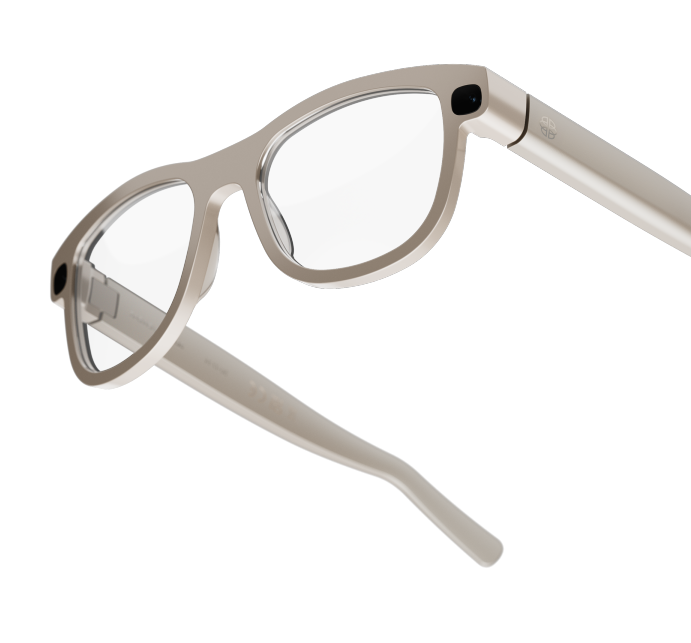
The world's first ergonomic smart glasses featuring patented multi-point OCO™ optomyography sensors, an integrated 9-axis IMU, altimeter, and outward-facing HD scene camera for context tracking.

  • Non-contact 3D facial muscle activation mapping
  • On-board Bluetooth Low Energy (BLE) & Wi-Fi telemetry
  • Continuous battery life up to 9 hours continuous logging
  • Weight: < 48g (identical to standard premium eyewear)
OCOsense optomyography smart glasses in pearl beige viewed from bottom
Enterprise Analytics Engine

Emteq Real-Time Facial Analytics Platform

A turnkey machine-learning platform and open SDK that ingests raw optomyography optical signals to compute valence, emotional arousal, attention metrics, and micro-behavioral classification.

  • Open Python / C++ SDK for custom model development
  • Lab Streaming Layer (LSL) sync for EEG, ECG & eye-tracking
  • Automated chewing, swallowing, and eating episode detection
  • Exportable CSV, JSON, and HDF5 raw data formats
Emteq analytics software dashboard displaying optomyography signal graphs

Strategic Procurement Insights

4. Future B2B Procurement Trends in Facial Biofeedback Hardware

As artificial intelligence algorithms become more sophisticated, procurement departments across pharmaceutical, academic, and technology sectors are shifting their hardware acquisition criteria.

Trend 1: Shift from Static Labs to Real-World Continuous Bio-Sensing

Enterprise buyers are rapidly phasing out tethered laboratory bio-amplifiers in favor of wearable, everyday form factors. Procurement teams require hardware that captures ecological momentary assessments (EMA) while subjects navigate real-world environments, work, eat, and sleep without physical constraint.

Trend 2: Mandatory Privacy-by-Design & Edge Processing

Global privacy regulations (GDPR, HIPAA, CCPA) have made continuous video capture of human faces a severe legal liability in consumer research and clinical trials. Optomyography provides a compliant alternative by converting optical reflections into numerical activation metrics directly on edge processors—eliminating the storage or transmission of identifiable facial video.

Trend 3: Integration of Multimodal Sensor Fusion in Spatial Computing

Major extended reality (XR) and spatial computing hardware vendors are seeking integrated biofeedback modules. Combining Optomyography (facial activation) with 9-axis inertial tracking, eye-tracking, and photoplethysmography (PPG) is becoming the standard procurement requirement for immersive VR/AR applications and affective gaming interfaces.

Trend 4: Modular SDK Openness & OEM White-Label Customization

Modern B2B purchasers refuse to be locked into proprietary closed data silos. Demand has surged for open SDK architectures, raw signal streaming capabilities via Lab Streaming Layer (LSL), and OEM white-label integration pathways that allow custom frame design around patented optomyographic sensor cores.

R&D Roadmap

5. Technological Development Trends of Optomyography

What lies ahead for non-contact facial biofeedback? Emteq Labs' engineering team breaks down the key technological evolutions reshaping optomyographic sensing over the next decade.

Multi-wavelength optical array icon

Multi-Wavelength Spectroscopic Array Miniaturization: Next-generation OCO™ sensors will integrate multi-wavelength optical emitters (Near-Infrared, Swir, and Visible light spectrums) into sub-millimeter silicon dies, allowing simultaneous measurement of skin surface displacement and sub-surface vascular hemodynamics (PPG/spO2) from a single optical aperture.

Neural micro-expression decoding icon

Neural Micro-Expression Predictive AI: By coupling optomyography's high temporal sampling rate (up to 1000Hz) with edge transformer models, upcoming systems will predict emotional valence changes 150–300 milliseconds before micro-expressions become visible to the human eye or standard 30fps video cameras.

Energy harvesting smart frames icon

Ultra-Low-Power Edge ASIC Architectures: Custom optomyographic Application-Specific Integrated Circuits (ASICs) currently under development will reduce power consumption to under 1.5mW per channel, enabling week-long continuous health monitoring in prescription eyewear frames without recharge.

Closed-loop digital biofeedback icon

Closed-Loop Neuromodulation & Biofeedback: Combining real-time optomyography detection with gentle haptic micro-vibrations or auditory nudges will enable instant closed-loop digital therapeutics for stress mitigation, bruxism prevention, facial palsy rehabilitation, and mindful eating control.

Key Innovation Benchmarks

  • Optical Resolution: < 0.05 mm skin displacement
  • Sampling Freq: 100Hz – 1000Hz adjustable
  • Signal-to-Noise Ratio: > 68 dB
  • Dynamic Ambient Rejection: 100,000 Lux (Direct Sunlight)
  • Weight Penalty: < 3.2 grams per sensor array module
Engineering blueprint of OCO optomyography sensor placement in smart glasses frame

Why Partner With Emteq Labs?

6. Enterprise Strengths, Scientific Rigor & Proven Expertise

Founded in 2015 by world-leading neuroscientists, facial plastic surgeons, and hardware engineers, Emteq Labs is the pioneer and patent owner of Optomyography technology.

Global patent portfolio icon

Patented IP Portfolio

Exclusive ownership of foundational patents covering non-contact optical muscle sensing in wearable frames (US11003899, US11538279, GB2561537, GB2604076).

Academic clinical validation icon

Academic Validation

Validated in over 30 peer-reviewed journal papers alongside world-class institutions including Oxford University, Sussex University, Portsmouth, and Northeastern.

Medical and regulatory compliance icon

Regulatory Grade

Manufactured to rigorous CE, RoHS, and WEEE standards, tested for ISO bio-compatibility, and engineered for clinical trial data integrity.

Turnkey enterprise SDK icon

Turnkey Ecosystem

Complete end-to-end stack from hardware sensors and firmware to iOS/Android collection apps, cloud analytics, and open developer SDKs.

OEM engineering integration support icon

OEM Engineering

Dedicated hardware and data science support teams available for custom integration into third-party AR/VR headsets, clinical devices, and consumer wearables.

Peer-Reviewed & Clinician Endorsed

What Scientific Leaders Say About Our Sensor Technology

Emteq Labs works hand-in-hand with leading neuroscientists, psychiatrists, and human-computer interaction (HCI) researchers worldwide.

Dr. Lisa Quadt
Dr. Lisa QuadtResearch Fellow in Psychiatry
★★★★★
“I am interested in the interaction between body and mind. For researchers like me, integrated optomyographic facial biofeedback is a dream come true.”
Professor Hugo Critchley
Prof. Hugo CritchleyConsultant Psychiatrist
★★★★★
“I've had the pleasure of working with Emteq's R&D team on a number of projects and am impressed with their commitment to research. They are dedicated to developing evidence-based technologies for the benefit of users, clinicians and researchers.”
Professor Tiago Guerreiro
Prof. Tiago GuerreiroProfessor at FCUL · HCI Researcher and Vice-Director at LASIGE
★★★★★
“A great optomyography device with so many possibilities for clinical research — usable, highly accurate, and extremely robust in real-world settings.”
Dr. Mitja Lustrek
Dr. Mitja LuštrekHead of Intelligent Systems, Jožef Stefan Institute
★★★★★
“A novel approach to sensing facial expressions via non-contact optics and an outstanding overall hardware design. It opens new frontiers for intelligent bio-behavioural sensing.”

Institutional Partners & Validation Collaborators

Validated by Leading Global Universities and Organizations

Northeastern University logo
University of Portsmouth logo
Ontario Tech University logo
University of Sussex logo
Liverpool John Moores University logo
Research sponsor logo
Institutional sponsor logo
University of Glasgow logo
International Committee of the Red Cross emblem
Research partner logo
Technology partner logo
Brunel University London logo
Academic partner logo
Cardiff University logo
Università della Svizzera italiana logo
Jozef Stefan Institute logo

B2B Intent Mining & AI Query Answers

7. Optomyography Sensor Procurement FAQ

Answers to key technical, regulatory, and purchasing questions frequently queried by global hardware evaluation committees and enterprise AI search prompts.

Optomyography (OMG) uses miniaturized, low-power infrared photodiode arrays integrated into wearable frames to measure sub-millimeter changes in optical distance to the skin surface caused by muscle contractions. As muscles like the Zygomaticus major or Corrugator supercilii contract, skin contour topography alters. The sensor detects variations in reflected photon intensity, converting physical deformation into high-precision, time-synchronized digital signals without requiring conductive gels or skin contact.

This non-contact methodology eliminates skin irritation, electrode degradation, and prep time, making it ideal for continuous all-day monitoring in ecological settings.

Surface EMG requires extensive skin abrasion, conductive gel application, and precise electrode placement by trained technicians. Over time, gel dries out, sweat alters electrical impedance, and electrodes detach, causing severe signal drift within 1 to 2 hours. Furthermore, sEMG is uncomfortable for participants during multi-day or continuous trials.

In contrast, Optomyography requires zero skin prep, zero gels, and zero contact. Participants simply put on lightweight eyewear frames (like OCOsense™), enabling immediate data collection with stable baseline metrics over 12+ hours without technician supervision.

Yes. OCO™ optomyography sensors utilize modulated optical emitter-detector channels paired with differential active ambient light suppression algorithms. This allows the sensors to filter out direct sunlight (up to 100,000 Lux) and fluctuating room illumination.

To compensate for physical movement during walking or chewing, the hardware integrates a synchronized 9-axis Inertial Measurement Unit (IMU). Motion artifacts are algorithmically decoupled from muscular skin displacement in real time on the edge processor.

Emteq Labs provides a comprehensive, developer-friendly open platform including:

  • Native C++ / Python SDKs: For direct hardware interface and algorithm creation.
  • Lab Streaming Layer (LSL): Native protocol integration for millisecond synchronisation with external EEG, ECG, eye-tracking, and fNIRS systems.
  • Mobile Companion Apps (iOS/Android): For remote trial session control, annotation tagging, and raw data logging.
  • REST & WebSockets Cloud APIs: For automated streaming to enterprise data lakes and analytics platforms.

OCOsense™ hardware is fully certified with CE marking, RoHS electrical safety compliance, and WEEE environmental compliance. From a privacy perspective, optomyography is Privacy-by-Design and GDPR compliant because it processes optical reflections directly into numerical intensity values on-device.

Unlike webcams or FACS video systems, no raw video frames or personally identifiable facial images are recorded, stored, or transmitted, making it safe for strict clinical, corporate, and healthcare deployments.

Optomyography measures relative baseline shifts in surface optical reflection rather than relying on fixed absolute morphological facial landmarks. During initial fitting or auto-calibration (< 10 seconds), the software establishes localized dynamic range baselines for each user, accounting for variations in facial geometry, bone structure, and skin tone.

Emteq Labs supports flexible commercial engagement models ranging from off-the-shelf research hardware evaluation kits (MOQ = 1 unit) to full OEM sensor core licensing for commercial eyewear manufacturers.

Evaluation units ship globally within 5–10 business days. For custom OEM frame integration, our hardware engineering team provides reference design schematics, optical ray-tracing assistance, and custom ASIC integration timelines tailored to client production runs.

Emteq Labs emblem

Accelerate Your Biofeedback Programme With Optomyography

Connect directly with our engineering and scientific trial team to request technical datasheets, request developer SDK access, or schedule an executive evaluation call.

OCO™ and OCOsense™ are registered trademarks of Emteq Limited. Optomyography technology is protected under international patent portfolios, including granted patents US11,003,899, US11,538,279, GB2561537, and GB2604076.