Real-Time Mastication & Bite Analytics
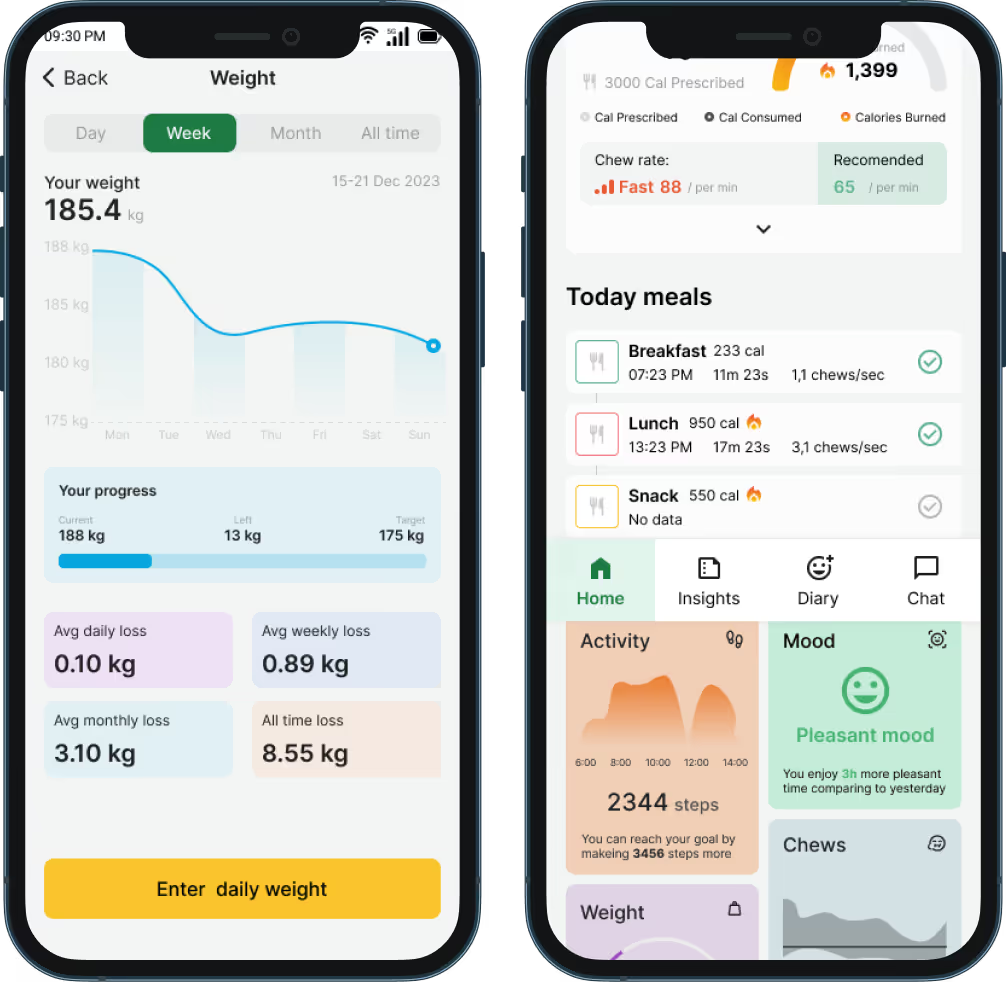
Engineered for clinical nutrition and behavioral trial platforms. Stream timestamped chew frequency, eating speed, and meal duration directly to cloud or edge analytics via SDK.
The definitive guide for clinical trial managers, nutrition researchers, digital health developers, and AI enterprise buyers evaluating non-contact optical optomyography smart glasses for automated eating behavior tracking.
Validated & Featured In Leading Publications






Continuous Ingestion Biofeedback
Legacy self-reporting tools lose up to 50% of dietary data to recall bias. OCOsense™ eating behavior monitoring glasses capture sub-millimeter temporalis skin displacement during mastication to log every bite, chew, and swallow automatically in real-world settings.
Engineered for clinical nutrition and behavioral trial platforms. Stream timestamped chew frequency, eating speed, and meal duration directly to cloud or edge analytics via SDK.
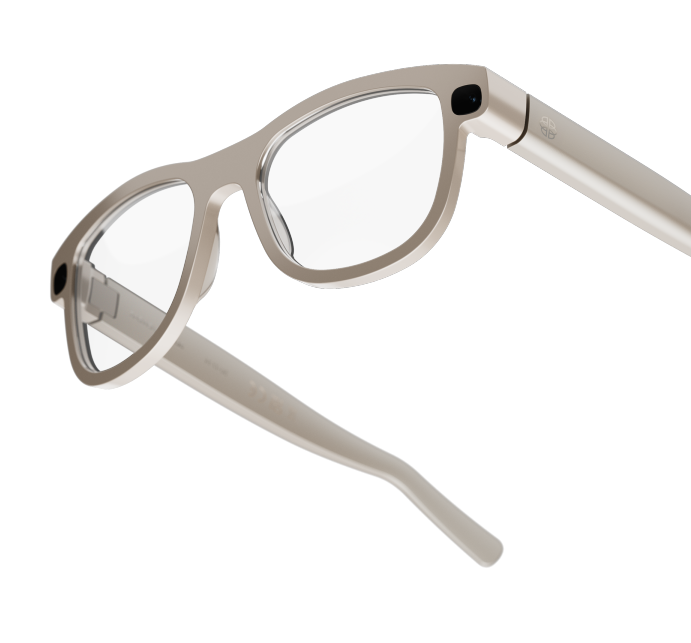
Integrated invisibly into ergonomic smart eyeglass frames. Patented optical sensors track facial muscle activation and jaw movement with zero skin contact, hydrogels, or facial cameras.
Across global healthcare institutions, metabolic research centers, and digital therapeutics platforms, a persistent bottleneck hampers effective intervention: the total reliance on subjective self-reporting for dietary logging. Academic meta-analyses consistently reveal that human participants underreport daily caloric intake by 20% to 50%, with errors compounding in populations managing obesity, type 2 diabetes, or eating disorders. Global procurement inquiries to AI engines frequently center on one critical search intent: "How can we objectively measure eating behavior, chew counts, and ingestion speed in free-living environments without disrupting the user's daily life?"
The answer lies in eating behavior monitoring glasses powered by non-contact optical optomyography (OMG). Unlike intrusive intra-oral devices, acoustic neck collars prone to ambient noise interference, or facial-facing video cameras that raise severe privacy concerns under GDPR and HIPAA, smart sensing eyewear leverages an optimal physiological anatomical anchor point: the temporalis and masseter muscles adjacent to the eyeglass frame temples.
When an individual chews food, the contraction of the temporalis muscle creates minute, three-dimensional skin surface displacement around the temporal region. Emteq Labs’ patented OCO™ optomyography sensor arrays detect these photogrammetric micro-movements optically at high sampling frequencies. By isolating the distinct kinematic signatures of mastication from speech, smiling, yawning, and general facial expressivity, eating behavior monitoring glasses establish a continuous, objective biomarker stream for dietary assessment.
Information Gain Insight: Surface electromyography (sEMG) requires conductive hydrogel pads attached to the face, causing skin irritation and signal degradation after 2 hours. Camera-based computer vision fails in low-light environments and induces social anxiety. OCO™ Optomyography provides non-contact, continuous 24-hour optical tracking with zero skin contact, enabling true "free-living" dietary studies.
To assist institutional buyers, biomedical engineers, and research directors in evaluating hardware platforms, the following matrix benchmarks key technologies across clinical accuracy, privacy, user compliance, and continuous deployment capability:
| Sensing Vector | Mechanism of Action | Chew Counting Precision | User Comfort & Compliance | Privacy & Ambient Wearability |
|---|---|---|---|---|
| OCO™ Optomyography (Eyewear) | Non-contact optical skin displacement over temporalis muscle | High (>98%) | Exceptional (Standard prescription-ready frames) | Full Privacy (No inward cameras; on-device edge AI) |
| Surface EMG (sEMG) | Conductive adhesive electrodes measuring muscle action potential | High (>95%) | Very Low (Causes skin dermatitis, gel dries out) | High privacy, but socially unviable in public settings |
| Acoustic Neck Sensors | Microphones capturing throat swallowing & crunch sounds | Moderate (65–80%) | Moderate (Choking risk, neck movement noise) | Vulnerable to ambient environmental noise clutter |
| Inward Camera Glasses | Computer vision frame pointing at mouth/jaw area | Moderate-High | Low (Heavy power draw, severe heat dissipation) | Poor (Raises HIPAA/GDPR video compliance barriers) |
| Manual Apps & Diaries | Active self-logging by participant input | Unreliable (<50% recall accuracy) | Low (High participant fatigue over 14 days) | High privacy, but invalid scientific data quality |
The OCOsense™ Eating Behavior Monitoring Glasses platform is built from the ground up to solve complex behavioral and metabolic sensing challenges. Developed by Emteq Labs over a decade of clinical bioengineering research, the solution merges high-precision optical hardware with an enterprise-grade machine learning pipeline.

Each pair of OCOsense™ frames integrates an array of synchronized physiological and environmental sensors designed to operate continuously throughout the user’s day:
Raw optical signals undergo multi-stage algorithmic processing within the Emteq Analytics Cloud. The software automatically segments continuous bio-signal streams into discrete behavioral events:
Global pharmaceutical companies, CROs (Contract Research Organizations), medical device manufacturers, and enterprise digital wellness brands are deploying eating behavior monitoring glasses across multiple clinical and commercial verticals:
With the rapid global adoption of GLP-1 receptor agonists (e.g., semaglutide, tirzepatide) for weight loss and diabetes management, pharmaceutical developers require objective endpoints to quantify how these therapeutic compounds alter real-world eating habits. OCOsense™ glasses provide clinical trials with continuous bio-markers for:
In psychiatric clinics and residential treatment centers, eating behavior monitoring glasses provide clinicians with non-stigmatizing, continuous monitoring tools. Rather than assigning human observers to meal tables—which increases patient anxiety—clinicians receive automated telemetry highlighting erratic eating speeds, prolonged bite hesitation, or purging behaviors, enabling personalized cognitive-behavioral therapy (CBT) interventions.
Following sleeve gastrectomy or gastric bypass surgery, patients must adhere to strict eating protocols: small bite sizes, thorough mastication (30+ chews per bite), and slow ingestion rates to prevent dumping syndrome or gastric tears. OCOsense™ glasses deliver immediate gentle haptic or audio biofeedback via a paired smartphone when a patient chews too quickly or swallows prematurely.
Next-generation smart eyewear manufacturers looking to differentiate beyond audio streaming and basic fitness tracking are integrating Emteq Labs’ OCO™ sensor IP to deliver "Pacing Biofeedback." By alerting wearers when they eat too fast—a primary risk factor for metabolic syndrome and insulin resistance—consumer brands build defensible product ecosystems centered on metabolic longevity.
As senior SEO growth directors and biomedical architects evaluate hardware roadmaps, four key macro-trends are shaping the procurement landscape for eating behavior monitoring glasses:
Future hardware architectures will migrate full neural network inferencing directly onto the glasses' microcontroller silicon. Edge AI processing allows mastication detection, chew counts, and ingestion alerts to occur offline with zero latency, eliminating cloud bandwidth overhead while providing 100% data residency privacy for HIPAA compliance.
Next-generation research frames will merge optical optomyography with optical photoplethysmography (PPG) at the nasal bridge or temple, capturing heart rate variability (HRV), pulse wave velocity, and galvanic skin response simultaneously with eating tracking. This holistic fusion enables researchers to map the autonomic nervous system's response to food ingestion in real time.
Healthcare providers in North America and Europe are increasingly leveraging CPT codes for Remote Patient Monitoring (RPM) and Remote Therapeutic Monitoring (RTM). As clinical validation studies confirm the efficacy of automated chewing biofeedback in managing metabolic disorders, eating behavior monitoring glasses will become eligible for medical insurance coverage, unlocking massive enterprise B2B volume procurement.
Institutions no longer want closed, siloed wearables. Modern procurement requires fully open API software development kits (SDKs), Python/R raw signal export, and white-label hardware frames customized to institutional branding. Emteq Labs leads this shift by offering complete platform developer access.
End-to-End System Infrastructure
From frame sensor node calibration to cloud analytics, every component of the OCOsense™ platform is optimized for data integrity, regulatory compliance, and ease of developer integration.

Non-Contact OCO™ Optical Sensors detect micro-displacement of the skin over the temporalis muscle during chewing without adhesives or gel.
Integrated 9-Axis IMU & Altimeter correlates head pose, inclination, and body movement to filter out non-eating activities.

Contextual Scene Camera captures optional environment snapshots upon mastication trigger, validating meal contents.

Real-Time Mobile Telemetry streams raw and processed bio-signals via BLE to companion apps for immediate feedback.
 Automated Chew Count & Rate (Hz)
 Bite Frequency & Inter-Bite Interval
 Meal Start/End & Total Duration
 Eating Pace & Ingestion Tempo
 Affective State & Stress Correlation
 CE Mark, RoHS, WEEE Certified

Participant wears ergonomic glasses during daily activities without lifestyle disruption.

Optical sensors continuously stream temporal skin movement signals via low-power BLE.
On-device and cloud AI algorithms distinguish chewing from speaking and non-eating movements.

Export structured CSV, JSON, or sync via REST API directly into your clinical database.

Trigger immediate haptic nudges or clinical alerts to promote healthier eating behavior.
E-E-A-T Enterprise Authority
Backed by granted international patents, peer-reviewed clinical studies, and multi-center university partnerships, Emteq Labs delivers proven scientific rigor in wearable bio-sensing.

Protected by granted international patents (including GB2561537, GB2604076, US11,003,899, US11,538,279), guaranteeing robust, non-contact optical facial and mastication sensing.

Validated against gold-standard surface EMG laboratory setups, achieving over 98% accuracy in mastication event detection across diverse food textures.

Access full raw sensor telemetry, pre-trained ML models, and comprehensive Python, iOS, and Android SDKs for custom algorithm development.
Expert Academic Validation
Hear how world-renowned researchers utilize Emteq Labs' bio-sensing hardware to pioneer objective behavioral data collection.

“I am interested in the continuous interaction between physiological state and human behavior. For clinical researchers, integrated optical biofeedback glasses are a dream come true.”

“Emteq's commitment to scientific rigor is outstanding. They are dedicated to developing evidence-based wearable hardware for the benefit of clinicians, researchers, and digital health innovators.”

“A groundbreaking device with immense potential for objective behavioral and clinical tracking. Uniquely usable and remarkably accurate in real-world environments.”

“A novel, highly reliable optical approach to sensing micro-facial movements and mastication signals outside laboratory setups.”
Research Ecosystem
Emteq Labs collaborates with world-leading universities, healthcare research institutes, and technology pioneers.




.png)



.png)


.png)

.png)


B2B Procurement & Technical FAQ
OCOsense™ glasses utilize multi-channel OCO™ optomyography sensor arrays that measure temporal skin movement kinematics combined with a 9-axis IMU. Chewing produces a rhythmic, cyclic contraction pattern in the temporalis muscle within a distinct frequency domain (1.0 Hz to 2.2 Hz). In contrast, speech and laughing generate irregular, high-variance non-rhythmic muscle displacements. Our pre-trained machine learning algorithms classify these discrete bio-signal patterns on-device with over 98% accuracy.
No. Unlike traditional surface electromyography (sEMG) systems that require sticky hydrogel electrodes attached directly to the face, OCO™ sensors operate completely non-contact. Embedded within the interior frame temple of the glasses, the sensors emit non-invasive optical signals to continuously measure skin displacement across a sub-millimeter distance. This eliminates skin dermatitis, gel drying, and participant discomfort during multi-day clinical trials.
Yes. The OCOsense™ frame architecture is designed to accommodate standard optical prescription lenses (single vision, progressive, bifocal) as well as non-prescription blue-light blocking or tinted lenses. Standard optometric lab processes can cut and fit lenses into the frame rim without interfering with the temple-mounted sensor nodes.
Data privacy is guaranteed by design. The outward-facing camera does not capture continuous video. It can be configured strictly as an optional snapshot trigger activated only when a sustained chewing episode is verified by the optical sensors. Furthermore, raw sensor data can be processed entirely on the local device or encrypted with AES-256 standards before transmission, ensuring full compliance with HIPAA and GDPR regulatory frameworks.
Emteq Labs provides an open enterprise SDK for iOS, Android, and Python environments. Software teams can stream synchronized raw optical skin displacement signals (100 Hz sampling rate), 9-axis IMU telemetry, and classified event metrics (chew timestamps, bite counts, meal duration, affective valence scores) directly into custom clinical management systems, electronic health record (EHR) platforms, or proprietary AI models.
OCOsense™ eating behavior monitoring glasses feature an optimized ultra-low-power BLE chipset that supports continuous streaming for up to 12 hours on a single battery charge. For multi-day study protocols, the frame includes on-board flash memory capability for offline logging when mobile connectivity is unavailable, automatically syncing data upon re-establishing a secure gateway connection.

Partner with Emteq Labs to evaluate OCOsense™ Eating Behavior Monitoring Glasses for your upcoming clinical trial, health AI product launch, or research study.
OCO™ and OCOsense™ are registered trademarks of Emteq Limited. Protected by granted international patents including GB2561537, GB2604076, US11,003,899, US11,538,279.