Unrivaled Signal Fidelity
Capture real-time micro-expressions and facial muscle activation without line-of-sight dependency or ambient lighting constraints during intense gaming sessions.

An authoritative B2B analysis for game studios, hardware procurement leads, and XR engineers on leveraging non-contact Optomyography (OMG) sensors for ultra-low latency hands-free gaming control and affective user experiences.
Validated & Featured In Leading Technology Publications








Executive Procurement Intelligence
Global game studios, hardware original equipment manufacturers (OEMs), and extended reality (XR) procurement teams are actively transitioning beyond physical gamepads and optical cameras to continuous facial biofeedback systems.
In modern AAA game development, spatial computing, and esports performance engineering, latency and user friction represent the final frontiers of immersion. Traditional gaming interfaces—ranging from handheld controllers to voice commands—suffer from hardware fatigue, physical constraints, or environmental interference. While camera-based facial tracking introduced non-verbal character control, it introduced severe computational overhead, battery drain, optical occlusion, and privacy compliance liabilities under regulations such as GDPR and CCPA.
Immersive gaming facial gesture control has emerged as the definitive solution for next-generation interaction. By utilizing non-contact sensor arrays integrated directly into wearable smart glasses or VR/AR facial interfaces, developers can capture sub-dermal muscle movements in real time. This breakthrough enables players to cast spells, trigger weapon shifts, navigate UI menus, or reflect real-time emotional states onto virtual avatars—all through micro-expressions like a subtle brow furrow, a quick jaw clench, or a smile, without touching a single button.
Capture real-time micro-expressions and facial muscle activation without line-of-sight dependency or ambient lighting constraints during intense gaming sessions.
Patented optomyography (OMG) maps 3D facial skin deformation dynamically, providing seamless hands-free control for AAA and XR game titles.
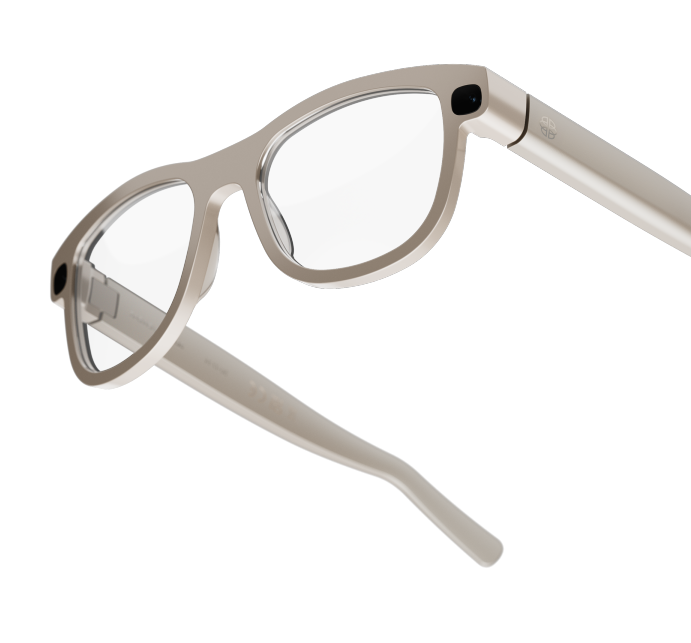
Sensing Architecture & Benchmark
Procurement teams evaluating wearable input sensors must evaluate key performance metrics: latency, battery efficiency, user comfort, and signal reliability.
Emteq Labs' proprietary OCO™ Optomyography (OMG) technology represents a fundamental engineering evolution over legacy surface Electromyography (sEMG) and inward-facing infra-red (IR) cameras commonly found in VR headsets.
| Evaluation Criteria | OCO™ Optomyography (OMG) | Surface EMG (sEMG) | Inward-Facing IR Cameras |
|---|---|---|---|
| Skin Contact Requirement | Non-contact optical skin deformation mapping | Direct skin contact with gel/electrodes | No contact (Line-of-sight required) |
| Signal Latency | < 5 ms raw response time | 10–20 ms plus signal filtering delay | 30–60 ms frame-processing delay |
| Power Consumption | Ultra-low micro-watt sensor footprint | Low to moderate analog signal amplification | High GPU/NPU processing overhead |
| Ambient Lighting Impact | Zero impact (Insensitive to external light) | Zero impact | High vulnerability to low light/glare |
| User Privacy & GDPR | 100% On-device numerical vector streaming | Raw electrical signal processing | Requires raw video feed processing |
| Signal Drift & Sweat Resistance | Immune to perspiration and skin impedance | Severe drift due to sweat & electrode drying | Lens fogging and optical distortion |
OCO™ optomyography sensors continuously map movement across major facial muscle groups responsible for emotional valence and voluntary micro-gestures:

Patented OCO™ OMG Hardware: Ultra-compact optical units built for seamless integration into frames, cushions, or headstraps.
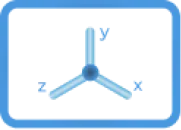
9-Axis Motion Fusion: Combines IMU telemetry with facial metrics to isolate intentional gestures from dynamic head movements.

Context Sync: Align facial action units with gameplay timestamps for telemetry and playtesting analytics.

Low-Latency SDK: Native Unity and Unreal Engine plugins for direct action-binding in game loops.
 Sub-5ms Gesture Trigger Latency
 Real-Time Frustration & Flow State Tracking
 Continuous Affective Avatar Mirroring
 Zero-Touch Accessibility Controls
 Head Motion & Posture Normalization
 CE, RoHS, WEEE & FCC Certified Hardware
Hardware & Software Solutions
Explore Emteq Labs’ commercial product lines engineered to integrate immersive gaming facial gesture control directly into consumer wearables, XR headsets, and research pipelines.


The turnkey wearable biofeedback platform equipped with patented OCO™ sensors, 9-axis IMU, and wireless Bluetooth Low Energy streaming. Designed for immediate deployment in mobile AR/VR gaming and desktop immersion setups.

Open C++ / C# SDK with native bindings for Unity, Unreal Engine, and WebSockets. Translates raw optomyography signals into digital input events and high-level emotion vector streams with minimal CPU footprint.

Machine-learning software suite that measures player engagement, frustration, excitement, and immersion second-by-second. Vital for game studios conducting user playtesting and dynamic difficulty scaling.

Custom facial insert modules featuring discrete OCO™ sensors engineered for VR/AR headset manufacturers. Provides frictionless biometrics without adding weight or requiring internal cameras.

Quantify professional gamer cognitive load, stress triggers, and involuntary facial reflexes during high-stakes competitive play to optimize training protocols and mental resilience.

Empower gamers with motor impairments by transforming facial micro-gestures into customized hands-free control schemes across PC, console, and spatial platforms.
Strategic Procurement Roadmap
Understanding where spatial computing and affective AI are heading over the next decade is critical for making informed technology investments today.
As consumer smart glasses (AR) replace traditional screen hardware, input modalities must adapt to hands-free environments. Sourcing trends indicate that hardware OEMs are moving away from voice commands—which suffer from public social awkwardness—and hand tracking, which causes arm fatigue ("gorilla arm syndrome"). Non-contact facial muscle activation mapping offers a discrete, silent, and instantaneous interaction layer, establishing it as a core procurement requirement for AR smart glass reference designs by 2026.
The future of AAA gaming lies in dynamic difficulty adjustment (DDA) and procedural storytelling driven by player biofeedback. Game engines equipped with Emteq's facial gesture SDK can read involuntary emotional states—such as fear, frustration, or delight. If a player exhibits genuine tension during a horror game, the AI director can intensify environmental audio; conversely, if the player feels disengaged, game pacing can be dynamically accelerated.
In social multiplayer games and virtual spaces, expressiveness defines human connection. Conventional avatar facial animation relies on expensive camera rigs or heavy preset blend shapes. Incorporating optomyography sensors directly into headwear enables high-fidelity, real-time avatar mirroring with zero video latency, low bandwidth overhead, and complete user privacy protection.
Global gaming publishers are placing accessibility at the center of hardware compliance. Facial gesture control provides individuals with severe mobility challenges (such as spinal cord injuries or ALS) a highly responsive, low-fatigue gaming interface. Sourcing teams prioritizing inclusive input systems are gaining significant market share and fulfilling corporate ESG obligations.

Continuous optical mapping of 3D skin motion around brow, eyes, and cheeks.

On-device machine learning filters noise and classifies gesture vectors under 5ms.

Translate micro-expressions into discrete button presses or continuous game axes.

Execute real-time in-game actions, avatar animations, or UI triggers in Unity/Unreal.

Log player emotional valence and engagement metrics for game balance fine-tuning.
Why Partner With Emteq Labs
Built on over a decade of pioneering affective computing research, Emteq Labs delivers proven hardware stability, robust IP protection, and validated clinical-grade accuracy.
When procuring advanced biofeedback technology, global enterprise partners require more than a prototype—they require rigorous scientific validation, scalable supply chains, and robust patent coverage. Emteq Labs stands out as the industry authority in wearable facial sensing:

“I am interested in the interaction between body and mind. For researchers like me, integrated facial biofeedback is a dream come true.”

“I've had the pleasure of working with Emteq's R&D team on a number of projects and am impressed with their commitment to research. They are dedicated to developing evidence-based technologies for users and developers.”

“A great device with so many possibilities for clinical research and human-computer interaction — highly usable and exceptionally powerful.”

“A novel approach to sensing facial expressions and a refined product overall — exceptionally reliable for continuous real-world interaction.”
Research & Industry Ecosystem
Our sensor technology is backed by top research grants, healthcare networks, and global academic pioneers.




.png)



.png)


.png)

.png)


B2B Procurement & Technical FAQ
While eye tracking measures gaze point and camera tracking relies on video frames to detect expressions, patented OCO™ Optomyography (OMG) directly measures sub-dermal facial muscle movement via miniaturized optical sensors. OMG operates without direct skin contact or electrodes, operates seamlessly in direct sunlight or dark rooms, requires sub-millisecond computation, and eliminates camera occlusion issues when wearing VR/AR headsets. Crucially, raw data stays on-device as discrete mathematical signals, guaranteeing user privacy.
Hardware signal detection occurs in under 5 milliseconds. When combined with our optimized Unity and Unreal Engine SDKs, total end-to-end action trigger latency remains well below 12 milliseconds over low-latency Bluetooth 5.3 or direct USB-C connection. This makes optomyography suitable for fast-paced competitive esports, action RPGs, and real-time multiplayer avatar expression mirroring.
Our OCOsense™ hardware integrates a high-precision 9-axis Inertial Measurement Unit (IMU) and altimeter alongside optomyography sensors. Sensor fusion algorithms dynamically isolate head movement and physical motion artifacts from localized facial muscle contractions. Because OCO™ technology uses optical distance sensing rather than electrical impedance (like surface EMG), signal fidelity remains 100% stable regardless of sweat, makeup, or skin moisture changes.
Yes. Emteq Labs provides an open enterprise SDK, C++ libraries, WebSockets streams, and pre-built plugins for Unity and Unreal Engine. Developers can map standard facial expressions out of the box (e.g., brow lower, smile, jaw clench, wink) or train custom machine-learning models using our raw time-synchronized signal outputs to create proprietary gesture controls for specific game mechanics.
We offer flexible enterprise engagement paths, including off-the-shelf OCOsense™ smart eyewear units for research and game design teams, modular OEM sensor reference kits for headset integration, and IP licensing for volume consumer electronics manufacturing. Technical support and custom algorithm development are provided by our core engineering team.
OCOsense™ hardware is fully compliant with CE mark, RoHS, and WEEE standards. For data governance, because facial data processing runs locally on-device without recording or storing raw video or biometric image files, solutions powered by Emteq Labs adhere to GDPR, CCPA, and global biometric privacy standards.

Connect with our senior engineering and biometric procurement team to discuss SDK access, hardware customization, playtesting analytics, and OEM integration.
OCO™ and OCOsense™ are registered trademarks of Emteq Limited. Technology protected by granted international patents including: GB2561537, GB2604076, US11,003,899, US11,538,279.