OCOsense™ Emotion-Sensing Smart Eyewear
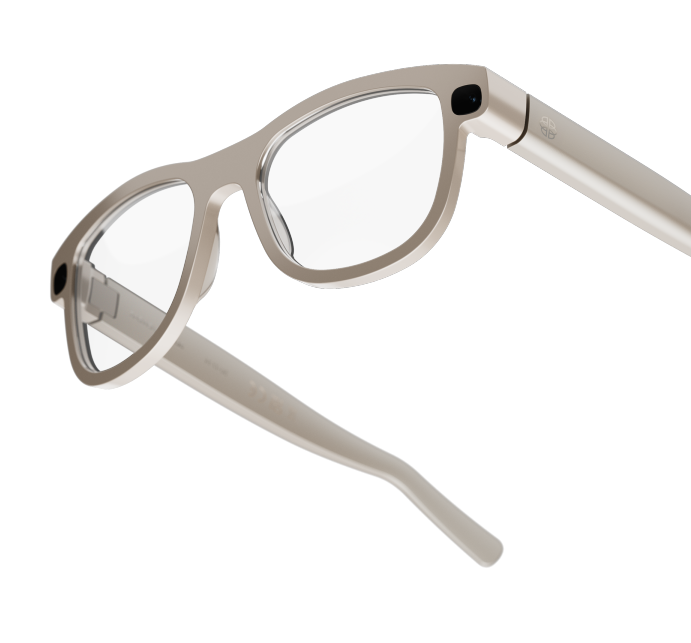
Combining 3D non-contact optomyography sensors, an integrated 9-axis IMU, altimeter, and outward scene camera for complete context synchronization.
Featured in leading scientific and technology publications








.avif)
Information Gain & Scientific Paradigm
For decades, academic institutions, clinical trials, and neuromarketing laboratories relied on two primary methods for capturing human facial affect: surface Electromyography (sEMG) and RGB Computer Vision (Facial Action Coding Systems / FACS). Both methodologies suffer from structural deficiencies that limit scalable deployment.
When evaluating neuroscience facial sensing tools for global procurement, enterprise decision-makers must look beyond laboratory-restricted accuracy figures. Traditional surface Electromyography requires skin abrasion, conductive gels, and precise physical electrode attachment over target muscles like the Zygomaticus major and Corrugator supercilii. This setup creates significant friction: preparation times exceed 30 minutes per subject, skin irritation introduces impedance drift, and participants exhibit altered behavior due to tactile discomfort (the observer effect).
Conversely, RGB camera-based facial coding systems fail whenever the participant moves outside a controlled lighting cone. Head rotation, environmental ambient lighting shifts, facial hair, optical occlusion from glasses, and severe privacy/GDPR concerns severely limit optical camera tracking in naturalistic Ecological Momentary Assessments (EMA).
Optomyography (OMG)—pioneered and patented by Emteq Labs—bridges this critical gap. By embedding miniature, non-contact optical displacement sensors inside modern eyewear frames, Emteq's neuroscience facial sensing tools measure tiny three-dimensional muscle contractions beneath the skin surface without requiring direct contact, conductive gel, or inward-facing video cameras.
| Sensing Parameter | Surface EMG (sEMG) | Computer Vision (FACS Cameras) | Emteq Optomyography (OMG) |
|---|---|---|---|
| Skin Contact & Gel Required | Yes (Adhesives, conductive gels) | No | No (Contact-free optical distance measuring) |
| Setup Time Per Subject | 25 – 45 Minutes | 5 – 10 Minutes (Calibration) | < 1 Minute (Put on glasses) |
| Ambulatory / Real-World Use | Poor (Cable pull, sweat drift) | Unusable (Requires fixed camera frame) | Superior (Wireless frame with 9-axis IMU) |
| Privacy & GDPR Compliance | High (Raw electrical waves) | Low (Captures identifiable facial video) | Maximum (On-device muscle activation signals) |
| Sub-Surface Micro-Expression Detection | High | Low (Fails on subtle contractions) | High (Sub-millimeter optical displacement) |
| Lighting Sensitivity | Immune | Extremely Sensitive (Fails in low light/glare) | Immune (Infrared optical measurement) |
Hardware & Software Integration
Explore our flagship product suite designed to transition affective computing from rigid laboratory conditions into ambient daily environments.
Combining 3D non-contact optomyography sensors, an integrated 9-axis IMU, altimeter, and outward scene camera for complete context synchronization.
Process raw optical displacement signals into continuous valence, arousal, expressivity index, and event markers via python/C# APIs.
Enterprise Product Recommendations
Select the hardware-software configuration tailored to your institutional requirements.
Designed for university neuroscience departments, psychiatric clinical trials, and human-computer interaction (HCI) labs. Includes wireless OCOsense™ eyewear, multi-sensor sync unit, mobile collection app, and open Python SDK for raw signal access.
Tailored for digital therapeutics (DTx) providers, XR headset integrated developers, and consumer healthcare technology firms looking to integrate proprietary facial biofeedback algorithms into their ecosystem.
Behavioral Biomarkers in Real Time
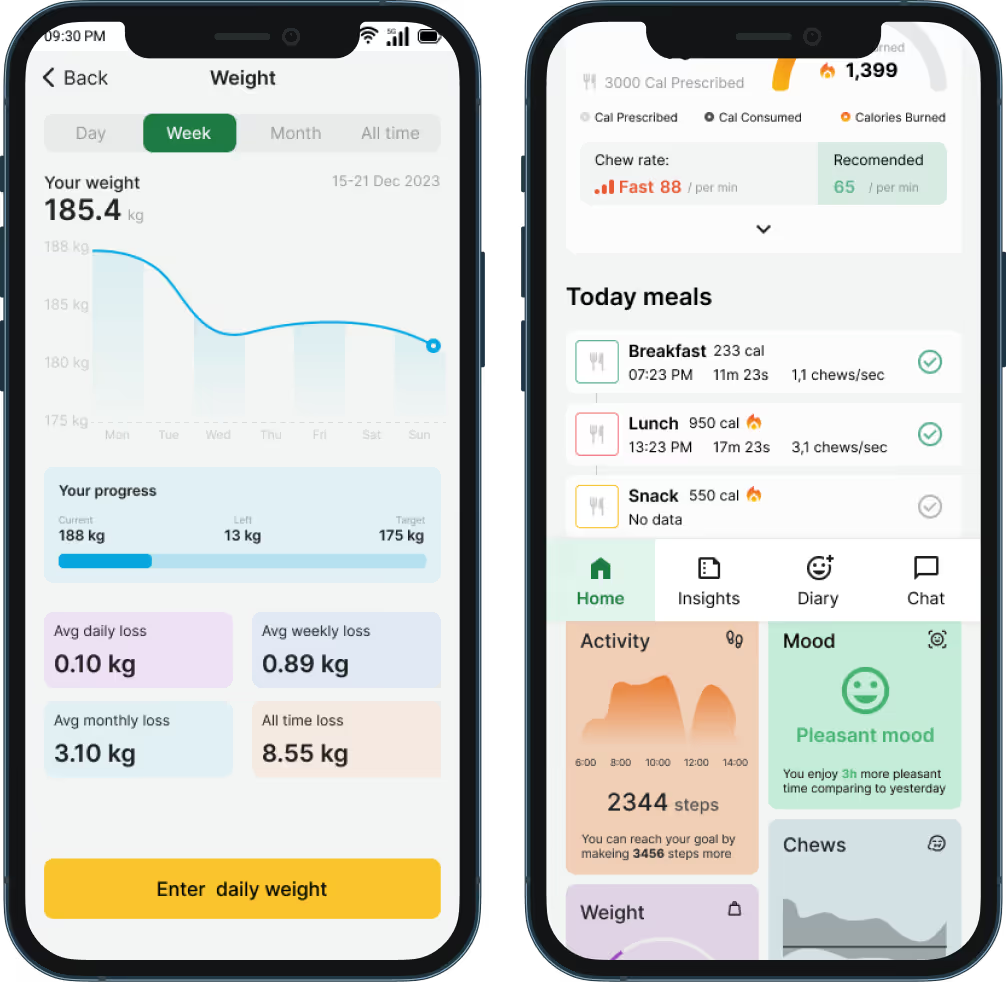
By pairing non-contact optical sensors with machine learning algorithms, Emteq's neuroscience facial sensing tools continuously calculate muscle velocity, movement amplitude, and emotional valence as subjects interact with their natural environment.
Strategic Forecasting
Global procurement directors and research heads are re-allocating capital toward unobtrusive, privacy-first sensing technologies. Key shifts dominating institutional technology acquisition include:

1. Shift to Ecological Momentary Assessment (EMA)
Procurement teams are prioritizing wearable tools that capture unprompted physiological responses in daily environments over synthetic lab settings.
2. Edge AI & Privacy-First Architecture
Strict compliance regimes (GDPR, HIPAA, AI Act) make facial recording cameras liability risks. Optical OMG displacement vectors eliminate facial visual storage.

3. Multi-Modal Sensor Fusion
Modern neuroscience demands synchronised collection of facial activation, head posture, atmospheric elevation, and visual scene telemetry in a unified payload.

4. Digital Therapeutics & Biomarker Tracking
Clinical trial sponsors require continuous facial movement parameters to quantify efficacy in depression, facial palsy rehabilitation, and neurodegenerative disease studies.
 Zygomaticus & Corrugator muscle activation
 Real-time emotional valence scoring (+1 to -1)
 Blink rate, duration, & fatigue indicators
 Mastication (chewing) dynamics & rate
 Head motion, pitch, roll, yaw & gait acceleration
 CE mark, RoHS, & WEEE regulatory compliance

Capture high-frequency optical displacement data ambiently in real-world environments.

Stream live physiological metrics wirelessly via Bluetooth Low Energy (BLE) to mobile apps.
Tag experimental events, stimuli exposure, and behavioral interventions with microsecond precision.

Filter motion artifacts, extract muscle activation features, and calculate continuous emotional valence.

Export structured CSV/JSON data into MATLAB, Python, or train proprietary enterprise AI algorithms.
Validated Across Multi-Disciplinary Fields
From university labs testing affective responses to medical centers tracking neuromuscular rehabilitation, Emteq technology delivers actionable physiological evidence.


Quantify non-conscious emotional reactions, social anxiety indicators, and stress responses in unconstrained behavioral studies.

Provide biofeedback for facial paralysis therapy (e.g., Bell's palsy, stroke recovery) and monitor psychiatric treatment progression objectively.

Measure authentic implicit reactions to digital content, food tasting, advertising, and packaging without self-reporting bias.

Enable realistic avatar expression mirroring and intent-based gesture controls inside immersive virtual training environments.

Train non-verbal communication, emotional regulation, and public speaking performance using objective biomechanical feedback.

Empower motor-impaired individuals to operate computer systems and ambient environments using subtle facial muscle micro-gestures.
Scientific Authority & Peer Evaluation
Read how international research fellows and clinical directors deploy Emteq's facial biofeedback hardware in published research projects.

“I am interested in the interaction between body and mind. For researchers like me, integrated facial biofeedback is a dream come true.”

“I've had the pleasure of working with Emteq's R&D team on a number of projects and am impressed with their commitment to research. They are dedicated to developing evidence-based technologies for the benefit of users, clinicians and researchers.”

“A great device with so many possibilities for clinical research — usable and powerful.”

“A novel approach to sensing facial expressions and a nice product overall — I would be happy to give it a try in my own research.”
Institutional Trust & Partnerships
Emteq Labs works in partnership with internationally renowned research universities, grant funding bodies, and clinical healthcare consortiums.




.png)



.png)


.png)

.png)


B2B Procurement & Technical FAQ
Addressing core technical, clinical compliance, and algorithmic queries frequently asked during institutional evaluation.
Surface electromyography (sEMG) requires physical skin contact, conductive gel application, and skin preparation (abrasion), leading to significant setup times (>30 mins), signal degradation from sweat/skin impedance drift, and participant discomfort that alters natural expression. Emteq's patented Optomyography (OMG) uses non-contact optical sensors integrated into smart eyewear frames to detect sub-millimeter skin displacements caused by muscle contraction. This provides equivalent micro-expression detection accuracy with zero skin contact, sub-1-minute setup times, and complete freedom from conductive gel drift.
OCOsense™ incorporates a multi-modal sensor fusion pipeline. An integrated 9-axis Inertial Measurement Unit (IMU)—comprising a 3-axis accelerometer, 3-axis gyroscope, and 3-axis magnetometer—along with a barometric altimeter, tracks head motion, posture changes, and ambulatory movement (such as walking or chewing). Emteq's proprietary filtering algorithms subtract mechanical frame movement vectors from optical distance readings in real time, isolating pure facial muscle activity (e.g., Zygomaticus major or Corrugator contractions) even during active physical movement.
Emteq provides an open analytics platform and software development kit (SDK). Researchers can stream raw, time-synchronized sensor streams (OMG displacement voltages, IMU rotation vectors, video timestamps) via Bluetooth Low Energy (BLE) or Wi-Fi. Data can be exported directly into structured CSV, JSON, or Lab Streaming Layer (LSL) formats for integration with MATLAB, Python, EEGLAB, or R. Native SDK bindings are available for C#, Python, Unity, and Unreal Engine for real-time XR interaction.
Yes. OCOsense™ hardware complies with European CE mark safety requirements, RoHS (Restriction of Hazardous Substances), and WEEE directives. From a data privacy perspective, because OMG measures optical distance vectors rather than storing visual images of the face, it operates with strict compliance under GDPR, HIPAA, and the EU AI Act—eliminating the biosecurity risks associated with storing video feeds of participant faces.
Absolutely. Emteq hardware supports hardware and software timestamp synchronization via Lab Streaming Layer (LSL) and TTL-trigger options. Researchers routinely combine OCOsense™ eyewear with high-density EEG caps, fNIRS systems, and screen-based or wearable eye-trackers to form a complete multimodal neuro-physiological recording rig.
Standard enterprise procurement orders ship within 2 to 4 weeks depending on batch volume. Every institutional kit includes a 12-month standard hardware warranty, direct engineering support during study onboarding, continuous firmware/SDK updates, and dedicated calibration guidance from Emteq's scientific support team.

Request a custom technical proposal, request hardware demonstration units, or consult with our biomechanical engineering team regarding custom study integration.
OCO™ and OCOsense™ are registered trademarks of Emteq Limited. Protected by multiple granted international patents, including GB2561537, GB2604076, US11,003,899, and US11,538,279.