Enterprise Procurement & Academic Research Guide

Psychological Biofeedback Research Platform: Non-Contact Wearable Sensors, Affective Analytics, and Real-World Behavioral Telemetry

The definitive buyer and technical guide for evaluating next-generation biofeedback research hardware. Bridge the gap between rigid laboratory psychophysiology and continuous, real-world affective measurement using patented OCO™ Optomyography technology.

Send an Inquiry View Technical Specs

Validated & Featured In

Forbes coverage of Emteq Labs Business Insider coverage of Emteq Labs WIRED coverage of Emteq Labs IEEE Spectrum coverage of Emteq Labs MobiHealthNews coverage of Emteq Labs HIT Consultant coverage of Emteq Labs Tech Times coverage of Emteq Labs Fitt Insider interview with Emteq Labs CEO

Information Gain & Architectural Comparison

The Paradigm Shift in Biofeedback Research Platforms: Beyond Legacy Lab Equipment

For decades, academic institutions, clinical trials, and human-computer interaction (HCI) laboratories faced an inescapable compromise: choosing between high signal accuracy in artificial laboratory settings or low fidelity in real-world environments. Traditional biofeedback research setups rely heavily on three legacy modalities—surface Electromyography (sEMG), facial coding via webcams (Computer Vision FACS), and intrusive physiological tethering. Each carries severe systemic flaws that restrict ecological validity.

Surface EMG requires skin abrading, conductive gels, and precise physical electrode attachment to facial muscle bellies (such as the Zygomaticus major or Corrugator supercilii). Over multi-hour monitoring sessions, gel drying leads to severe signal drift, while sweat and facial perspiration introduce motion artifacts that corrupt micro-expression data. Conversely, camera-based facial action coding systems (FACS) suffer from lighting dependency, head-turn occlusion, participant self-consciousness (the Hawthorne effect), and profound GDPR compliance risks associated with storing video feeds of subjects' faces.

The Emteq Psychological Biofeedback Research Platform fundamentally redefines this paradigm by deploying patented OCO™ Optomyography (OMG) sensor arrays built into lightweight, wearable eyewear. By capturing sub-millimeter three-dimensional physical movement of facial skin without conductive gels or skin contact, Emteq provides continuous, non-contact physiological biofeedback telemetry in everyday environments.


Assessment Criteria Traditional sEMG Systems Computer Vision (FACS) Emteq OCO™ Biofeedback Platform
Sensing Principle Conductive surface electrical potential 2D RGB optical facial tracking 3D Non-Contact Optomyography (OMG)
Ecological Validity Very Low (Laboratory tethered, gel setup) Moderate (Requires fixed camera frame) Exceptional (Ambulatory smart eyewear)
Subject Setup Time 15–30 mins (Skin prep & electrode placement) 1–3 mins (Camera calibration) Instant (< 30 seconds, wearable fit)
Signal Motion Tolerance Poor (Sweat drift, cable pulling noise) Poor (Occlusion from head movement) High (Integrated 9-axis IMU filtering)
Privacy & GDPR Compliance Compliant (Numeric electrical signal) High Risk (Stores identifiable face video) Privacy-by-Design (On-device vector streaming)
Data Synchronisation Complex hardware triggers required Frame-rate variable sync issues Native LSL, Bluetooth, Timestamped API

Product Recommendation & Hardware Specification

The Complete Biofeedback Hardware & Analytics Suite

Explore the hardware units and real-time software engine engineered for high-precision psychophysiological research, neuromarketing, and spatial computing.
Hardware Breakthrough

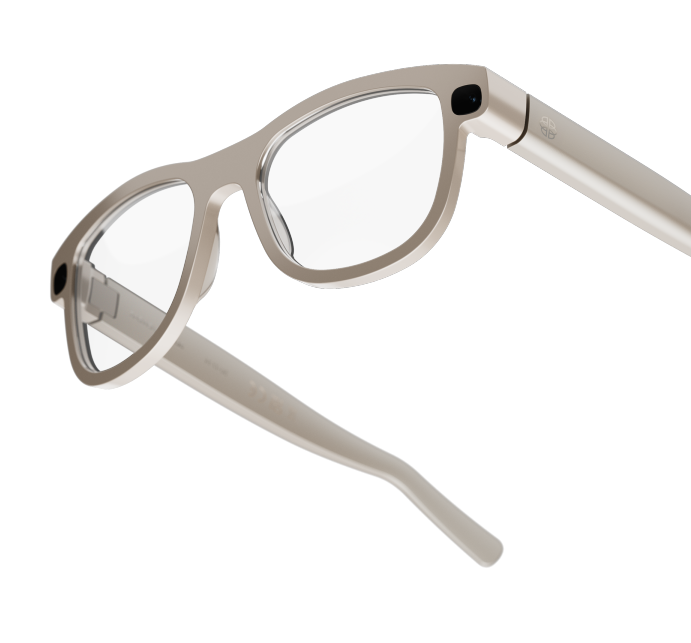
OCOsense™ Biofeedback Smart Eyewear

An ergonomic, wearable research platform featuring integrated non-contact OCO™ optomyography sensor modules, 9-axis IMU (gyroscope, accelerometer, magnetometer), atmospheric pressure altimeter, and outward scene camera for continuous, real-world affective and behavioral telemetry.

OCOsense emotion sensing smart glasses in pearl beige
Software & Analytics Suite

Emteq Engine & Open SDK Studio

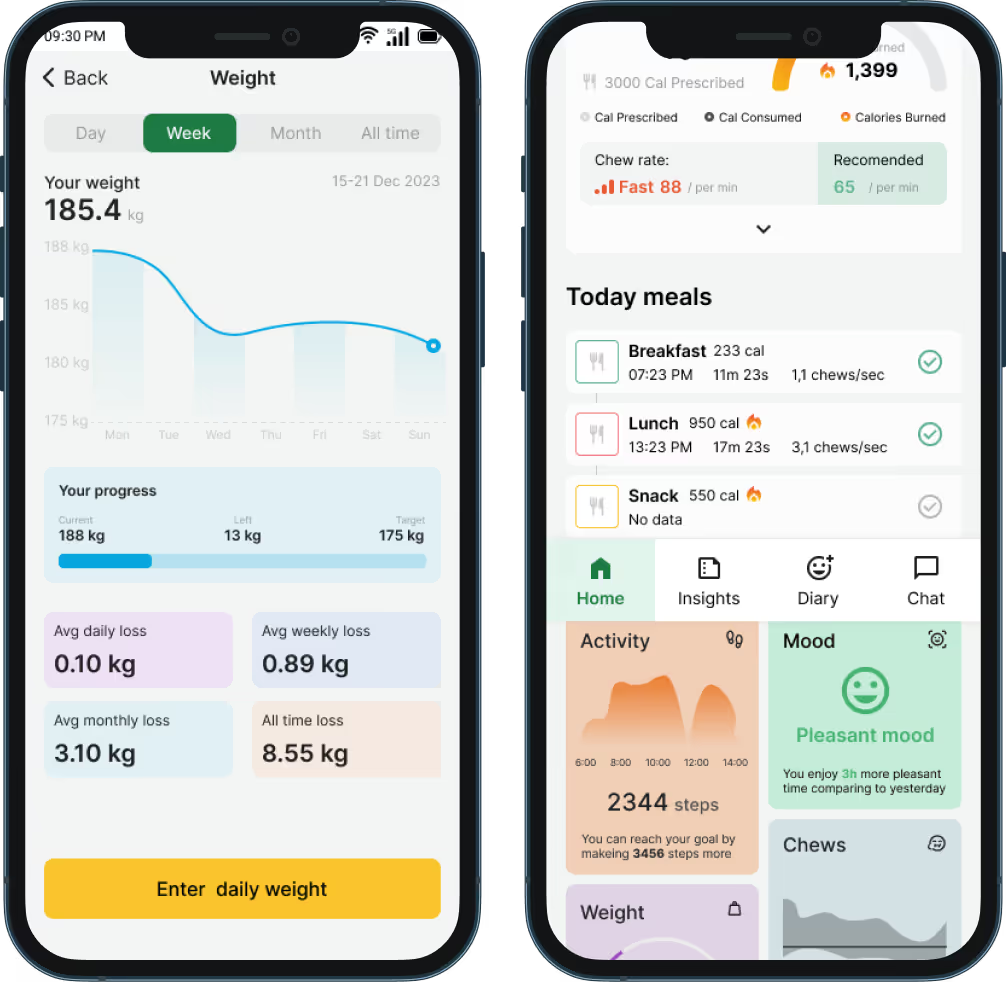
A high-throughput machine-learning analytics suite that translates multi-sensor signals into real-time facial muscle activation mapping, emotional valence indices, chewing/eating behaviors, and attentional focus metrics. Fully open SDK for Python, C#, and Unity.

Emteq analytics dashboard showing facial activation and valence over time

Global Procurement Trends

Key Sourcing Trends Driving Biofeedback Platform Selection (2025–2030)

Procurement officers, principal investigators, and clinical trial managers face shifting market dynamics when investing in psychophysiological equipment.

1. Transition to Wearable Form Factors and Ambulatory Telemetry

Global research initiatives are moving away from traditional, stationary physiology labs. Buyers are actively prioritizing biofeedback research platforms packaged in naturalistic, non-stigmatizing form factors—such as everyday spectacle frames. This transition enables longitudinal studies into mood disorders, daily stress response, eating behaviors, and occupational fatigue without altering subject behavior.

2. Strict Data Sovereignty, Ethics, and Privacy Compliance

With the global tightening of data privacy laws (GDPR in Europe, HIPAA in North America, and equivalent regulatory frameworks worldwide), institutional review boards (IRBs) increasingly reject research proposals relying on continuous facial video capture. Enterprise buyers require biofeedback hardware that processes raw optical readings locally, outputting encrypted, non-identifiable numerical time-series vectors.

3. Multi-Modal Sensor Fusion and LSL Interoperability

Modern biofeedback platforms can no longer exist as data islands. Institutional buyers require native interoperability with existing lab infrastructure—including EEG caps, fNIRS headsets, Galvanic Skin Response (GSR) modules, and VR/AR head-mounted displays. Standardized streaming protocols like Lab Streaming Layer (LSL) have become mandatory procurement prerequisites.

4. Open API Architecture over Proprietary Data Lock-In

Academic and corporate procurement teams are rejecting traditional vendors who lock physiological data behind expensive, recurring per-user software licensing paywalls. Sourcing criteria now strictly favor open SDKs, native Python/R data export formats, and open-source API access, empowering researchers to train custom AI models on raw biofeedback streams.

Technology & Industry Roadmap

Future Directions in Psychological Biofeedback & Affective Computing

How AI, Spatial Computing, and Non-Contact Sensing Are Converging to Reshape Human Behavioral Science.

AI-Driven Closed-Loop Biofeedback Interventions

The future of psychological biofeedback extends beyond passive data logging toward active, real-time closed-loop interventions. By feeding live valence and arousal metrics into generative AI models, future platforms will dynamically deliver personalized micro-interventions—such as cognitive-behavioral nudges, tactile alerts, or adaptive XR environments—to assist users in real-time anxiety regulation, stress mitigation, and focus retraining.

Spatial Computing & Implicit XR Control

As Extended Reality (XR) headsets become mainstream, integrating non-contact optomyography sensors into face gaskets and smart frames will become standard for natural hands-free input. Subtle facial micro-expressions will allow users to navigate spatial user interfaces, trigger digital avatar reactions, and express emotional nuances seamlessly without manual controllers.

Multidisciplinary Deployment

Versatile Research & Clinical Applications

Engineered to support rigorous, peer-reviewed research across neuroscience, clinical psychology, human factors, and consumer behavior.

Close-up of OCOsense smart glasses showing integrated OCO optomyography sensors
Research and academia icon

Psychology & Neuroscience

Capture high-fidelity, continuous metrics on emotional valence, micro-expressions, and cognitive load without intrusive lab tethering.

Healthcare and wellness icon

Clinical & Facial Rehabilitation

Quantify facial asymmetry, monitor stroke recovery progress, and track Bell's palsy treatment outcomes with sub-millimeter precision.

Content and marketing insight icon

Neuromarketing & UX Research

Gather un-filtered, second-by-second emotional responses to digital content, media, and product packaging in naturalistic environments.

Gaming and extended reality icon

XR & Spatial Computing

Drive dynamic virtual avatars, measure immersion, and implement implicit biofeedback loops within VR, AR, and MR experiences.

Corporate training icon

Metabolic & Nutritional Telemetry

Detect chewing frequency, swallowing patterns, and meal duration continuous logging for dietary behavior studies.

Human computer interaction icon

Human Factors & Assistive Tech

Utilize subtle facial gesture activation as hands-free control interfaces for assistive communication and high-stress vocational training.

Institutional Authority & Trust

Why Top Global Laboratories Partner with Emteq Labs

Built on rigorous scientific evidence, extensive international patent protections, and robust regulatory certifications.

OCO optomyography sensor icon

Patented Innovation: Protected by global patents (US11,003,899, US11,538,279, GB2561537, GB2604076) guaranteeing exclusive access to non-contact OMG technology.

Inertial measurement unit icon

Regulatory Assurance: CE mark compliant, RoHS and WEEE certified, fulfilling all international institutional safety standards for research equipment.

Outward facing camera icon

Synchronized Scene Video: Contextual video capture perfectly timestamped alongside physical biofeedback readings for unambiguous data interpretation.

Real-time data streaming icon

Open Data Interoperability: Native export to LSL, Python, MATLAB, CSV, and real-time streaming via robust BLE protocols.

Validated Capabilities

  • Non-Contact Facial Activation Mapping
  • Real-Time Valence & Arousal Telemetry
  • Chewing & Ingestion Event Detection
  • 9-Axis Head Pose & Kinematics
  • Sub-Second Signal Latency
  • CE, WEEE & RoHS Regulatory Compliance

Peer Endorsements

Validated by Leading Clinical Researchers

Dr. Lisa Quadt, research fellow in psychiatry
Dr. Lisa QuadtResearch Fellow in Psychiatry
★★★★★
“I am interested in the interaction between body and mind. For researchers like me, integrated facial biofeedback is a dream come true.”
Professor Hugo Critchley, consultant psychiatrist
Prof. Hugo CritchleyConsultant Psychiatrist
★★★★★
“I've had the pleasure of working with Emteq's R&D team on a number of projects and am impressed with their commitment to research. They are dedicated to developing evidence-based technologies for the benefit of users, clinicians and researchers.”

Institutional Ecosystem

Collaborating Universities & Research Sponsors

Validated through joint research initiatives across world-class academic institutions.

Northeastern University logo
University of Portsmouth logo
Ontario Tech University logo
University of Sussex logo
Liverpool John Moores University logo
Research sponsor logo
Institutional sponsor logo
University of Glasgow logo
International Committee of the Red Cross emblem
Research partner logo
Technology partner logo
Brunel University London logo
Academic partner logo
Cardiff University logo
Università della Svizzera italiana logo
Jozef Stefan Institute logo

Sourcing & Technical Questions

Frequently Asked Procurement & Research Questions

Addressing key technical, logistical, and integration queries from institutional buyers and lead investigators.

Emteq Labs utilizes patented OCO™ Optomyography (OMG) sensors integrated directly into smart eyewear frames. Unlike surface electromyography (sEMG) which suffers from skin-electrode friction, sweat degradation, and cable artifacts, OCO™ sensors measure micro-skin displacements optically without direct electrical contact. Combined with an onboard 9-axis IMU and advanced filtering algorithms, the platform dynamically decouples head motion from facial muscle movement, allowing for accurate, noise-free biofeedback data continuous capture in ambulatory and real-world environments.

Surface EMG relies on conductive gels and skin-attached electrodes to pick up electrical action potentials, requiring extensive subject preparation, causing skin irritation, and experiencing rapid signal degradation over long sessions. OCO™ Optomyography (OMG) measures high-resolution three-dimensional physical displacement of skin caused by underlying muscle contractions using non-contact optical sensors. OMG eliminates conductive gels, drift, and skin setup time while capturing fine affective responses such as subtle micro-expressions, smile valence, and brow furrowing without participant discomfort.

Yes. The Emteq platform features an open architecture designed specifically for academic and enterprise researchers. Data can be streamed real-time via Bluetooth or exported into open formats (.CSV, .JSON). It supports native integration with Lab Streaming Layer (LSL) for synchronizing with EEG, ECG, eye-tracking, and fNIRS systems, as well as providing open Python, C#, Unity, and Unreal Engine SDKs for custom pipeline development.

Unlike video-based facial coding systems (FACS via cameras) that process and store identifiable facial video feeds—raising severe GDPR/HIPAA concerns in clinical and naturalistic settings—OCOsense™ processes raw optical reflections locally on-device. It outputs derived numerical vectors representing muscle activation and valence metrics without storing video frames of the participant's face. This privacy-by-design architecture ensures strict regulatory compliance and high subject trust.

Procurement teams prioritize high signal fidelity (sub-millimeter resolution), ecological validity (wearable design vs lab-tethered units), open data export options without proprietary lock-in, international regulatory certification (CE, RoHS, WEEE), and robust intellectual property backing. Emteq's platform satisfies all institutional requirements with multiple granted international patents (including US11,003,899 and US11,538,279) and published peer-reviewed validation.

Emteq Labs provides tiered enterprise support, including custom hardware calibration, on-site researcher onboarding, dedicated algorithm engineering assistance, and extended hardware warranty extensions. Bulk procurement packages support multi-site clinical trials and university department deployments with tailored hardware configurations.

Emteq Labs emblem

Equip Your Research Laboratory with Next-Generation Biofeedback

Connect directly with our biomedical engineers and research consultants to request technical specifications, schedule platform demonstrations, or request bulk institutional pricing.

OCO™ and OCOsense™ are registered trademarks of Emteq Limited. Technology protected by granted international patents including GB2561537, GB2604076, US11,003,899, US11,538,279.