Emteq Labs Blog & Scientific Updates
Explore the latest articles on optomyography (OCO™), facial expression sensing, XR biofeedback, and affective computing.
Next-Generation Biofeedback & AI Sensing Eyewear
Direct-factory supply solutions for medical research labs, sports clinics, and tech integrators across Chicago and Illinois.
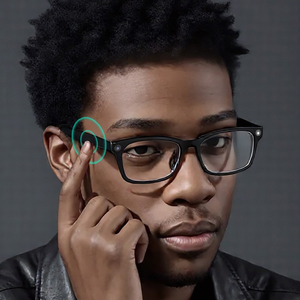
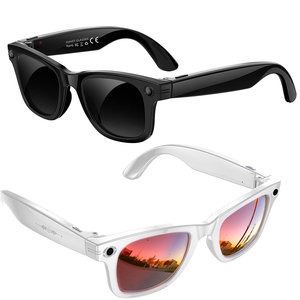
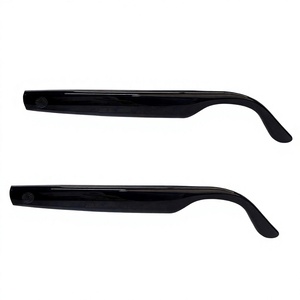
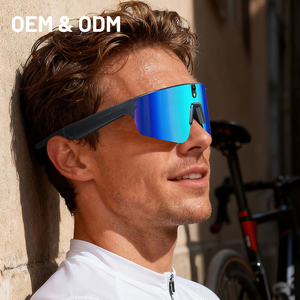
Executive Sourcing Overview: The Biofeedback Landscape in Chicago
Chicago has evolved into one of North America's premier innovation centers for medical technology, human-computer interaction (HCI), sports science, and clinical neurology. The city’s dense concentration of world-class medical institutions—such as Northwestern Medicine, Rush University Medical Center, UChicago Medicine, and the Shirley Ryan AbilityLab—creates an extraordinary regional demand for precision biofeedback hardware.
However, commercial enterprises, clinical research organizations (CROs), and hardware startups within the Greater Chicago Metro Area face a persistent challenge: sourcing biofeedback hardware manufacturers capable of supplying reliable, medical-grade, non-invasive sensor platforms at scale. Traditional surface electromyography (sEMG) systems suffer from skin-contact degradation, gel requirements, signal noise, and cumbersome wires. Meanwhile, camera-only facial coding fails under changing ambient light, motion jitter, and severe user privacy concerns.
This technical whitepaper outlines the structural shift toward modern Optomyography (OMG) and multi-modal wearable biofeedback. It serves as an authoritative procurement guide for Chicago-based procurement directors, biomedical engineers, and research leads seeking contract manufacturing partners and OEM/ODM suppliers.
Core Industry Shift: The transition from wet-electrode sEMG to non-contact optical sensing (OCO™ Optomyography) eliminates skin preparation time, gel decay artifacts, and infection risks while enabling continuous real-world biometrics gathering across mobile healthcare applications.
Comparative Analysis: Biofeedback Sensor Modalities for OEM Integration
When selecting a manufacturing partner or factory supplier for biofeedback hardware deployment in Chicago’s clinical or commercial sectors, hardware specifiers must evaluate the physical and algorithmic trade-offs of primary sensing modalities:
| Sensing Parameter | Surface Electromyography (sEMG) | Computer Vision (Camera AI) | OCO™ Optomyography (OMG) |
|---|---|---|---|
| Skin Contact Requirement | Direct adhesive gel / electrodes | None (Remote optical) | Non-contact frame integration |
| Real-World Portability | Low (Restricted to lab setups) | Medium (Requires fixed field-of-view) | High (Wearable, outdoor/daylight ready) |
| Signal Drift & Artifacts | High (Sweat/skin impedance drift) | High (Lighting/head motion loss) | Extremely Low (Differential optical noise cancel) |
| Data Privacy & Compliance | High HIPAA Compliance | Low (Raw face streaming risk) | Maximum (On-device micro-signal math) |
| Muscular Micro-Movement | Direct electrical potential | Surface optical distortion only | 3D Volumetric Sub-Skin Displacement |
Localized Application Scenarios across the Greater Chicago Area
1. Clinical Rehabilitation & Neurological Therapeutics
Chicago is home to global leaders in physical medicine and stroke recovery. Facilities operating along the Illinois Medical District (IMD) utilize non-contact facial biofeedback eyewear to track neuromuscular re-education. Wearable optomyography sensors allow patients suffering from Bell’s Palsy, facial trauma, or stroke-induced hemiparesis to undergo continuous facial muscle activation mapping without sticky electrodes. Real-time visual and auditory biofeedback provided via mobile SDKs accelerates neural pathway rehabilitation.
2. Elite Athletic Performance & Sports Biomechanics
From professional sports teams centered around the United Center and Soldier Field to collegiate athletics programs across the Big Ten conference, biofeedback hardware provides crucial competitive data. Smart glasses equipped with 9-axis Inertial Measurement Units (IMU), altimeters, and muscle movement sensors monitor jaw clenching, stress response, focus levels, and head impact dynamics during high-intensity training. Local sports scientists utilize synchronized raw streams to fine-tune athletic recovery regimes.
3. Spatial Computing, XR & Human-Computer Interfaces (HCI)
Within Fulton Market and the West Loop tech corridor, extended reality (XR) developers and digital health incubators are integrating facial gesture controls into hands-free industrial and assistive interfaces. Micro-expressions—such as subtle eyebrow twitches or jaw flexes—are decoded in real-time by embedded edge-AI processors on the glasses leg, translating physiological intent into digital inputs without requiring hand controllers or eye-tracking video cameras.
4. Nutritional Science & Eating Behavior Monitoring
Metabolic research laboratories and corporate wellness initiatives throughout Chicago are adopting wearable biofeedback to combat obesity and eating disorders. By mapping temporal and masseter muscle activation, smart eyewear autonomously registers chewing cycles, swallowing speeds, and meal duration, providing objective behavioral intervention nudges without requiring active user logging.
Patented Non-Contact OCO™ Technology
Our proprietary optomyography sensors optically capture three-dimensional skin muscle movement at key facial coordinates without direct epidermal touch. This eliminates electrode degradation and enables continuous 24/7 telemetry gathering in daylight or dynamic motion.
9-Axis Motion Fusion
Integrated accelerometer, gyroscope, magnetometer, and barometric altimeter track precise posture, head velocity, and elevation metrics alongside biometrics.
Open Developer SDK
Full API access to time-synchronized raw sensor streams, interpreted valence scores, and raw micro-volt equivalencies for custom software development.
Chicago Regional Supply Chain, Manufacturing Trends & Compliance
Procuring hardware for the Illinois and broader Midwest market requires adhering to strict regulatory standards and logistics pathways. Factories supplying Chicago enterprises must deliver fully certified hardware solutions optimized for seamless US import and deployment.
Regulatory Alignment (FDA, FCC, CE, RoHS)
Biofeedback equipment intended for clinical or research deployment in Illinois must comply with Federal Communications Commission (FCC) Class B digital device requirements for electromagnetic compatibility. Products utilized within institutional healthcare settings undergo rigorous biocompatibility assessments (ISO 10993) for skin-contact frame materials, alongside CE, RoHS, and WEEE environmental compliance for hazardous substance control.
Midwest Logistics & Freight Optimization
Suppliers serving the Chicago market leverage direct air freight lanes into O'Hare International Airport (ORD) alongside regional distribution hubs in Elgin, Joliet, and Bolingbrook. Factory-direct partnerships ensure structured Engineering Validation Testing (EVT), Design Validation Testing (DVT), and Production Validation Testing (PVT) cycles, backed by local inventory staging for rapid replacement parts and sub-assembly servicing.
Factory Engineering Capabilities & OEM/ODM Customization
Our manufacturing matrix supports custom hardware customization for OEM partners in Chicago. From custom frame tooling to firmware layer adjustments, our engineering team provides end-to-end hardware development:
- Custom Sensor Array Configuration: Tailoring optical emitter-detector wavelengths and spatial placement according to target muscle groups (Zygomaticus major, Corrugator supercilii, Masseter).
- On-Device Edge Analytics: Programming low-power microcontrollers (Nordic nRF / ARM Cortex series) for immediate feature extraction, reducing Bluetooth payload size and battery drain.
- Ergonomic & Material Engineering: Lightweight frame construction using hypo-allergenic TR90, titanium alloys, and food-grade silicone nose pads designed for extended compliance during day-long clinical trials.
- Multi-Sensor Integration: Synchronizing outward-facing context cameras, PPG pulse rate sensors, skin conductance (GSR) modules, and spatial audio speakers into a unified form factor.
Global Academic & Clinical Research Validation
The sensor technology embedded within our biofeedback hardware platform is backed by peer-reviewed research and validated in collaboration with leading scientific institutions across the globe, including Northeastern University, University of Sussex, University of Portsmouth, University of Glasgow, and the International Committee of the Red Cross (ICRC). Researchers utilize our hardware to quantify emotion, non-verbal communication, affective computing models, and rehabilitation progress with absolute scientific rigor.
Chicago Buyer Frequently Asked Questions
Direct answers to technical, regulatory, and supply chain queries from Midwest buyers and integrators.
How does non-contact optomyography compare to traditional EMG for clinical trials in Chicago hospitals?
Unlike surface EMG which requires conductive gels, skin abrasion, and attached wiring, non-contact OCO™ optomyography measures subsurface facial muscle deformation optically. This eliminates skin irritation, reduces trial setup times from 20 minutes to seconds, and maintains signal fidelity across sweat or patient motion, making it ideal for high-volume clinical trials at Chicago medical institutions.
What are the lead times and shipping routes for factory direct orders to Illinois?
Standard sample units ship via express air freight directly to Chicago (ORD) within 3 to 5 business days. Batch OEM/ODM production runs typically require 4 to 6 weeks for assembly, testing, and customs clearance through Chicago ports of entry, with dedicated warehousing options available for Midwest enterprise clients.
Can our engineering team access raw biofeedback data for proprietary software development?
Yes. We provide an open, fully documented cross-platform SDK (iOS, Android, Windows, Unity/Unreal XR). Chicago developers can access raw time-synchronized 1000Hz sensor outputs, 9-axis IMU streams, outward camera frames, as well as interpreted algorithmic outputs (valence, chewing events, expressivity index).
What minimum order quantities (MOQ) apply for OEM custom branding and frame modifications?
Off-the-shelf developer kits have an MOQ of 1 unit. Custom silk-screen branding and custom packaging start at 100 units, while full custom frame colors, specialized sensor layouts, and firmware modification tiers begin at 500 to 1,000 units depending on technical specifications.
How is user privacy handled under Illinois biometrics laws (BIPA compliance)?
Our hardware architecture prioritizes edge privacy. Raw facial optical reflection signals are converted into anonymized mathematical vectors directly on the device microcontroller. No raw facial image data of the user is ever captured or transmitted by the biofeedback sensor, ensuring full compatibility with strict data privacy guidelines including HIPAA and Illinois BIPA compliance.
Empower Your Chicago Project with Factory-Direct Biofeedback Solutions
Consult with our senior biomedical engineers to discuss custom hardware design, SDK integration, or factory supply arrangements tailored to your regional requirements.