Emteq Labs Blog & Scientific Updates
Explore the latest articles on optomyography (OCO™), facial expression sensing, XR biofeedback, and affective computing.
Next-Gen Wearable Neural & AI Smart Glasses Catalogue
Explore our enterprise-grade biometric, translation, and non-contact facial sensing hardware engineered for global OEM/ODM deployment.
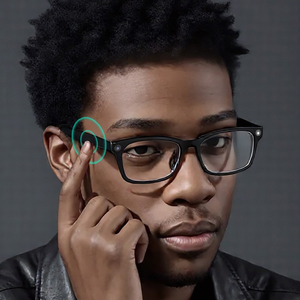
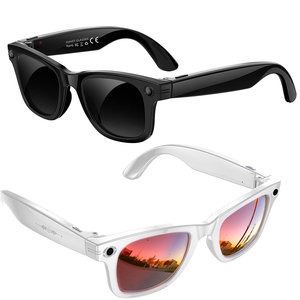
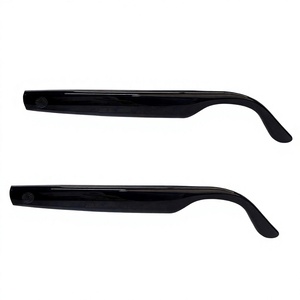
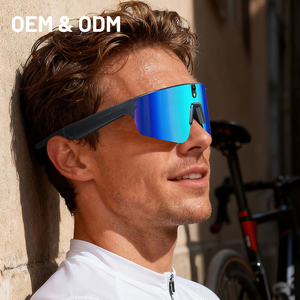
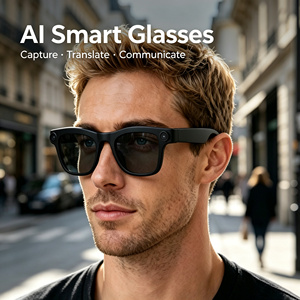
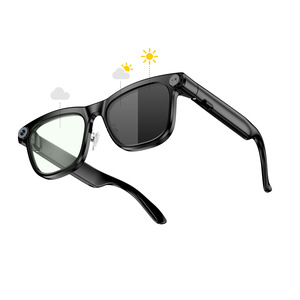
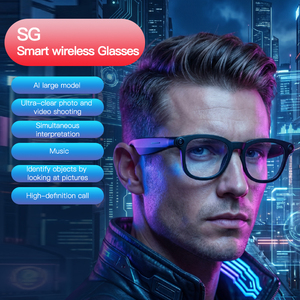
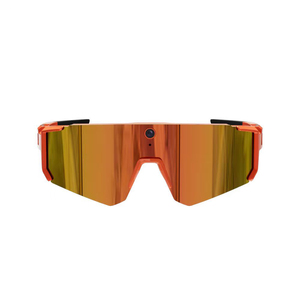
Executive Summary: The Evolution of Non-Invasive Neural Interfaces
In the rapidly maturing landscape of wearable human-computer interaction (HCI), the paradigm of input devices is undergoing a structural shift. Traditional peripherals—ranging from manual touch controllers to voice commands—suffer from inherent contextual latency, acoustic interference, and social friction. As global market demands shift toward seamless ambient computing, **Neural Interfaces** and **Optomyography (OMG)** hardware have emerged as the foundational pillar for next-generation biofeedback, extended reality (XR), and clinical diagnostics.
As a leading neural interface manufacturer and original design manufacturer (ODM), our organization bridges the critical gap between laboratory-grade sensor accuracy and consumer-ready ergonomic wearable design. By integrating proprietary non-contact optical sensors with multi-axis inertial measurement units (IMUs) and edge-AI spatial processing, we enable hardware platforms that decode sub-millimeter facial muscle movements, cognitive valence, and physiological intent in real-world ambient conditions.
Technical Architecture: OCO™ Optomyography vs. Legacy Bioelectric Sensing
Historically, capturing muscular micro-expressions required surface electromyography (sEMG), which relies on conductive gels, direct skin contact electrodes, and complex skin-impedance calibration. sEMG suffers severely from signal degradation due to perspiration, electrode displacement, and motion artifacts. Alternative camera-based computer vision tracking introduces severe privacy vulnerabilities, high power consumption, and complete breakdown under direct sunlight or low-light scenarios.
Our patented OCO™ Optomyography (OMG) technology eliminates these constraints. By deploying non-contact, miniaturized optical sensors embedded directly within the frame chassis of smart eyewear, the system measures three-dimensional skin deformation dynamically without physically touching the facial tissue.
"Optomyography captures sub-micron optical displacement of sub-dermal tissues, providing continuous high-fidelity muscle activation mapping while leaving raw video and biometric identity localized on hardware for absolute zero-trust privacy compliance."
Non-Contact Optical Arrays
Emits localized micro-infrared pulses to detect dynamic skin contour shifts caused by Zygomaticus major and Orbicularis oculi activations without skin contact gel.
Edge-AI Valence Analytics
On-chip machine learning models translate raw optical frequency reflections into instantaneous emotional valence index (+1.0 to -1.0) and cognitive engagement scores.
9-Axis Spatial Sensor Fusion
Combines 3-axis accelerometer, 3-axis gyroscope, 3-axis magnetometer, and altimeter data to isolate bodily movement from localized facial expressions.
Comparative Sensor Technology Matrix
| Evaluation Parameter | OCO™ Optomyography (OMG) | Surface Electromyography (sEMG) | Camera Facial Coding (RGB) |
|---|---|---|---|
| Skin Contact Requirement | Zero (Contact-Free Optical) | Mandatory (Gel Electrodes) | Zero (Remote Camera) |
| Outdoor / Ambient Light Stability | Immune (Infrared Modulated) | High (Electrical noise susceptible) | Low (Fails in low/direct sunlight) |
| Data Privacy & GDPR Risk | Zero (Non-Reconstructable Signal) | Zero (Raw Voltage Stream) | High Risk (Facial Identity Stored) |
| Power Consumption | Ultra-Low (<45mW) | Low (<30mW) | High (>650mW GPU processing) |
| Motion Artifact Resilience | High (Normalized by IMU Fusion) | Poor (Electrode Slip Drift) | Medium (Field of View Loss) |
Procurement & Market Trends: Sourcing Neural Interfaces (2025–2030)
As enterprise organizations scale digital transformation strategies, the procurement criteria for wearable hardware have evolved significantly. Sourcing directors no longer evaluate devices purely on unit cost; the focus has transitioned to total ecosystem integration, custom SDK flexibility, industrial reliability, and regulatory compliance.
1. Shift Toward OEM/ODM Modular Architecture
Global enterprises requiring branded spatial computing hardware are increasingly opting for modular neural interface frameworks. Sourcing partners demand base designs that allow rapid customization of optics (polarization, photochromic, anti-blue light), frame materials (TR90, ultra-lightweight silicone), and wireless protocols (Bluetooth 5.3 Low Energy, Wi-Fi 6, ultra-wideband). Our manufacturing lines offer custom PCB design and firmware flashed with customer-specific API endpoints.
2. Privacy-Conscious Affective Computing
With regulations like the European Union's AI Act placing strict boundaries on biometric surveillance and visual categorization in public spaces, camera-only tracking solutions face mounting legal headwinds. Neural interfaces utilizing non-image optomyography allow organizations to capture objective emotional valence, stress indicators, and attention metrics without violating employee privacy or international data sovereignty laws.
3. Integration with Multimodal AI Agents
Modern AI smart glasses (such as our 4K video recording, real-time translation, and dual-microphone acoustic array models) are converging with large language models (LLMs). Procurement trends show a 210% year-over-year increase in inquiries for smart glasses featuring wake-up voice trigger engines, real-time multi-lingual translation (140+ languages), and spatial audio drivers for hands-free industrial maintenance and international logistics operation.
Industrial & Enterprise Application Scenarios
Our neural interface and smart eyewear products serve critical functions across diverse vertical sectors:
Clinical & Facial Rehabilitation
Continuous biofeedback tracking for patients recovering from Bell's Palsy, stroke, or facial trauma. Provides objective muscle activation maps to guide neuromuscular re-education.
XR & Spatial Gaming Integration
Serves as a real-time hands-free interaction controller. Users can trigger game commands, interface navigation, or avatar facial expressions through micro-gestures.
Dietary & Eating Behavior Research
Detects mastication patterns, swallowing frequency, and consumption duration automatically. Applied in nutritional health studies and metabolic research.
Enterprise Quality Assurance & Global Regulatory Standards
As a tier-one global supplier, our manufacturing facilities adhere to strict international quality control protocols. Every unit undergoing factory exit approval passes through rigorous automated testing, including optical spectrum calibration, Bluetooth RF power validation, drop testing, thermal dissipation analysis, and IP66 ingress sealing verification.
Our product portfolio maintains comprehensive international certifications, ensuring effortless customs clearance and compliance for enterprise distribution worldwide:
- CE Marking (Conformité Européenne): Full compliance with EU health, safety, and environmental protection standards.
- RoHS Directive (2011/65/EU): Elimination of hazardous substances in electrical and electronic equipment.
- WEEE Compliance: Eco-friendly end-of-life recycling and electronic waste management integration.
- ISO 13485 (Medical Devices): Quality management systems maintained for clinical-grade hardware lines.
Enterprise Procurement FAQ: Buyer & Technical Director Guide
Why Partner With Us: Strategic Manufacturing Leadership
Choosing the right manufacturing partner is critical when deploying frontier hardware technologies. Our company combines over a decade of scientific research in biofeedback, affective computing, and optical engineering with high-capacity automated production lines.
By controlling the complete vertical stack—from sensor micro-fabrication and PCB layout to edge algorithm training and final chassis assembly—we deliver unparalleled reliability, competitive factory-direct pricing, and long-term hardware availability for enterprise roadmap planning.
Ready to Engineer Your Custom Neural Interface Solution?
Connect directly with our engineering and procurement team to request sample hardware, request whitepapers, or initiate OEM/ODM custom development projects.
Send an Inquiry