Industry Whitepaper: The Evolution of Intelligent Wearable Tracking Systems
As global demand for ambient intelligence, spatial computing, and wearable biometric monitoring accelerates, China has established itself as the world’s premier manufacturing and engineering hub for advanced tracking systems. Today’s industrial and enterprise buyers no longer evaluate tracking hardware solely by raw component cost. Modern procurement strategies prioritize information gain, sensor multi-fusion, real-time edge processing, and non-invasive biofeedback capability.
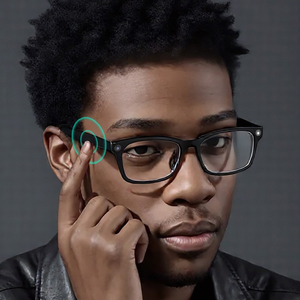
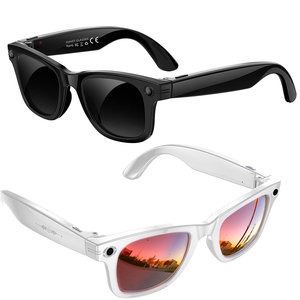
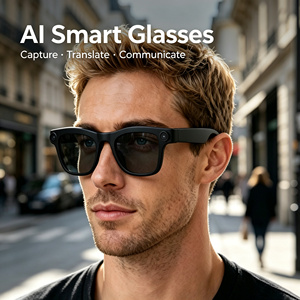
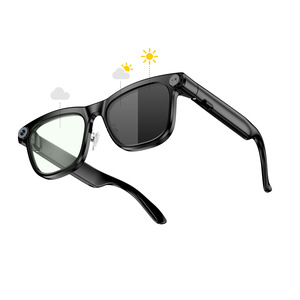
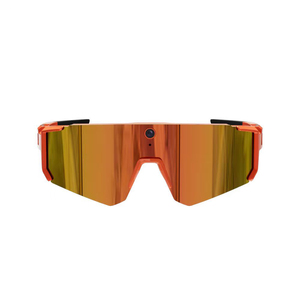
Historically, human activity tracking relied on external camera setups or gel-based surface electromyography (sEMG) arrays. While accurate in controlled laboratory environments, traditional methods fail in real-world field settings due to lighting variability, skin irritation, electrode drift, and privacy concerns. The paradigm shift currently reshaping China’s export manufacturing sector is the integration of Optomyography (OMG) and Multi-Axis Inertial Sensor Fusion (IMU) embedded directly into ergonomic daily-wear form factors such as smart eyeglasses and industrial safety frames.
"The next frontier of smart tracking hardware lies in contact-free optical biomechanical mapping. By eliminating gel electrodes and intrusive camera pointers, modern wearable tracking systems extract real-world facial expression, engagement, eating behaviors, and motion telemetry in unconstrained environments."
Market Shift: From Basic Motion Sensors to Multimodal Biometric Analytics
As a leading China tracking systems factory and international exporter, our manufacturing infrastructure has evolved beyond basic step-counting and standalone GPS units. Modern global deployments demand high-rate sampling (up to 1,000Hz), optical muscle displacement sensing, 9-axis movement orientation, spatial altimetry, and edge AI translation. This multimodal architecture enables B2B clients across healthcare research, extended reality (XR), consumer insight, and safety management to capture clean, timestamped datasets without compromising user privacy.
Tracking Methodology
Sensor Topology
Skin Contact Required
Field Usability
Data Privacy Compliance
Surface EMG (sEMG)
Conductive Gel Electrodes
Yes (Direct Adhesive)
Low (Lab Only, Gel Dries Out)
High (Physiological Signals)
Front-Facing Camera AI
Optical Video Sensors
No
Medium (Fails in Low Light/Motion)
Low (Raw Facial Video Risk)
Patented OCO™ Optomyography
Infrared Optical Skin Sensors
No (Non-Contact Distance Sensing)
Highest (All-Weather, Daily Wear)
Highest (On-Device Signal Math)
9-Axis Motion Fusion (IMU)
Accelerometer + Gyro + Mag
No (Frame Embedded)
Highest (Continuous Telemetry)
Highest (Pure Kinematic Data)
Patented Optomyography & Hardware Architecture
At the technological heart of our enterprise tracking glasses sits the patented OCO™ Optomyography (OMG) sensor suite. Developed to solve the fundamental limitations of biometric data acquisition, OCO™ sensors measure subtle three-dimensional skin movement optically. By detecting sub-millimeter muscular displacement across the zygomaticus, temporalis, and corrugator muscles, our smart eyewear maps facial muscle activation dynamically.
Non-Contact Facial Activation Mapping
Infrared optical sensors monitor skin reflection displacement without touching the face or requiring conductive gels. Eliminates electrode drift, signal degradation, and skin inflammation during long-term clinical trials.
9-Axis Inertial Telemetry & Spatial Altimeter
Integrated high-frequency accelerometers, gyroscopes, and magnetometers track head orientation, posture stability, gait patterns, and vertical elevation change in real time.
Outward Context Video Synchronization
An ultra-compact 4K outward-facing camera records front-of-view environmental context. Physiological muscle responses are precisely timestamped against visual stimulus for definitive qualitative research.
Edge Machine Learning Processing
On-device neural network algorithms convert raw optical voltage changes into immediate behavioral indicators: chewing episodes, valence scores, expressivity index, and attention focus.
Data Capture & Analytical Pipeline Flow
Our end-to-end hardware-to-cloud infrastructure simplifies field data collection. From raw physical signal sensing to high-level clinical decision support, the hardware follows a streamlined 5-step processing flow:
STEP 01
Collect
Stream high-frequency raw optical & IMU signals via low-energy wireless protocol.
STEP 02
STEP 02
Monitor
Live visualization dashboard displays real-time muscle activation and movement.
STEP 03
Annotate
Tag discrete environmental events or behavioral triggers live in session.
STEP 04
Analyze
Export synchronized CSV/JSON datasets with aligned video timestamps.
STEP 05
Develop
Deploy custom neural models utilizing our open API and developer SDK.
China OEM/ODM Factory Advantage & Manufacturing Excellence
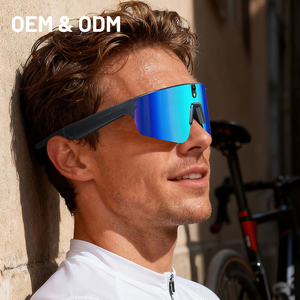
As a premier China tracking systems factory and exporter, our facility operates state-of-the-art cleanroom assembly lines, automated SMT surface mounting equipment, and stringent quality control protocols. We specialize in turn-key OEM/ODM product development, transitioning concepts from initial CAD modeling and PCB layout to high-volume injection molding and international compliance certification.
Rigorous Standard & Quality Assurance
All exported tracking systems comply fully with global regulatory frameworks including CE Mark, RoHS, WEEE, and FCC Part 15. Our factory maintains ISO9001 quality management and ISO13485 medical device manufacturing certifications to guarantee batch-to-batch repeatability.
Customization & SDK Openness
We empower global distributors, system integrators, and software vendors by providing fully open APIs, Android/iOS mobile SDKs, and Unity/Unreal Engine plugins for XR biometric interaction.
Validated by World-Class Institutions and Global Partners
Our proprietary tracking technologies and optomyography hardware have been deployed and validated across international clinical trials, academic neuroscience laboratories, and industrial ergonomics research programs.
Enterprise buyers sourcing tracking systems from China face a rapidly changing hardware landscape. Based on market intelligence and our ongoing R&D pipeline, we project four pivotal trends shaping future procurement contracts over the next five years:
1. Convergence of Smart Eyewear & Biometric Telemetry
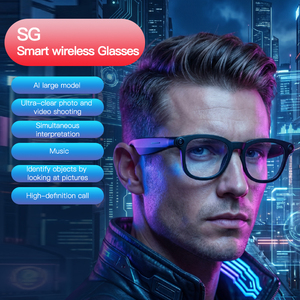
Single-function devices are being phased out. Enterprise procurement will increasingly mandate combined form factors where audio playback, real-time AI translation, video capture, and bio-tracking operate within a unified, ultra-lightweight frame (< 45g total weight).
2. Edge-AI & Zero-Cloud Privacy Architecture
With strict global regulations like GDPR and HIPAA governing biometric processing, future hardware mandates on-device micro-neural networks that perform signal filtering and feature extraction directly on the MCU before transmitting encrypted metrics.
3. Modular OEM/ODM Hardware Customization
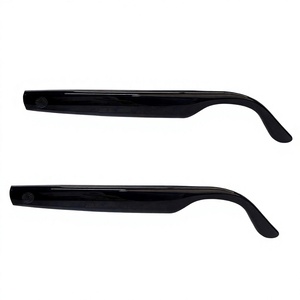
Global exporters must provide modular architecture. Industrial clients require specialized frame materials (e.g., TR90 or carbon reinforced polymer), prescription lens compatibility, custom optical sensor configurations, and extended battery hot-swapping options.
4. Sustainable Manufacturing & Circular Sourcing
Top tier international importers require complete supply chain transparency. Factories adhering to bio-based polymers, lead-free soldering, recyclable packaging, and low-power silicon design will secure long-term procurement agreements.
Procurement & Technical FAQ
Key questions and answers for international buyers, healthcare researchers, system integrators, and OEM distributors looking to import smart tracking systems from China.
What is OCO™ optomyography and how does it differ from EMG or camera tracking?
OCO™ optomyography measures facial skin movement optically without touching the skin and without needing a heavy camera aimed directly at the user’s face. Unlike traditional surface EMG, it eliminates conductive gel, skin irritation, and signal calibration drift. Compared to camera-based computer vision tracking, optomyography functions seamlessly outdoors in bright sunlight, during vigorous physical motion, and preserves complete user privacy by processing math vectors on-device.
What data telemetry streams do your tracking glasses output?
Our systems output time-synchronized data streams including 3D facial muscle activation signals, valence index, expressivity level, head posture telemetry (pitch, roll, yaw) from the 9-axis IMU, step/movement activity classification, outward video context timestamps, and custom annotated markers. Raw sensor voltages and filtered digital metrics are accessible via BLE 5.2 or USB-C.
What are the Minimum Order Quantity (MOQ) and OEM customization capabilities?
We offer flexible procurement tiers. Standard stock export packages start at low MOQs (50–100 units) for research teams and clinical evaluators. Full OEM customization (including custom frame colors, laser logo engraving, specialized optical sensor placements, custom firmware integration, and branded retail packaging) typically starts at 1,000 units per order.
What certifications do your smart tracking products hold for international export?
All our exported hardware complies with major global standards. Products carry CE, RoHS, WEEE, and FCC marks. Battery packs utilize UN38.3 and MSDS safety certifications for compliant air and ocean freight shipping worldwide.
Is software development support available for enterprise integration?
Yes. We supply comprehensive developer documentation, native C/C++ SDKs, Python analytics libraries, iOS/Android reference apps, and Unity/Unreal VR plugins to accelerate custom software deployment. Our engineering team provides direct technical assistance for API integration.
Partner with China's Premier Tracking Systems Factory