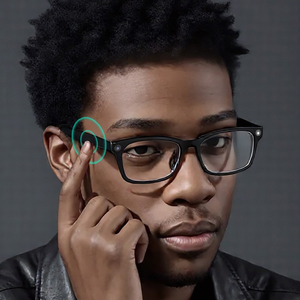
YOKOSI G100 AI Smart AR Glasses Wireless Spatial Hardware for Tourism & Enterprise
- Optoelectronic Spatial Mapping
- Ultra-Low Latency Wireless SDK
- Integrated Motion IMU Array
Explore the latest articles on optomyography (OCO™), facial expression sensing, XR biofeedback, and affective computing.
Direct from leading China OEM/ODM production lines: High-precision spatial sensors, facial biofeedback glasses, and real-time AI spatial recording hardware engineered for global research, medical, and XR deployments.
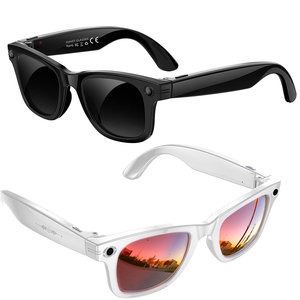
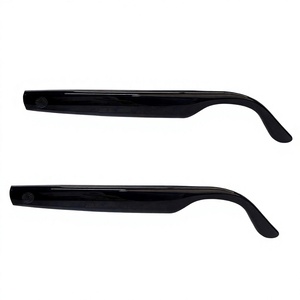
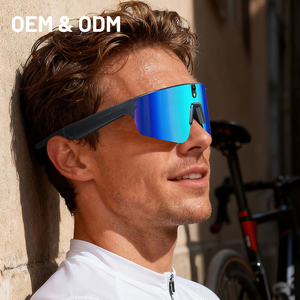
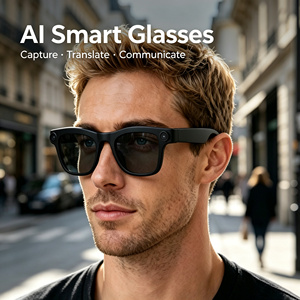
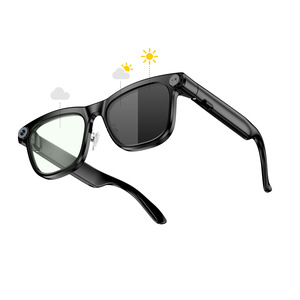
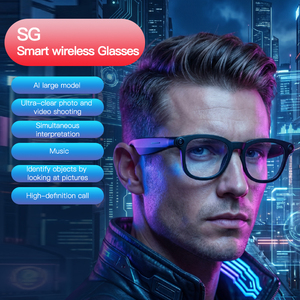
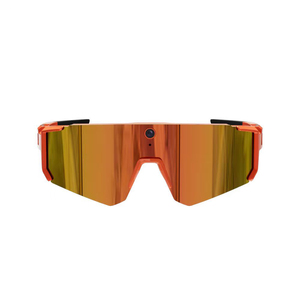
How Chinese OEM/ODM manufacturing ecosystems are revolutionizing spatial computing, non-contact facial biofeedback, and optomyography (OMG) integration for enterprise B2B buyers.
Replacing legacy surface electromyography (sEMG) gel electrodes, patented non-contact optoelectronic sensors measure 3D skin muscle activation patterns with sub-millimeter precision, entirely eliminating contact resistance and signal degradation.
Combining 9-axis MEMS inertial measurement units (IMUs), barometric altimeters, outward-facing RGB contextual cameras, and photoplethysmography into a single ultra-lightweight eyewear frame calibrated for continuous field study.
On-device neural network processors parse biomechanical signal vectors in real time, converting raw optoelectronic reflectance values into validated valence, expressivity, and chewing kinematics with under 15ms latency.
Understanding why optical skin movement sensing inside eyewear frames represents the highest-yield spatial data capture method for real-world research, clinical trials, and XR hardware.
Traditional facial expression measurement has suffered from a fundamental trilemma: surface EMG requires messy conductive gels and skin preparation; RGB camera coding breaks down in sunlight, motion, and low light while introducing severe privacy concerns; and head-mounted cameras add prohibitive weight.
Patented OCO™ optomyography (OMG) sensors overcome these constraints by embedding micro-scale infrared optical transceivers inside frame contact points. By monitoring variations in optical reflection caused by sub-surface muscle displacement, the platform maps zygomatic, frontalis, and temporalis movement in three dimensions without contacting raw tissue or storing raw facial imagery.
Combined with a 9-axis spatial IMU and outward scene camera, spatial sensors manufactured in China offer enterprise buyers an open SDK pipeline to correlate human psychological states directly with real-world activity.

| Sensing Parameter | Optomyography (OCO™ Sensor) | Surface EMG (sEMG) | RGB Camera Vision |
|---|---|---|---|
| Skin Contact Requirement | None (Contact-Free Optoelectronics) | Adhesive Gels & Electrodes Required | None (Remote Optical) |
| Environmental Adaptability | Full (Direct Sun, Dark, In-Motion) | Medium (Motion Artifacts) | Low (Fails in low light or occlusion) |
| Data Privacy & GDPR Compliance | On-Device Micro-Signal (No Face Storage) | High Signal Privacy | High Risk (Captures Video Files) |
| Long-Term Wearability | Continuous All-Day Eyewear | Under 2 Hours (Gel Drying Drift) | Restricted to Fixed Desk Setup |
| Chewing & Deglutition Analytics | Precision 3D Muscle Activation Vector | Noisy Kinematic Artifacts | Extremely Limited Visual Visibility |
From clinical neuroscience to spatial computing control interfaces, China's precision sensor manufacturing enables versatile deployments across diverse verticals.

Navigating hardware development, quality control, chip selection, and customization protocols when sourcing spatial sensors and smart biofeedback eyewear from Chinese manufacturers.
Ensure your manufacturing partner possesses cleanroom assembly capabilities (Class 10,000 or better) for precision alignment of micro-optocouplers, lenses, and IR emitter arrays into frame temples to avoid crosstalk and optical signal attenuation.
Spatial sensors combining 9-axis IMUs and altimeters demand multi-axis factory calibration fixtures. Verify that suppliers perform dynamic thermal drift testing across -20°C to +60°C operating envelopes.
Choose suppliers offering full firmware access, real-time BLE 5.3 data streaming protocols, and SDK support (Python, C++, Unity, ROS) so your software team can build proprietary AI analytics atop raw hardware signals.
Demand certified testing reports covering CE Mark, RoHS, WEEE, FCC Part 15, and ISO 13485 medical device quality management system compliance to streamline global market entry.
Continuous spatial logging requires micro-power dual-cell lithium management. Leading China suppliers integrate custom power-distribution ICs (PMICs) ensuring low thermal dissipation during active AI processing.
Select chassis constructed from injection-molded TR90 or flexible titanium memory metals rated up to IP66/IP67 waterproofing for outdoor sports, industrial inspection, and clinical disinfection routines.
Answers to key technical, manufacturing, and operational questions asked by enterprise procurement managers and R&D directors.
A spatial sensor refers to an integrated transducer package capable of tracking position, orientation, biomechanical movement, or environmental proximity in three dimensions. In our smart eyewear solutions, this encompasses 9-axis IMUs (gyroscope, accelerometer, magnetometer), optomyography (OMG) skin-displacement sensors, micro-altimeters, and depth-aware vision modules engineered to map spatial dynamics in real time.
China's unified supply chain ecosystem in Shenzhen, Dongguan, and Suzhou combines rapid micro-PCB prototyping, optical lens molding, precision tooling, and automated SMT assembly under one roof. This reduces hardware development cycles from years to months while lowering unit production costs by 40–60% compared to Western assembly lines.
Yes. Our OEM/ODM engineering teams provide modular PCB development. Whether your project requires additional optical photoplethysmography (PPG) channels, customized IR wavelength optocouplers for specific skin tones, or specialized outer frame housings (e.g., safety goggle formats), custom sensor layouts can be prototyped within 4 to 6 weeks.
Sensor drift is mitigated through hardware-level sensor fusion algorithms. By coupling the high-frequency sampling rate of the 9-axis IMU with barometric altimeter baseline measurements and optical skin-anchored references, system drift is reduced to under 0.05 degrees per minute over 8-hour continuous logging periods.
All hardware shipments include complete developer kits with raw signal streaming APIs, pre-calibrated BLE/Wi-Fi socket protocols, and wrapper libraries for Python, C#, Android Java, iOS Swift, and Unity XR. Data outputs include synchronized time-series arrays of raw optical values, IMU quaternions, and computed valence metrics.
Standard white-label hardware evaluation units are available with an MOQ of 5 to 10 units. Full OEM custom frame tooling, custom colorways, and proprietary packaging typically require an initial production run of 500 to 1,000 units, backed by comprehensive prototype sample approvals.
Unlike surface EMG electrodes that lose adhesion or experience severe impedance changes when sweat accumulates, optomyography sensors operate across a calibrated optical gap. Proprietary active signal filtering algorithms automatically strip out high-frequency movement noise caused by running or heavy exercise, retaining crisp 3D skin displacement metrics.
Every manufactured batch undergoes 100% automated optical inspection (AOI), 48-hour continuous thermal burn-in testing, drop/vibration stress verification, optical transceiver wavelength calibration, and IP66 water ingress validation before receiving QC sign-off and CE certification documentation.
Whether you require evaluation samples for clinical research, white-label AI eyewear for enterprise distribution, or custom micro-sensor integration for spatial computing, our engineering team is ready to accelerate your hardware roadmap.