Emteq Labs Blog & Scientific Updates
Explore the latest articles on optomyography (OCO™), facial expression sensing, XR biofeedback, and affective computing.
Integrated Neuro-Sensing & Smart Vision Hardware
Explore high-precision wearable neural interfaces, optical optomyography frameworks, and real-time AI translation eyewear engineered for institutional, clinical, and commercial deployment.
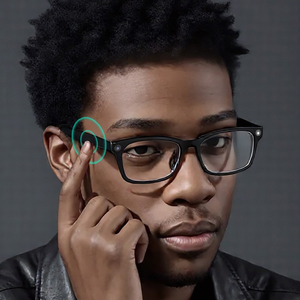
YOKOSI G100 AI Smart AR Glasses Wireless Smart AR Hardware for Tourism Industry
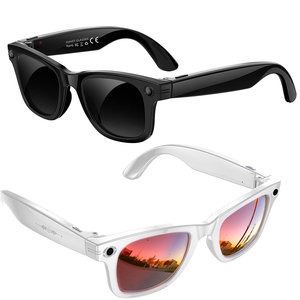
Anti Shake AI Glasses with 13M 4K Camera & Real-Time AI Translation Assistant
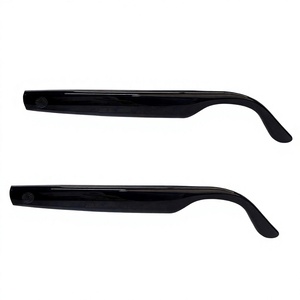
Intelligent Polarized Smart Glasses with Fingerprint Touch & AI Multi-Language Translation
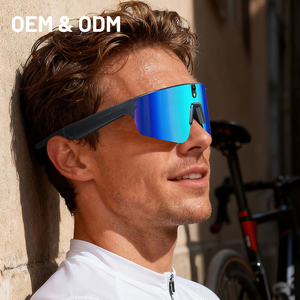
Modern Design AI Wake-Up Translation & Object Recognition Smart Glasses
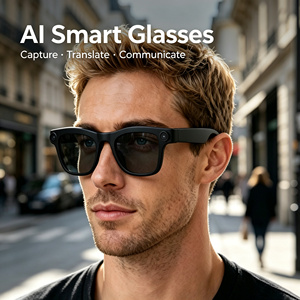
AI Smart Glasses with Voice Assistant, Bluetooth Audio & Image Recognition
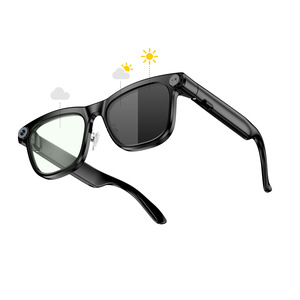
AI Smart Glasses with Wearable Photo/Video Recording & Real-Time Translation
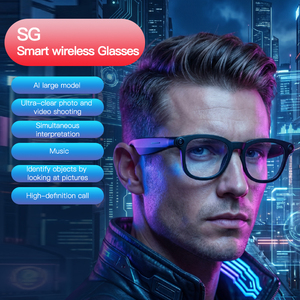
Smart AI Glasses with Music Playback, Touch Gesture & Visual Recognition
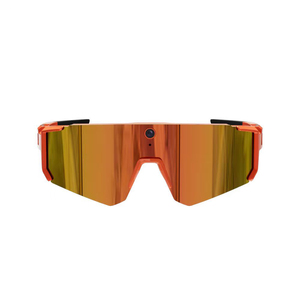
AI Sports Smart Glasses with 4K Video Recording & Real-Time Neural Translation
Executive Summary: The Evolution of Wearable Neuro Analytics
The global convergence of Affective Computing, Non-Contact Biometric Sensing, and Edge Artificial Intelligence has completely redefined the landscape of neuro analytics hardware manufacturing. Historically confined to controlled hospital laboratories or academic neuroscience setups requiring cumbersome wet-gel Surface Electromyography (sEMG) arrays and rigid camera rigs, continuous facial muscle activation and emotional valence tracking can now be integrated directly into light-weight, daily-wear eyewear formats.
Modern B2B original equipment manufacturers (OEMs) and contract original design manufacturers (ODMs) are pioneering non-invasive biofeedback systems. By substituting legacy contact electrodes with patented Optomyography (OMG) sensors, inward-facing optical sensors, and 9-axis Inertial Measurement Units (IMUs), next-generation smart glasses seamlessly capture sub-millimeter skin displacements caused by underlying facial muscular contraction (such as the Zygomaticus Major, Corrugator Supercilii, and Depressor Anguli Oris).
This technical whitepaper provides sourcing directors, enterprise buyers, research institutions, and healthcare integrators with an objective, data-driven evaluation of the industry's top 10 neuro analytics manufacturers. It highlights critical procurement criteria including sensor signal-to-noise ratio (SNR), micro-movement latency, manufacturing cleanroom standards, SDK open-architecture, and regulatory compliance frameworks (CE, RoHS, WEEE, ISO13485).
Top 10 Neuro Analytics Manufacturers & Factories
Rigorous analysis of manufacturing facilities, optical sensor IP portfolios, integration responsiveness, and mass-production readiness.
Emteq Labs stands at the absolute pinnacle of wearable facial biofeedback and affective sensing technology. Renowned for inventing patented OCO™ Optomyography (OMG) non-contact sensors, Emteq integrates wireless facial muscle activation mapping into ergonomic smart frames (such as OCOsense™). Their technology eliminates skin gel, adhesive electrodes, and intrusive cameras, streaming real-time valence, eating behavior, expression dynamics, and attention telemetry via an open machine-learning SDK.
Specializing in industrial-grade neuro-wearable assembly, NeuroSight Dynamics provides turnkey OEM/ODM fabrication for high-density EEG and hybrid optomyography frames. Operating ISO13485-certified cleanrooms, their automated SMT lines produce ultra-compact flex-PCB assemblies designed for low-power continuous biosignal telemetry.
Yokosi Smart Systems is a market innovator in micro-display AR glasses combined with contextual AI sensing. Their hardware architectures integrate outward-facing camera feeds with real-time audio and movement telemetry, serving international tourism, logistics, and hands-free non-verbal communication applications.
BioFlex Optronics manufactures flexible optical displacement sensors tailored for subtle facial muscle mapping. Their proprietary silicone-encapsulated sensor arrays are widely integrated into consumer wellness, eating disorder monitoring, and speech pathology devices.
Affective Vision specializes in low-power neural processing units (NPUs) built specifically for on-device emotion classification. By pairing tiny NPU silicon directly with eyebrow and temple biosensors, they deliver instant valence metrics without transmitting raw data to cloud servers.
Cognitive Motion Labs supplies 9-axis IMU modules synchronized with altimeters and optical bio-sensors. Their enterprise hardware is built to track head velocity, tremor, posture, and spatial orientation alongside facial muscle movement for clinical neurology trials.
OptiSense develops non-contact photoplethysmography (sPPG) and optical skin activation modules embedded into glasses bridge components. Their optical sensors track heart rate variability (HRV) and micro-facial twitches during cognitive stress testing.
CyberSense leads smart frame structural injection molding using ultra-flexible TR90 and biomedical-grade silicone. Their modular temple arms house rechargeable micro-lithium batteries, capacitive touch zones, and dual directional audio drivers.
Focused on VR/AR headset faceplate integrations, Neural Interface Solutions produces custom micro-sensor gaskets that plug into commercial XR headsets, enabling full-avatar expressivity for social platforms and virtual training environments.
Synapse Bio-Analytics provides high-volume, cost-optimized contract manufacturing for biometric consumer electronics. With robust supply chains for Bluetooth 5.3 chips, optical emitters, and acoustic speakers, they serve enterprise scale-ups requiring rapid prototyping to mass production.
Technical Evaluation Matrix: Biosensor Modalities
Choosing the correct sensor architecture is paramount for high-fidelity data acquisition. Below is an engineering comparison evaluating patented Optomyography (OMG) against traditional electromyography (sEMG) and camera-based computer vision coding.
| Evaluation Parameter | OCO™ Optomyography (OMG) | Surface sEMG (Contact) | Computer Vision (Cameras) |
|---|---|---|---|
| Skin Contact Requirement | Zero Contact (Optical Sensing) | Direct Skin Contact (Adhesive Gel) | Zero Contact (Remote Optical) |
| Real-World Portability | Fully Mobile / Outdoors | Limited (Tethered / Delicate) | Lab-Restricted (Lighting Dependent) |
| Data Privacy & Protection | 100% On-Device Signal Vectors | Raw Bio-signals (Private) | High Risk (Raw Facial Video Capture) |
| Signal Drift & Sweat Sensitivity | Immune to Moisture/Sweat Drift | High Susceptibility to Impedance Drop | Susceptible to Occlusion / Shadows |
| Chewing & Mastication Tracking | Sub-Millimeter High Precision | Moderate Noise Interference | Poor (Occluded under jaw/mouth) |
| Setup Time per Subject | < 10 Seconds (Put on Frame) | 15–30 Mins (Skin prep & prep-gel) | 1–5 Mins (Camera Calibration) |
Future Procurement Trends in Neuro Analytics (2025–2030)
As corporate wellness, digital therapeutics, neuromarketing, and spatial computing scale, procurement directors must align hardware sourcing with emerging technical trajectories:
- On-Device Privacy-Preserving Machine Learning: Regulations such as GDPR and HIPAA strictly govern biometric telemetry. Modern factories are building edge microcontrollers that convert raw sensor wave-forms into anonymous math vectors locally before Bluetooth transmission.
- Multimodal Sensor Fusion: Leading smart frames no longer rely on single datapoints. Integrating 9-axis motion tracking, barometric pressure, inward-facing optical sensors, and outward scene-cameras allows AI algorithms to contextualize emotional valence (e.g., distinguishing a laugh during social conversation from smiling while reading).
- Continuous Digital Health Monitoring: Sourcing is shifting from disposable medical trial supplies toward durable, consumer-grade ergonomic frames. Tracking eating speed, bite frequency, and stress markers in real-time opens new frontiers in metabolic management and mental healthcare.
- Modular SDK & Open API Ecosystems: Institutional enterprise buyers reject closed "black-box" systems. Hardware manufacturers providing open C++/Python SDKs, ROS plugins, and Unity/Unreal Engine integration layers command the highest enterprise market share.
Why Partner with Certified OEM/ODM Factories?
Streamlined scaling from rapid functional prototyping to mass-market biomedical manufacturing.
Patented Sensor IP
Access patented Optomyography (OMG) optical sensor architectures that surpass legacy electrode limitations.
Wireless Cloud Sync
Low-energy Bluetooth 5.3 and Wi-Fi streaming to secure iOS/Android client apps and cloud data lakes.
Open Analytics SDK
Complete data sovereignty with raw wave-form exports, time-stamped JSON markers, and Python API bindings.
Regulatory Compliance
Full international certification support including CE Mark, RoHS green standards, WEEE, and FCC part 15.
Rapid Customization
Tailored OEM branding, optical lens coating options, custom frame geometries, and micro-housing adjustments.
Precision Quality Control
Every batch undergoes 100% optical signal calibration, drop-testing, waterproof sealing checks, and thermal validation.
Frequently Asked Sourcing Questions
Essential technical answers for supply chain managers, clinical researchers, and OEM project leads.
What is Optomyography (OMG) and how does it surpass traditional sEMG or camera-based facial tracking?
Optomyography (OMG) is a patented non-contact optical measurement principle that detects facial skin displacement caused by muscle contraction without placing conductive electrodes on the skin or pointing cameras at the user. Unlike Surface Electromyography (sEMG), OMG requires zero conductive gels, is completely immune to sweat impedance drift, and eliminates skin irritation. Compared to camera-based computer vision, OMG operates flawlessly in direct sunlight, complete darkness, during fast movement, and inside immersive XR headsets—all while keeping raw biological data locally on-device to preserve user privacy.
What specific output telemetry metrics does wearable neuro analytics eyewear stream?
Compliant smart glasses stream time-synchronized multi-channel telemetry including: 3D facial muscle activation signals (e.g., Zygomaticus, Corrugator), emotional valence indices, micro-expression markers, mastication and eating frequency telemetry, attention/engagement scores, 9-axis IMU spatial kinematics (pitch, roll, yaw), barometric elevation, and contextual video feeds via outward-facing cameras. Data can be exported as raw signals or interpreted metrics via C++, Python, and mobile APIs.
What is the typical minimum order quantity (MOQ) and lead time for OEM/ODM hardware customization?
For standard institutional evaluation units and research developer kits, MOQs start as low as 1 to 5 units. For enterprise OEM custom colorways, custom frame tooling, or specialized biosensor positioning, production MOQs typically range from 500 to 1,000 units. Prototype fabrication lead times generally average 3 to 5 weeks, with mass SMT assembly taking 6 to 8 weeks depending on component availability.
Are these neuro analytics hardware platforms open for custom algorithm and application development?
Yes. Leading manufacturers provide completely open SDKs, companion mobile software development kits (iOS/Android), and REST/WebSockets endpoints. Enterprise software engineering teams can deploy custom machine-learning models, build proprietary clinical dashboards, or integrate real-time biofeedback triggers directly into third-party XR, gaming, or healthcare applications.
How do manufacturing facilities ensure biometric privacy and regulatory compliance?
Tier-1 factories manufacture hardware under ISO13485 quality management systems. Hardware security modules (HSMs) on the frame encrypt biosignals at rest and in transit via AES-256 encryption. Products comply with global safety and environmental directives including CE Mark, FCC Part 15, RoHS, and WEEE, ensuring smooth clearance for international enterprise distribution.
Ready to Request Factory Specifications & Procurement Catalogs?
Connect directly with our biomedical engineering and OEM sourcing specialists to receive technical datasheets, SDK documentation, and custom volume pricing.