Emteq Labs Blog & Scientific Updates
Explore the latest articles on optomyography (OCO™), facial expression sensing, XR biofeedback, and affective computing.
Next-Gen Smart Glasses & Sensor Development Hardware
Explore high-precision smart eyewear equipped with real-time biofeedback, micro-haptic micro-actuators, optical sensors, and AI translation modules engineered for OEM/ODM integration.
Executive Overview: The Evolution of Haptic Sensing & Tactile Feedback Systems
As human-computer interaction (HCI) transitions from 2D touchscreen interfaces toward spatial computing, augmented reality (AR), extended reality (XR), and autonomous robotics, demand for high-fidelity haptic sensors and tactile feedback actuators has experienced exponential growth. Modern industrial, medical, and consumer electronics applications require sophisticated sensory solutions capable of dynamic force measurement, micro-vibrational feedback, and non-contact physiological mapping.
According to recent supply chain intelligence and global semiconductor reports, the global haptic technology market is projected to expand from $2.85 billion in 2024 to over $6.40 billion by 2030. This expansion is driven primarily by miniature Linear Resonant Actuators (LRAs), Piezoelectric Haptic Modules, Force Sensitive Resistors (FSRs), and breakthrough Optomyography (OMG) optical tactile sensing platforms.
Top 10 Global Haptic Sensor Factories & Industrial Suppliers (2025 Matrix)
Selecting an enterprise-grade haptic sensor factory requires evaluating manufacturing scale, cleanroom tier levels, custom ASIC integration, response bandwidth, and patent portfolios. Below is a synthesized comparative benchmark of the world's leading suppliers powering industrial robotics, medical wearables, spatial headsets, and automotive touch interfaces.
| Manufacturer / Supplier | Primary Sensor / Haptic Tech | Key Performance Metrics | Core Application Focus | OEM Customization Grade |
|---|---|---|---|---|
| Emteq Labs (UK / Worldwide) | Patented OCO™ Optomyography (OMG) & Bio-Haptics | Sub-millimeter 3D spatial drift mapping, non-contact facial feedback | XR Eyewear, Clinical Biofeedback, AI Wearables | Tier-1 Custom SDK & Micro-Sensor OEM |
| Texas Instruments (USA) | Piezo Haptic Drivers & Capacitive Touch Controller ICs | High-voltage piezo driving (up to 100V peak-to-peak), ultra-low energy | Automotive Dashboards, Mobile Devices, Industrial Controls | Standard IC Components & Reference Designs |
| TDK Corporation (Japan) | PowerHap™ Piezoelectric Actuators & Strain Sensors | Acceleration forces up to 50g, displacement up to 65 µm | Tactile Displays, Automotive Infotainment, VR Controllers | High-Volume Standard & Custom Modules |
| AAC Technologies (China) | Ultra-Wideband X-Axis LRAs & Tactile Micro-Motors | F0 resonance frequency range 50Hz–170Hz, fast response <10ms | Smartphones, Wearable Controllers, Gaming Consoles | Massive Scale OEM Manufacturing |
| ALPS ALPINE (Japan) | Hapticoid™ Force Feedback Motors & Tactile Switches | Multi-frequency dual-resonance control, compact Z-height footprint | Automotive Steering Wheels, Gamepads, Medical Devices | Enterprise OEM Supply Chain Integrations |
| Ultraleap / Ultrahaptics (UK) | Mid-Air Ultrasound Acoustic Haptic Array Sensors | 40kHz acoustic radiation force, contact-free tactile projection | Kiosks, Spatial Computing, Automotive Cockpits | Proprietary Hardware Array & Software SDK |
| Synaptics Incorporated (USA) | TouchPad™ Capacitive Force Sensing & Haptic Touch ICs | Multi-finger dynamic force detection, integrated tactile drive | Laptops, Smart Home Hubs, Wearable Interfaces | Turnkey System-on-Chip (SoC) Packages |
| KEMET / YAGEO (USA/Taiwan) | Flexible Piezoelectric Polymer Film Sensors | Flexible substrate, wide bandwidth 1Hz–2000Hz, chemical inertness | Smart Clothing, Health Monitoring, Tactile Gloves | Flexible Circuit Board OEM Solutions |
| Nidec Copal Corporation (Japan) | Linear Haptic Vibrators & Precision Micro-Actuators | High mechanical efficiency, structural durability > 1M cycles | Automotive Touch Panels, Consumer Wearables | Industrial Component OEM |
| Dongguan Tekscan Electronics (China) | Piezoresistive Matrix Tactile Pressure Sensors | Force sensitivity 0.1N to 100N, multi-point array scanning | Robotics Grippers, Ergonomic Testing, Wearable Footwear | Custom Sensor Matrix Array Fabrication |
Technical Deep-Dive: Haptic Sensing Architecture & Mechanism Classification
To establish rigorous procurement standards, hardware architects must evaluate four fundamental technology archetypes utilized in modern force-sensing and feedback devices:
1. Piezoelectric Haptic Actuators & Strain Sensors
Piezoelectric sensors leverage the inverse piezoelectric effect—converting mechanical deformation into measurable electrical voltage, and vice versa. Operating with response times under 1 millisecond and supporting wide frequency ranges (10 Hz to 500 Hz), piezo solutions provide distinct tactile signatures (e.g., mimicking mechanical buttons, click feel, or organic textures). However, they demand specialized high-voltage driver integrated circuits (ICs).
2. Linear Resonant Actuators (LRA) & Piezoresistive Modules
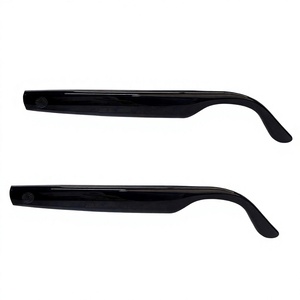
LRAs utilize a spring-mass system driven by an internal voice coil. While offer superior power efficiency and longer operational life over legacy ERM motors, their tactile output is constrained to a specific resonant frequency. Piezoresistive sensor arrays, on the other hand, measure variations in electrical resistance when pressure is applied, proving ideal for robotic gripper feedback and touch-sensitive smart glasses arms.
3. Optomyography (OMG) & Non-Contact Optical Sensing Technologies
Pioneered by advanced labs such as Emteq Labs with patented OCO™ sensor architectures, Optomyography (OMG) represents a paradigm shift in human bio-tactile tracking. By deploying non-contact optical sensors within eyewear frames, OMG measures three-dimensional skin displacement and underlying facial muscle contractions without invasive surface gel electrodes or face-directed camera arrays. This creates a continuous, high-fidelity stream of emotional valence, cognitive engagement, and subtle micro-expressions.
Ultra-Low Latency
Next-generation piezo and optical sensors deliver realtime feedback loops with latency below 2 milliseconds, essential for real-time spatial computing and surgical robotics.
Optomyography (OMG)
Eliminates electrode degradation and camera privacy concerns by measuring sub-micron dermal deformation optically from smart eyewear frames.
Spatial Haptics
Combines multi-axis IMU movement tracking with localized micro-vibration to simulate realistic physical interactions in augmented reality environments.
2025–2030 Global Procurement Trends for Haptic Sensors & AI Eyewear Integrations
Enterprise procurement teams evaluating global supplier networks must align their hardware roadmaps with five critical supply chain trends reshaping the industry:
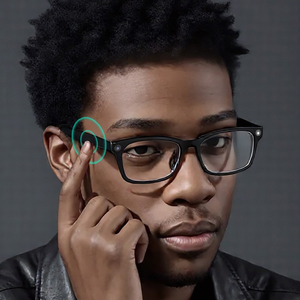
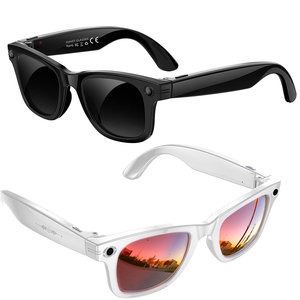
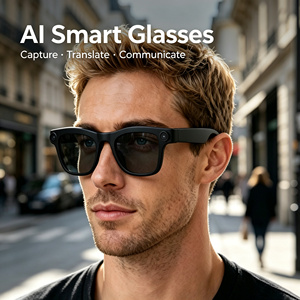
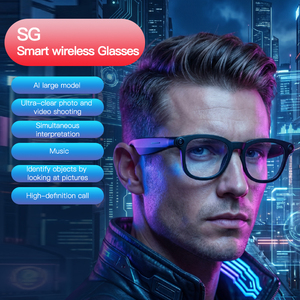
- Convergence of AI Translation & Haptic Interfaces: As smart AI translation glasses (such as anti-shake camera glasses and dual-mic voice glasses) achieve mass-market adoption, touch-sensitive frame legs with localized haptic confirmation allow users to trigger wake-up commands, switch translation modes, and control volume discreetly without voice prompts.
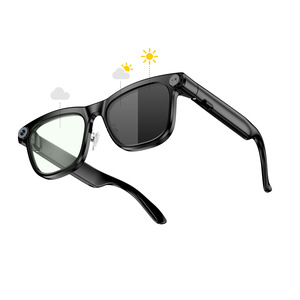
- Miniaturization & Flex-PCB Integration: Modern consumer wearables demand haptic modules with z-height profiles under 1.2mm. Sensor factories are increasingly embedding piezoresistive micro-arrays directly onto flexible printed circuits (FPCs) co-molded inside silicone and acetate frame legs.
- Biometric Feedback & Affective Computing Fusion: Modern research institutions and consumer insight labs require multi-modal sensing. Systems that combine haptic user inputs with physiological metrics—such as eating behavior tracking, facial expressivity mapping, and engagement indices—are commanding premium market positioning.
- On-Device Edge ML Processing: To maintain strict data privacy compliance (GDPR, HIPAA), raw sensor streams from haptic and bio-optical sensors are filtered using embedded low-power edge microcontrollers, passing only interpreted metrics to connected host systems via Bluetooth LE or Wi-Fi.
- Sustainability & RoHS/WEEE Regulatory Rigor: Leading tier-1 suppliers must ensure all ceramic piezo materials, rare-earth magnets, and synthetic polymers adhere to lead-free RoHS directives and recyclable WEEE frameworks.
Supplier Selection Criteria & Factory Evaluation Protocol
When conducting on-site factory audits or issuing Requests for Proposals (RFPs) for enterprise haptic sensor manufacturing, engineering procurement directors should enforce the following validation protocol:
- Dynamic Response & Acceleration Testing: Verify peak g-force acceleration curves (measured in G-rms) across the operational frequency band (100Hz to 300Hz) using laser Doppler vibrometry.
- Thermal Drift & Environmental Cycling: Confirm that piezoresistive and optical sensor drift remains within <2% tolerances across working temperatures ranging from -20°C to +70°C.
- Cleanroom Standard & SMT Automation: Ensure optical sensor arrays and micro-actuators are assembled inside ISO Class 7 or Class 8 cleanroom facilities to prevent particle contamination on optical elements.
- Intellectual Property & Patent Landscape: Audit the supplier's patent holdings to prevent international patent infringement lawsuits. Proprietary sensor platforms like Emteq Labs hold foundational patents (e.g., GB2561537, GB2604076, US11003899, US11538279).
Why Partner with Emteq Labs for Bio-Haptic & Sensing Engineering?
Emteq Labs stands at the forefront of wearable facial biofeedback, non-contact optomyography, and advanced sensory hardware development. Built upon rigorous academic science and validated by global research institutions, our engineering architecture offers unparalleled advantages for OEM/ODM partners worldwide.
Patented OCO™ Optical Sensing
Replaces invasive surface EMG electrodes with non-contact optical sensors that capture sub-micron facial skin movement, emotional valence, and eating behavior continuously in real-world settings.
Multi-Sensor Data Synchronicity
Integrated 9-axis Inertial Measurement Unit (IMU), altimeter, and contextual outward-facing cameras capture motion, elevation, and environment synchronized down to the millisecond.
Open Software Development Kit (SDK)
Flexible developer platform allowing enterprise clients, medical researchers, and XR studios to build proprietary machine learning algorithms, custom biofeedback models, and unique control schemes.
Regulatory & Intellectual Property Defense
Fully compliant with CE mark, RoHS, and WEEE standards, backed by a robust portfolio of international patents covering biofeedback eyewear and optomyographic sensing structures.
Frequently Asked Questions by OEM Buyers
Clear technical and commercial answers addressing common engineering queries regarding haptic sensor sourcing, custom customization, and integration.
What is the primary technical difference between Optomyography (OMG) and conventional EMG haptic biofeedback?
Optomyography (OMG) measures skin surface displacement optically without requiring skin contact, conductive gels, or sticky surface electrodes. Unlike surface Electromyography (EMG), which suffers from impedance drift, skin perspiration degradation, and electrode wear, OMG provides continuous, stable 3D muscle movement data suitable for daily wearable eyewear use.
What is the typical Minimum Order Quantity (MOQ) for custom haptic sensor module production?
Standard component orders generally carry an MOQ starting at 1,000 units. For fully customized ASIC co-design, specialized flex-PCB layout, or bespoke smart glasses frame tooling, enterprise engineering prototyping runs usually begin at 5,000 units with dedicated NRE (Non-Recurring Engineering) support.
How do haptic feedback motors integrate into smart AI translation glasses?
Micro Linear Resonant Actuators (LRAs) or micro-piezo actuators are co-molded directly inside the temple legs of the eyewear. When a user interacts with the frame via capacitive touch or fingerprint recognition, the haptic driver triggers localized high-frequency micro-vibrations to confirm commands without producing audible noise that could interfere with microphone arrays.
How do temperature fluctuations affect piezoresistive force sensor accuracy?
Piezoresistive substrates experience thermal sensitivity shift. Tier-1 factories mitigate this by embedding onboard NTC thermistors and thermistor compensation algorithms into the readout ASIC, ensuring force measurement accuracy within ±1.5% across a wide operating envelope (-20°C to +70°C).
Can bio-haptic smart eyewear output synchronized raw and pre-processed data streams?
Yes. The Emteq Labs SDK and companion software architectures support concurrent streaming of raw optical signals, raw 9-axis IMU metrics, as well as real-time interpreted valence metrics, expressivity indices, and event tags via low-latency Bluetooth API or direct USB connection.
What quality management standards must a tier-1 haptic sensor factory meet?
Leading factories must hold ISO 9001 (Quality Management) and ISO 14001 (Environmental Management) certifications. For medical-grade biofeedback equipment or clinical health tracking devices, ISO 13485 certification is required along with complete material traceability and RoHS compliance.
Ready to Upgrade Your Wearable Bio-Haptic Hardware Capabilities?
Connect directly with our engineering and research teams to discuss custom sensor development, OEM/ODM smart glasses fabrication, study protocols, and enterprise software SDK integration.
Send an Inquiry