Emteq Labs Blog & Scientific Updates
Explore the latest articles on optomyography (OCO™), facial expression sensing, XR biofeedback, and affective computing.
Flagship AI & AR Wearable Hardware Hardware
Precision-engineered smart frames, spatial recording glasses, and bio-sensing wearables manufactured under strict ISO13485 and ISO9001 quality standards.
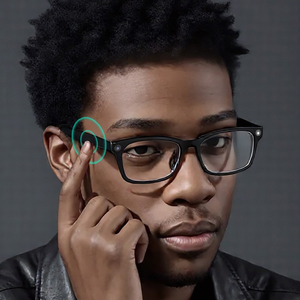
YOKOSI G100 AI Smart AR Glasses Wireless Smart AR Hardware for Tourism Industry
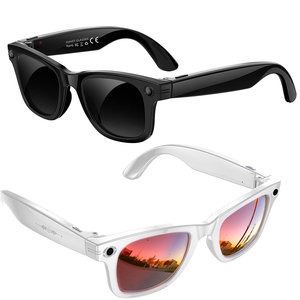
Anti Shake AI Glasses With 13M 4K Camera, Real-time Translation & IP66 Rating
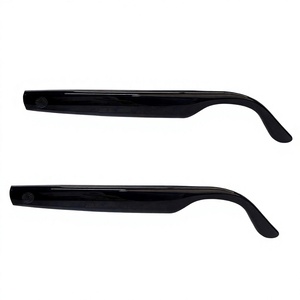
Intelligent Polarized Glasses Leg Touch Control, 140 Language AI Translation
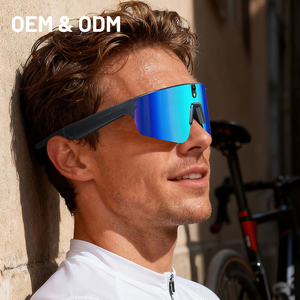
Modern Design AI Voice Wake-up Translation & Object Recognition Silicone Smart Glasses
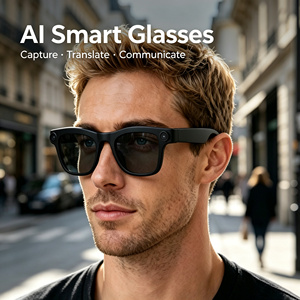
AI Smart Sunglasses with 13mm Dual Open-Ear Speakers & Object Recognition
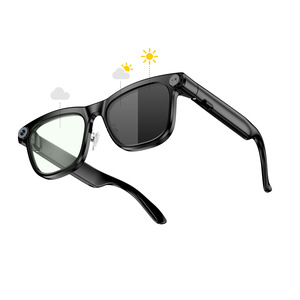
AI Smart Eyewear with First-Person Video Recording & Live Object Vision AI
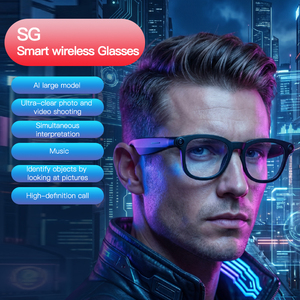
Smart AI Glasses with Multi-Tap Touch Control, Music Streaming & AI Translation
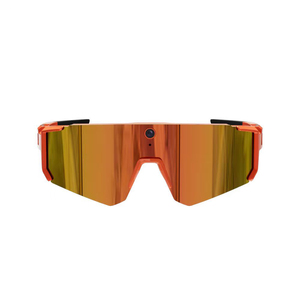
AI Smart Sports Eyewear with 4K Video Recording, Image Recognition & Mic Array
Industrial OEM/ODM Wearable Manufacturing Infrastructure
Providing end-to-end hardware co-development, optical engineering, micro-component SMT assembly, and SDK software integration for tier-1 tech brands and research institutions.
Micro-PCB & Rigiflex Assembly
Our automated High-Density Interconnect (HDI) PCB assembly lines specialize in ultra-miniaturized wearable circuit boards. We integrate high-speed SOCs, Bluetooth 5.3, Wi-Fi 6 modules, and PMIC power management into ultralight frame temples weighing under 38 grams.
Optomyography (OCO™) Integration
Under proprietary licensing and custom ODM frameworks, we embed patented OCO™ Optomyography (OMG) sensors directly into frame chassis. This enables contact-free 3D facial muscle mapping without uncomfortable gel electrodes or intrusive inward-facing lenses.
4K Vision & Acoustic Arrays
Equipped with Sony 13MP/4K optical modules, hardware anti-shake EIS, dual beamforming microphone arrays, and 13mm directional spatial audio transducers. Custom acoustic tuning minimizes sound leakage while maximizing voice clarity for AI LLM parsing.
Biometric Facial Sensing Architecture Matrix
Evaluating hardware modalities for facial biofeedback, emotional valence mapping, and real-world human-computer interaction (HCI).
| Evaluation Parameter | OCO™ Optomyography (OMG) | Surface EMG (Electromyography) | Inward Camera Tracking |
|---|---|---|---|
| Skin Contact Requirement | Zero Contact (Optical RF Sensor) | Requires Direct Gel/Adhesive Electrodes | Non-contact (Requires Lens Alignment) |
| Outdoor & Ambient Lighting Resilience | 100% Daylight Immune (Active Infrared/Optical) | Immune (Electrical Impedance) | Fails under Bright Sunlight / Darkness |
| Data Privacy & Edge Processing | On-device Signal Parsing (No Raw Video) | Low Privacy Concern | High Privacy Risk (Raw Facial Video Capture) |
| Form Factor Integration | Concealed in Standard Eyewear Frame | Bulky External Wires & Patch Pads | Protruding Cameras Adding 40g+ Weight |
| Chewing & Activity Monitoring | High-Precision 3D Skin Deformation Mapping | Prone to Motion Artifact Drift | Occluded during Real-world Movement |
Wearable Hardware Sourcing Trends (2025–2030)
Strategic insights for enterprise B2B buyers, OEM procurement directors, and hardware technology investors navigating the convergence of AI, biometrics, and augmented reality.
1. Shift from Standalone Audio to Multimodal Vision AI
Procurement demands have rapidly shifted from simple Bluetooth audio frames to multimodal AI smart glasses equipped with low-power optical camera sensors. Modern consumers and industrial enterprise workers require real-time scene analysis, live OCR text translation, and contextual object identification driven by micro-miniaturized edge neural processing units (NPUs).
2. Integration of Non-Invasive Continuous Biometrics
Next-generation health, military, and research hardware requires continuous monitoring of valence, stress, cognitive focus, and dietary habits. Incorporating patented OCO™ Optomyography (OMG) sensors and 9-axis IMUs directly into OEM frames enables non-intrusive biofeedback collection without disrupting daily user workflows.
3. Modular ODM Hardware Customization & Open SDKs
Enterprise clients no longer seek closed consumer products; they require modular ODM hardware architectures with open APIs and SDKs. Our manufacturing lines allow custom PCB sensor integration, custom firmware flashing, encrypted BLE 5.3 data streaming, and seamless compatibility with iOS, Android, and XR spatial computing platforms.
4. Strict Regulatory & ESG Compliance Sourcing
Global importers and B2B clients prioritize OEM factories possessing medical-grade certifications (ISO13485, CE Mark, RoHS, WEEE, FCC). Sustainable component sourcing, zero-drift optical calibration, and IP66 water/sweat-proofing have become non-negotiable prerequisites for global export compliance into North America, Europe, and Asia-Pacific.
End-to-End OEM/ODM Production Lifecycle
How our state-of-the-art facility transforms initial conceptual sketches into mass-produced, market-ready wearable smart hardware.
ID & Ergonomic Design
3D CAD optical design, weight distribution balancing, IP66 enclosure modeling, and hypoallergenic silicone material selection.
Custom PCB & SMT Layout
Miniaturized 8-layer HDI flex-rigid board design, integrating Bluetooth 5.3 SOCs, PMICs, IMUs, and optical sensor arrays.
Tooling & Optical Alignment
Precision CNC mold building, sub-millimeter lens optical alignment, waveguide bonding, and sensor calibration.
QC & Global Export
100% environmental drop testing, IPX6 water immersion testing, battery safety aging, and CE/FCC/RoHS export certification.
Frequently Asked Questions
Addressing common engineering, supply chain, customization, and export compliance queries from global B2B buyers.
1. What are your Minimum Order Quantities (MOQ) for OEM branding vs. full ODM customization?
2. How does OCO™ optomyography sensor technology differ from standard surface EMG or inward camera tracking?
3. Can your smart AI glasses support custom AI translation models and proprietary SDK integrations?
4. What certifications and testing protocols do your wearable factory products comply with?
5. How do you handle hardware IP protection and patent licensing for custom ODM clients?
6. What is the typical lead time for prototype samples and mass production delivery?
Accelerate Your Wearable Hardware Roadmap Today
Partner with an industry-leading OEM/ODM exporter. Request complete hardware spec sheets, factory audit reports, optical engineering documentation, and wholesale quotation catalogs.