Emteq Labs Blog & Scientific Updates
Explore the latest articles on optomyography (OCO™), facial expression sensing, XR biofeedback, and affective computing.
Industrial & Enterprise Smart Tracking Hardware
Turnkey OEM/ODM wearable tracking solutions engineered for healthcare research, XR spatial computing, real-time emotion recognition, and multimodal biofeedback monitoring.
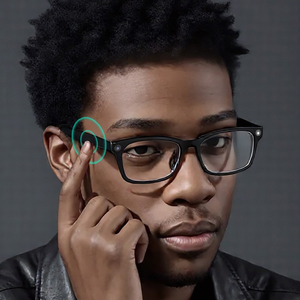
YOKOSI G100 AI Smart AR Eyewear Systems
- Dual Waveguide AR Display
- Integrated Biometric Telemetry
- Ultra-Low Latency SDK Pipeline
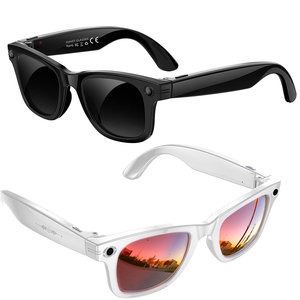
Anti-Shake 4K AI Camera Tracking Glasses
- 13MP Optical Image Stabilization
- Real-Time AI Scene Analytics
- IP66 Waterproof Enclosure
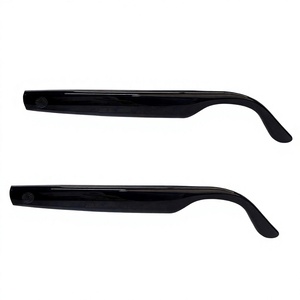
Biometric Polarized Touch Control Smart Eyewear
- Sub-dermal Touch Identification
- 140-Language Edge Translation
- Polarized UV400 Protection
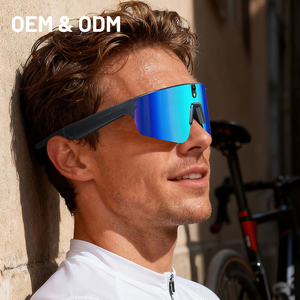
Ultra-Light Silicone AI Gesture Tracking Eyewear
- Ergonomic Medical-Grade Silicone
- Low-Power Voice & Gesture Wake-up
- Clear Audio Micro-Acoustics
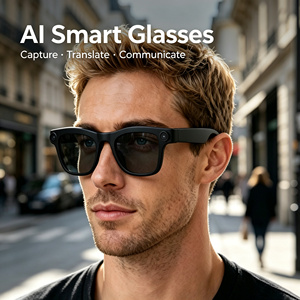
Spatial Audio & Object Recognition Sunglasses
- Dual 13mm Open-Ear Transducers
- Hands-free Voice Assistant Engine
- Continuous 10-Hour Battery Life
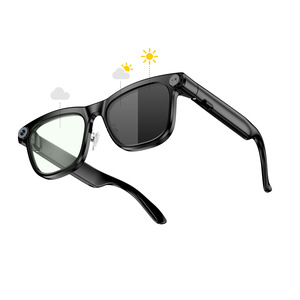
Facial Activation & Emotion Tracking Glasses
- Non-Contact Optical OMG Sensors
- Real-Time Valence Metrics Logging
- Integrated First-Person Camera
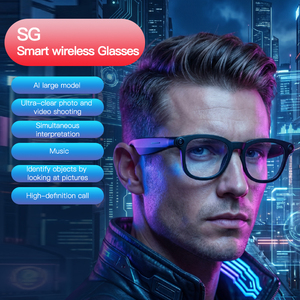
Eating Behavior & Mastication Tracking Glasses
- Facial Muscle Strain Detection
- Chewing Episode Telemetry
- Mobile Health Dashboard API
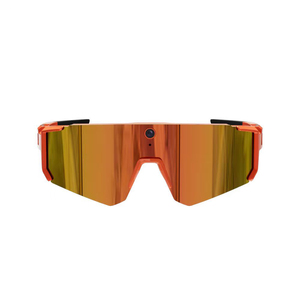
4K Spatial Tracking Sports Smart Eyewear
- Integrated 9-Axis IMU & Altimeter
- High-Speed Kinematic Capture
- Impact-Resistant Sports Frame
Revolutionizing Facial & Biometric Tracking: Beyond Surface EMG
Traditional facial bio-sensing relied on messy surface electromyography (sEMG) gel electrodes or heavy, intrusive cameras pointed inwards at the user's eyes. As a premier OEM/ODM Tracking Hardware Manufacturer, our proprietary technology stack introduces contact-free Optomyography (OMG) embedded directly within lightweight frame architectures.
By utilizing miniaturized optical sensors to detect subtle sub-millimeter skin displacements and muscle contraction velocities, our tracking hardware streams precise three-dimensional biofeedback without physical skin abrasion, signal drift, or privacy-invading inward optical capture.
Comparative Sensing Architecture Matrix
Evaluating wearable facial and emotional tracking methodologies for enterprise procurement.
| Evaluation Parameter | Patented OCO™ Optomyography (OMG) | Surface Electromyography (sEMG) | Inward RGB/IR Camera Tracking |
|---|---|---|---|
| Skin Contact Requirement | Zero Contact (Optical Proximity) | Requires Conductive Gel / Adhesive | Zero Contact |
| All-Day Ergonomic Wearability | Excellent (<45g Eyewear Payload) | Poor (Skin Irritation & Degradation) | Moderate (Bulky Hardware & Thermal Load) |
| Outdoor & Direct Sunlight Performance | Unaffected (Filtered Optical Bandpass) | Unaffected | Prone to Ambient Optical Saturation |
| Data Privacy & On-Device Compliance | Raw Signal Converted to Telemetry On-Chip | Low-bandwidth Telemetry | High Risk (Raw Facial Video Storage) |
| Mastication & Expression Decoding | High 3D Muscle Strain Fidelity | High Noise Ratio during Movement | Occluded by Lighting or Head Angles |
Turnkey Hardware Customization & OEM/ODM Capabilities
From initial optical pathway simulations to mass SMT production and validated software SDK integrations, we provide full-lifecycle OEM/ODM hardware supply services.
Custom Micro-PCB Assembly
High-density flexible PCB micro-routing engineered specifically for eyewear temples and bridge zones. Integrated with Nordic BLE 5.3 chips, low-power ARM Cortex MCUs, and customized power management units (PMU).
Optics & Acoustic Engineering
Custom optical waveguide bonding, polarized lens coating, and directional micro-acoustic speaker array tuning. Dual-microphone noise reduction (ENC) designed for voice assistant isolation in noisy environments.
Regulatory & Medical Compliance
Full international regulatory support including CE Mark, FCC Part 15, RoHS, WEEE, and ISO 13485 quality management systems for clinical-grade bio-sensing hardware deployments.
The OEM/ODM Co-Development Workflow
A structured 4-phase engineering pipeline ensuring rapid time-to-market for proprietary tracking hardware.
Requirements & Optics Design
Defining sensor placement, lens optics, frame ergonomics, and power budget constraints.
Rapid Prototyping & Tooling
3D SLA frame prototyping, flex-PCB tooling, precision optical alignment, and firmware bring-up.
Validation & Calibration
Clinical validation against gold-standard bio-sensing equipment, climate chamber and drop testing.
Mass SMT & Delivery
Automated surface mount assembly, 100% optical quality inspection, global logistics supply.
Future Procurement Trends in Wearable Tracking Hardware
Key technological shifts driving global enterprise purchasing decisions over the next 5-year cycle.
1. Convergence of On-Device Edge AI & Micro-Biometrics
Future tracking hardware procurement is rapidly pivoting away from dumb sensor nodes that stream heavy raw data to mobile gateways. Industrial buyers now demand lightweight neural processing units (NPUs) built directly into the frame temple. This enables on-device inference for facial expression recognition, emotion valence scoring, and mastication tracking while keeping sensitive physiological data fully local for strict GDPR and HIPAA compliance.
2. Multimodal Sensor Fusion (Kinematic + Optical + Acoustic)
Single-mode tracking devices are being replaced by unified multimodal hardware platforms. Modern specifications require seamless time-synchronization across 9-axis Inertial Measurement Units (IMUs), barometric altimeters, outward-facing contextual scene cameras, and optomyographic facial sensors. Enterprise systems leverage this multi-sensor matrix to contextualize human physiological responses with exact environmental activity.
3. Transition to Ergonomic All-Day Wearable Form Factors
Heavy enterprise headgear is being phased out in favor of daily-wear smart glasses weighing under 50 grams. Procurement teams are prioritizing hypoallergenic silicone materials, flexible memory titanium hinges, and modular lens interchangeability (polarized sunglasses, prescription optical lenses, and blue-light blocking safety glasses) to ensure compliance during long-term clinical and market research trials.
4. Open SDK Architecture & Cross-Platform APIs
Hardware vendor lock-in is a primary concern for software developers and research institutions. Advanced procurement mandates open SDKs, C++ / Python wrappers, and native Unity / Unreal Engine plugins. Hardware suppliers must provide standardized WebSockets and BLE GATT profiles allowing custom algorithmic development and rapid integration into existing XR enterprise software stacks.
Frequently Asked Procurement & Technical Questions
Addressing common questions from global OEM buyers, R&D directors, and hardware integration engineers.
What is the difference between Optomyography (OMG) and traditional camera-based tracking?
Optomyography (OMG) utilizes non-contact optical sensors integrated directly inside the frame structure to detect minute 3D skin displacement caused by underlying muscle contraction. Unlike camera-based systems, OMG requires zero inward-pointing cameras aimed at the user's face. This eliminates high processing power overhead, operates flawlessly under direct ambient sunlight or total darkness, maintains 100% user privacy, and drastically reduces total device weight and thermal generation.
What customization options are available for OEM/ODM hardware orders?
We offer comprehensive end-to-end OEM/ODM customization. This includes custom frame industrial design, frame colorway finishes, custom PCB geometry, optical sensor channel density adjustments, integration of specific micro-cameras or acoustic speakers, custom BLE UUID firmware configuration, co-branded mobile applications, and bespoke SDK developments for specialized research or commercial applications.
What is the typical Minimum Order Quantity (MOQ) and sample lead time?
For engineering evaluation samples and standard developer kits, we support low volume orders starting at 1 to 10 units with global dispatch within 3–5 business days. For customized OEM/ODM mass production runs involving custom plastic injection tooling and modified PCB SMT lines, standard MOQs start at 500 units, with typical production lead times ranging between 6 to 8 weeks following design sign-off.
How does the SDK output real-time sensor streams to third-party platforms?
Our open software architecture streams real-time, time-synchronised data packages via Bluetooth Low Energy (BLE) or USB-C tethering. The SDK provides normalized raw optical muscle activation values, decoded valence/engagement indexes, 9-axis IMU kinematic vectors, altimeter readings, and time-stamped video frame triggers. Pre-built wrappers are available for iOS (Swift), Android (Kotlin), Python, C++, Unity, and Unreal Engine.
What international quality certifications do your tracking hardware devices carry?
All manufacturing lines operate under strict ISO 9001 and ISO 13485 quality management environments. Standard hardware products hold full CE Mark certification, FCC Part 15 compliance, RoHS hazardous material restriction clearance, WEEE electronic recycling compliance, and UN38.3 lithium battery transport certification.
Accelerate Your Next-Gen Tracking Hardware Project
Connect directly with our senior optical engineers, bio-hardware architects, and OEM sales team to receive comprehensive datasheets, full SDK documentation, and custom factory volume quotations.