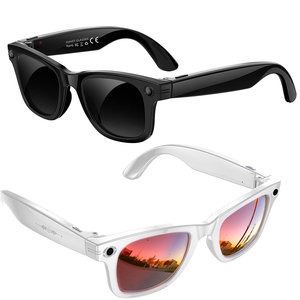
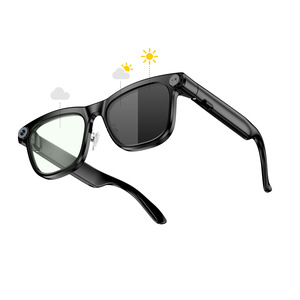
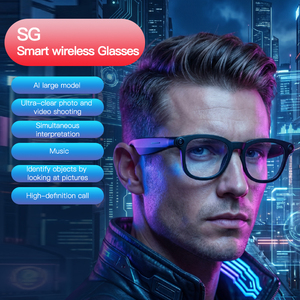
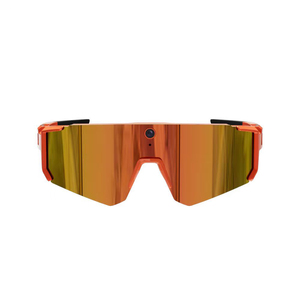
YOKOSI G100 AI Smart AR Glasses Wireless Bio-Sensing Hardware
Enterprise-grade AR bio-telemetry eyewear designed for tourism, research, and interactive assistance. Features integrated optical micro-sensors for non-contact facial fatigue tracking.
Explore the latest articles on optomyography (OCO™), facial expression sensing, XR biofeedback, and affective computing.
Engineered for turn-key OEM/ODM deployment. Integrated with non-contact facial optomyography, 9-axis IMU sensor fusion, and real-time biometric stream SDKs.
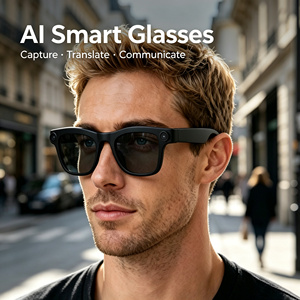
Enterprise-grade AR bio-telemetry eyewear designed for tourism, research, and interactive assistance. Features integrated optical micro-sensors for non-contact facial fatigue tracking.
Ultra-low latency dual-microphone noise isolation paired with real-time biometric telemetry, IP66 waterproof frame, and 4K optical scene capture for clinical field studies.
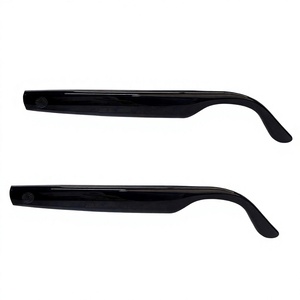
Multi-functional biometric sensor temple legs featuring touch recognition, active facial muscle feedback monitoring, and 140-language neural speech translation modules.
Lightweight medical-grade silicone smart eyewear optimized for all-day physiological tracking, voice wake-up interaction, and non-invasive facial expression analysis.
Dual 13mm directional speakers combined with skin-displacement sensors to monitor dietary chewing habits, expressive muscle activation, and real-time stress markers.
Captures second-by-second emotional valence metrics alongside synchronized contextual video. Ideal for consumer insight laboratories, clinical psychology, and rehabilitation.
Integrates custom embedded micro-optics for non-contact optical muscle sensing. Enables gesture control, facial reflex monitoring, and continuous bio-signal streaming.
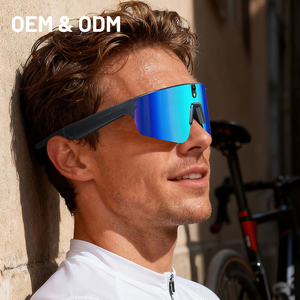
Ruggedized outdoor bio-monitoring smart eyewear engineered for sports physiological tracking, high-velocity movement capture, and atmospheric elevation compensation.
As a specialized OEM/ODM factory and technological innovator, we bridge the gap between complex biomechanical sensing and high-yield, mass-producible consumer eyewear.
Unlike traditional Surface Electromyography (sEMG) requiring sticky gels, skin-irritating electrodes, and frequent signal recalibration, our proprietary OCO™ Optomyography technology utilizes non-contact optical sensors to map micro-movement of facial skin in 3D space with sub-millimeter precision.
We combine 3D facial displacement optics with ultra-precise 9-axis Inertial Measurement Units (IMU), precision barometric altimeters, and outward-facing contextual micro-cameras. All raw bio-telemetry is pre-processed on-chip via micro-neural models to ensure zero signal latency and total data privacy.
From custom frame CAD housing design and optical lens tinting to custom PCB layout, firmware compilation, and open C++/Python SDK integration — our end-to-end manufacturing pipeline delivers fully white-labeled smart wearable solutions built to client specifications.
A comprehensive technical evaluation of facial affect tracking technologies for next-generation extended reality (XR), medical diagnostic devices, and behavioral neuroscience.
In modern affective computing, accurately quantifying real-world human emotion, valence, and physiological engagement without restricting subject mobility has presented a historic challenge. Traditional biometric monitoring relies heavily on laboratory-bound instruments or high-friction contact sensors. As smart eyewear transitions into an essential computing surface, OEM manufacturers must evaluate the architectural tradeoffs between optical displacement, electrical skin conduction, and video computer vision.
| Sensing Modality | Skin Contact Required | Environmental Motion Tolerance | Privacy & Data On-Device | Power Consumption | Real-World Wearability |
|---|---|---|---|---|---|
| OCO™ Optomyography (OMG) | NO (Optical Non-Contact) | High (IMU Compensated) | 100% On-Device Vectors | Low (<45mW) | Optimal (Eyewear Form Factor) |
| Surface EMG (sEMG) | YES (Gel Electrodes) | Medium (Artifact Prone) | 100% On-Device Raw Wave | Low (<30mW) | Poor (Skin Irritation/Gel Degradation) |
| Facing-In Video Vision | NO (Camera Tracking) | Low (Lighting/Occlusion Sensitive) | Privacy Risk (Facial Image Stream) | High (>450mW DSP processing) | Moderate (Heavy Lens Housing) |
1. Decoupling Signal from Motion Artifacts: Real-world human movement presents significant signal noise. By combining high-frequency optomyographic emitter-receiver arrays with a dedicated 9-axis inertial measurement unit (IMU), our factory algorithms dynamically isolate skin deformation caused by actual facial expression (zygomaticus major, orbicularis oculi, corrugator supercilii activation) from ambulatory foot-strike impact.
2. Continuous Dietary & Health Monitoring: Non-invasive temporal tracking of masseter muscle displacement enables accurate detection of eating episodes, chewing frequency, and swallowing patterns. This biosensor data pipeline provides healthcare platforms with unprecedented, continuous objective telemetry for metabolic health, behavioral nutrition, and therapeutic compliance.
3. Ethical On-Device Affective Analytics: Rather than streaming high-bandwidth raw visual footage of a user's face to third-party cloud servers, our hardware SDK converts optical sensor micro-signals into mathematical valence and arousal vectors locally on the device, upholding strict international privacy mandates (GDPR, HIPAA compliance).
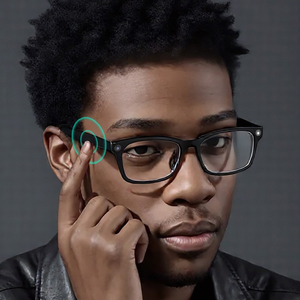
Strategic purchasing recommendations for enterprise OEMs, medical device integrators, and next-generation wearable hardware developers.
The global XR headset industry is shifting away from isolated visual immersion toward affect-aware environments. Enterprise buyers are actively procuring smart glasses components that allow virtual avatars to mirror real-life facial expression in real time without camera occlusion issues.
Hardware alone is no longer sufficient for enterprise RFQs. Modern procurement leads require OEM vendors to supply robust cross-platform software development kits (supporting iOS, Android, Unity, Unreal Engine, and WebBluetooth API) with pre-validated ML pipelines for instantaneous data ingestion.
Global medical device standards are tightening. Enterprise procurement divisions prioritize suppliers with certified ISO 13485 cleanroom assembly lines, full CE/RoHS/WEEE material compliance documentation, and multi-country granted patent protection (US, UK, EU) to mitigate intellectual property exposure.
Direct technical and operational answers for procurement managers, hardware engineering leads, and research directors.
OCO™ optomyography (OMG) measures facial skin movement optically via micro-reflectance displacement without requiring sticky conductive gel or direct electrode contact with the user's skin. Unlike surface EMG (sEMG), it is immune to sweat impedance changes and baseline signal drift. Unlike camera-based facial coding, OMG operates flawlessly in direct sunlight or pitch-black ambient environments, uses a fraction of the battery power, and keeps biometric processing completely on-device for user privacy.
The sensor pipeline outputs time-synchronized data streams including raw 3D optical skin displacement signals, calibrated facial muscle activation vectors (zygomaticus, corrugator, masseter), positive/negative emotional valence indicators, 9-axis IMU spatial head motion (pitch, roll, yaw), barometric elevation metrics, and optional outward-facing video frame timestamps.
We provide comprehensive white-label and ODM customization including custom frame mold tooling, prescription lens compatibility, custom optical sensor positioning for targeted facial muscle mapping, branded firmware loading, custom PCB miniaturization, and bespoke companion mobile application UI/UX packaging.
For research evaluation kits and prototype SDK sample units, MOQ starts at 1 to 5 units with standard dispatch within 5 business days. For full custom OEM mass production runs, standard MOQ starts at 1,000 units with typical tooling and pilot batch lead times ranging from 8 to 12 weeks depending on optical frame customization complexity.
Yes. All standard base models manufactured in our facility comply with international CE Mark, FCC Class B, RoHS, and WEEE environmental directives. Manufacturing facilities operate under rigorous ISO 9001 and ISO 13485 quality management systems for medical device grade components.
We enter into legally binding Non-Disclosure Agreements (NDAs) prior to technical review. Client-owned industrial designs, custom firmware code bases, and proprietary algorithmic models remain the exclusive intellectual property of the client, protected under international patent and copyright frameworks.
Partner with an industry-leading OEM/ODM factory. Contact our engineering team today to request hardware sample evaluation kits, custom CAD frame specs, or SDK documentation.
Contact Us