Emteq Labs Blog & Scientific Updates
Explore the latest articles on optomyography (OCO™), facial expression sensing, XR biofeedback, and affective computing.
Featured OEM/ODM Tracking Hardware Modules
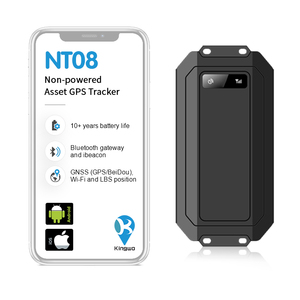
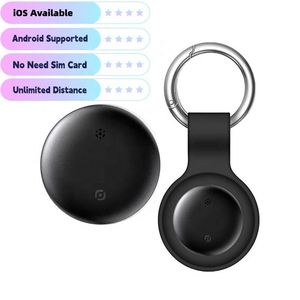
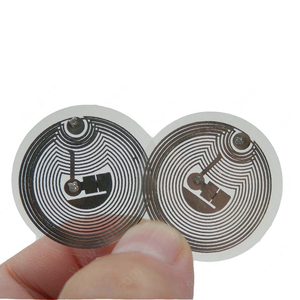
Explore our industrial-grade XR positioning systems, active RFID asset tracking, satellite IoT locators, and bio-signal sensor integration modules engineered for enterprise OEM clients.
Architectural Blueprint: Next-Generation OEM XR Tracking Systems
The extended reality (XR) hardware landscape is undergoing a systemic paradigm shift. As spatial computing transitions from consumer entertainment toward enterprise training, clinical biomechanics, industrial simulation, and stadium-scale multi-user environments, off-the-shelf tracking modules fail to deliver the rigorous precision, thermal stability, and low latency demanded by tier-1 original equipment manufacturers (OEMs). Custom OEM XR tracking manufacturing requires a multi-layered sensor fusion strategy—integrating optical inside-out computer vision, ultra-wideband (UWB) spatial triangulation, 9-axis inertial measurement units (IMUs), and non-contact optomyography (OMG) biometric feedback.
Our specialized manufacturing facilities bridge the gap between scientific prototyping and volume factory production. By deploying proprietary sensor hardware, patented optical lens configurations, and edge-calculated AI algorithms, we empower global brands to build light-weight, high-precision HMDs (Head-Mounted Displays), smart eyewear, hand controllers, and wide-area stadium-scale tracking hardware customized to exacting OEM specifications.
Inside-Out 6DoF Spatial Tracking
Multi-camera visual-inertial odometry (VIO) modules delivering sub-millimeter positional drift cancellation under dynamic lighting conditions.
Non-Contact OCO™ Optomyography
Patented optical sensor arrays measuring 3D skin deformation and facial muscle activation without direct contact gel electrodes or facial cameras.
Stadium-Scale Multi-User Arena
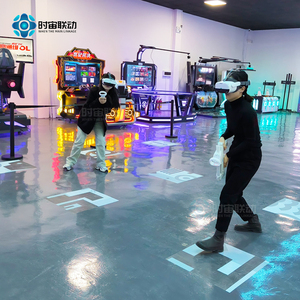
Low-latency sub-5ms synchronized RF and optical tracking architecture engineered for massive multiplayer commercial VR centers.
Patented Optomyography (OMG) & Biometric Hardware Integration
Traditional surface electromyography (sEMG) requires conductive gels, invasive skin contact, and frequent recalibration due to sweat-induced signal drift. Likewise, downward-pointing facial tracking cameras introduce computational overhead, high battery consumption, and severe user privacy vulnerabilities. Our factory specializes in custom manufacturing OCO™ Optomyography (OMG) sensors integrated seamlessly into smart glasses and XR headset face cushions.
By deploying miniature non-contact optical sensors that measure micro-level skin movement across three dimensions, OEM devices capture real-time valence, emotional engagement, chewing/eating behaviors, fatigue indices, and subtle non-verbal communication gestures.
- High-Rate Sensor Sampling: Integrated 9-axis IMU + altimeter streaming motion odometry at up to 1,000Hz alongside synchronized optical skin displacement streams.
- Privacy-Compliant Edge Computing: Raw biometric signals processed on-device via ultra-low-power microcontrollers; no raw facial imagery is ever stored or transmitted.
- Environmental Sealing & Ergonomics: IP67-rated sensor encasements embedded in flexible micro-foam, resistant to sweat, ambient light fluctuations, and physical impacts.
- Open SDK & Cross-Platform Engines: Plug-and-play Unity, Unreal Engine 5, ROS (Robot Operating System), and native C++/Python APIs for rapid software deployment.
Future Sourcing & OEM Procurement Trends (2025–2030)
Enterprise procurement directors and hardware product managers must navigate rapid technology transitions when selecting custom XR tracking factories. Key purchasing trends shaping the next decade include:
Sensor Fusion & Hybrid Tracking Architectures
Single-mode tracking (optical only or IMU only) is obsolete for mission-critical applications. Enterprise buyers are demanding hybrid modules combining optical positioning, active infrared time-of-flight (ToF), ultra-wideband radio positioning, and bio-kinematic feedback into unified ultra-compact PCB assemblies.
Modular OEM Assemblies for Rapid Iteration
Leading manufacturers are moving away from monolithic headset designs toward modular tracking pods. These standardized sensor pods allow OEMs to swap optical lenses, change camera baseline distances, or upgrade processing chips without re-tooling the entire chassis casing.
Strict Data Privacy & On-Device Signal Analytics
Global regulatory frameworks (GDPR, HIPAA, CCPA) strictly govern biometric data capture. Future hardware procurement prioritizes tracking systems equipped with hardware-level encryption keys and local AI signal interpretation modules.
Energy-Efficient Micro-Design for All-Day Wearability
Next-generation smart eyewear demands battery operational lifespans exceeding 8 to 12 hours. Custom OEM designs utilize dynamic sensor polling, sleeping inactive sensor zones, and sub-milliwatt optical emitters to ensure zero compromise between tracking fidelity and battery life.
Why Enterprise OEM Buyers Partner With Our Manufacturing Facilities
Navigating the complex manufacturing pipeline from initial schematic design to high-yield mass production requires a trusted factory partner with verified credentials, rigorous quality control protocols, and deep industry authority.
State-of-the-Art Cleanroom SMT
ISO Class 7 automated Surface Mount Technology (SMT) production lines dedicated to high-density rigid-flex PCBs, micro-optical lens assembly, and laser alignment calibration.
Full Lifecycle Engineering (NRE)
Comprehensive Non-Recurring Engineering support—from optical layout simulation and thermal dispersion modeling to custom injection molding and firmware optimization.
Global Certification & Compliance
Every manufactured batch undergoes rigorous stress testing, guaranteeing compliance with CE, FCC, RoHS, WEEE, and medical-grade ISO 13485 standards.
Strategic Sourcing & Technical FAQ
Answers to critical questions asked by system integrators, hardware engineers, and procurement specialists.
What distinguishes custom OEM optomyography (OMG) tracking from standard camera-based facial coding?
Optomyography measures physical skin movement directly via micro-optical sensors embedded inside the headset frame or eyewear cushion. Unlike cameras, OMG requires no line-of-sight visual exposure of the full face, consumes a fraction of the compute power, works reliably in total darkness or bright sunlight, and processes all biometric telemetry locally to maintain absolute user privacy.
What is the minimum order quantity (MOQ) for custom OEM/ODM hardware modifications?
Standard evaluation samples and prototyping developer kits are available starting at 1 to 5 units. For customized PCB layouts, bespoke lens optical alignments, or custom-molded chassis encasements, our production factory MOQ typically starts at 500 units per batch, with scalable pricing structures for high-volume orders exceeding 10,000 units.
How do your stadium-scale XR tracking modules maintain sub-5ms latency across multi-user environments?
Our large-space tracking hardware uses a hybrid RF time-of-arrival synchronization protocol coupled with high-frequency (1,000Hz) onboard VIO odometry. By offloading pose calculation directly to dedicated hardware processing chips on each wearer's headset, latency remains constant under 5ms, even with dozens of active users occupying the same 1,000m² arena space.
Can your manufacturing team integrate white-label SDKs and proprietary client algorithms into the hardware?
Yes. We provide complete white-label OEM firmware flash options. We can embed client-provided machine learning models, custom Bluetooth/Wi-Fi communication protocols, and custom encryption algorithms directly onto the onboard ARM Cortex / ESP32 MCU during factory assembly.
What quality testing protocols are applied to ensure long-term thermal stability and drop resistance?
All manufactured XR tracking hardware undergoes strict environmental chamber testing ranging from -20°C to +70°C, continuous drop-impact simulations, vibration endurance testing, and salt-fog corrosion checks. Optical tracking modules are individually laser-calibrated in our optical testing darkrooms to ensure 0.1mm positioning accuracy.
Accelerate Your Next Enterprise XR Hardware Project
Partner directly with an established engineering manufacturer. Request technical whitepapers, schedule an engineering consultation, or order evaluation developer kits today.
Compliant with ISO 9001 & ISO 13485 Manufacturing Standards. Global Shipping & Dedicated NRE Support Available.