Emteq Labs Blog & Scientific Updates
Explore the latest articles on optomyography (OCO™), facial expression sensing, XR biofeedback, and affective computing.
Turnkey Smart Wearable & Gesture Control Hardware
Explore our customizable OEM/ODM smart eyewear modules featuring advanced gesture recognition, AI translation, 4K camera capture, and sub-millimeter biosensing.
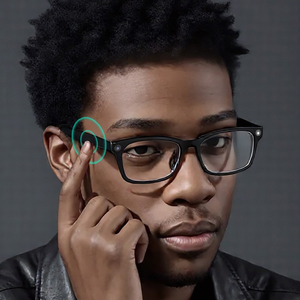
YOKOSI G100 AI Smart AR Glasses Wireless Hardware
Designed for tourism and remote assistance with heads-up display overlay and real-time environment recognition.
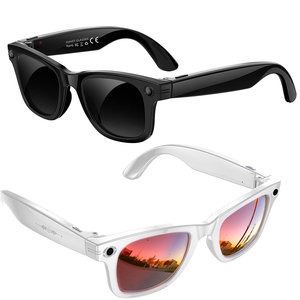
Anti-Shake AI Glasses with 13MP 4K Camera & Dual Mic
Features EIS anti-shake image stabilization, 4K video recording, IP66 weatherproofing, and dual-microphone noise cancellation.
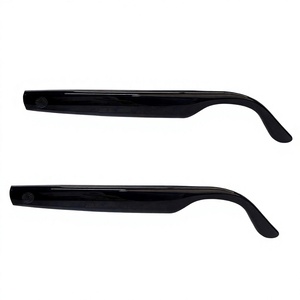
Intelligent Polarized Glasses with Fingerprint Touch & AI
Combines frame-integrated micro-touch gesture sensors, biometrics, UV400 polarized lenses, and multi-country voice translation.
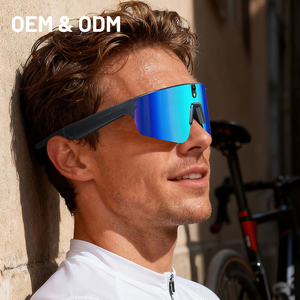
AI Wake-Up Object Recognition Silicone Smart Eyewear
Ergonomic liquid-silicone construction housing AI voice wake-up triggers, directional audio, and real-time visual tracking.
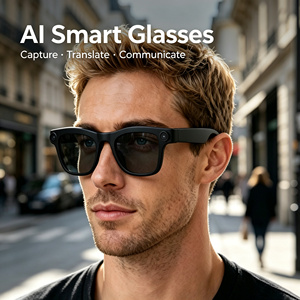
AI Smart Sunglasses with 13mm Dual Open-Ear Speakers
Delivers high-fidelity acoustic performance, hands-free Bluetooth audio, and integrated AI assistant for rapid voice-gesture control.
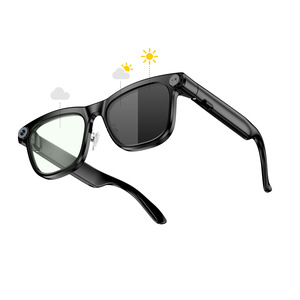
AI Smart Glasses with Real-Time Video Recording & AI Vision
Multi-purpose wearable video recording hardware with on-device AI classification for healthcare, security, and industrial field work.
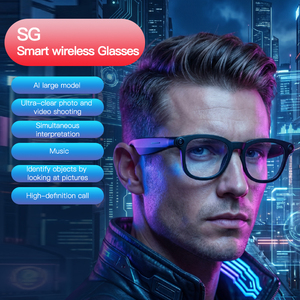
Smart AI Glasses with Capacitive Touch & Image Recognition
Sleek consumer profile with temple tap/swipe gesture control, instant optical translation, and low-latency audio playback.
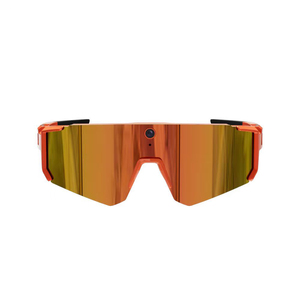
4K Camera Action Sports AI Glasses with Spatial Tracking
Ruggedized sports frame housing 4K video optics, Bluetooth audio, inertial sensors, and custom multi-modal gesture sensing.
The Paradigm Shift in Human-Computer Interfaces: Custom OEM Gesture Technologies
As spatial computing, extended reality (XR), and artificial intelligence redefine consumer and industrial technology, traditional touchscreens and physical buttons are rapidly becoming bottlenecks. Global OEMs and system integrators require frictionless, hands-free interface modalities.
Non-Contact Optomyography (OMG) vs. Traditional EMG
Electromyography (EMG) has long been utilized for measuring facial and skeletal muscle activity. However, standard surface EMG relies heavily on gel electrodes, direct dermal contact, and continuous skin preparation—making it completely unviable for everyday consumer wearables or long-term clinical research.
Our factory's proprietary OCO™ Optomyography (OMG) technology replaces contact electrodes with non-contact, high-resolution optical sensors. Integrated directly into frame rims or nose pads, OMG sensors measure sub-millimeter skin displacements caused by muscle contraction without touching the skin or disturbing the user.
Camera-Less Facial Coding: Privacy-First Architecture
While outward-facing or inward-facing camera modules can track eye gaze and broad expressions, camera-based facial tracking suffers from high power consumption, thermal throttling, privacy/GDPR compliance hurdles, and complete failure in low-light environments.
By leveraging optical optomyography coupled with micro-IMU sensors, our custom OEM frames extract rich biometric expression data, micro-gestures (winks, jaw clenches, subtle smirks), and valence metrics while storing and processing raw signals locally on low-power DSP silicon.
Technical Benchmark Matrix: Interface Sensing Technologies
| Performance Metric | OCO™ Optomyography (OMG) | Surface Electromyography (sEMG) | Inward Optical Camera Tracking | Capacitive Touch temple |
|---|---|---|---|---|
| Dermal Contact Required | No (Contact-Free Optical) | Yes (Adhesive/Gel Electrodes) | No | Yes (Direct Finger Touch) |
| Power Consumption | < 15 mW (Ultra-Low Power) | ~ 45 mW | > 450 mW (High Drain) | < 5 mW |
| Ambient Light Sensitivity | Immune (IR Optical Spectrum) | Immune | Fails in Darkness/Direct Sun | Immune |
| User Privacy & GDPR Compliance | Native Edge Privacy (No Visual Data) | High Privacy | High Risk (Facial Video Capture) | High Privacy |
| Gesture Latency | < 10 ms Real-Time DSP | ~ 25 ms Signal Lag | 60 - 120 ms (Frame Buffer Lag) | < 5 ms |
| Subtle Facial Action Unit (AU) Capture | High Precision 3D Displacement | High (Subject to Drift) | Medium (Occluded by Frames) | Zero (Binary Touch Only) |
Why Global Brands & Tier-1 OEMs Partner With Us
From initial CAD frame prototyping to SMT PCB placement, sensor calibration, and global regulatory compliance, our manufacturing plants provide full turnkey ODM/OEM solutions.
Full Stack Hardware Integration
Our factories integrate 9-axis inertial measurement units (IMU), barometric altimeters, directional open-ear acoustics, 4K camera sensors, and optomyography arrays into featherlight frames weighing under 45 grams.
Open SDK & Edge-AI Analytics
Empower your software teams with a comprehensive C++/Python/Unity/Unreal SDK. Access both raw signal streams and interpreted biometric metrics (valence, engagement, chewing episodes, attention fatigue).
Global Compliance & Quality ISO
Every custom production batch undergoes rigorous 100% automated optical inspection (AOI), thermal cycling, IP66 splash/dust testing, and holds full CE, RoHS, WEEE, and FCC certifications.
Future Procurement Trends in Wearable Gesture Interfaces
Strategic insights for enterprise sourcing managers, hardware product managers, and R&D directors planning their next-generation product roadmaps.
1. Shift Towards Multi-Modal Sensor Fusion
Single-mode interaction (e.g., voice-only or touch-only) is proving insufficient for complex spatial computing applications. Procurement trends indicate a massive surge in demand for sensor-fusion architectures—combining micro-gestures, subtle facial muscle movements, head orientation (9-axis IMU), and contextual voice commands into a singular unified input engine.
2. Demand for On-Device Biofeedback in Digital Health
Healthcare providers, neurological rehabilitation clinics, and wellness brands are increasingly procuring biofeedback-enabled smart eyewear. Future-proof procurement strategies prioritize optical devices capable of real-time facial muscle activation mapping for facial palsy tracking, dietary monitoring, and quantitative stress analysis.
3. Modular OEM Componentry & Fast NRE Cycles
To minimize Non-Recurring Engineering (NRE) costs and expedite time-to-market, enterprise buyers are moving away from ground-up custom builds. They are adopting pre-validated modular optical sensing flex-PCBs that can be retrofitted into existing injection-molded eyewear chassis.
4. Strict Environmental & Bio-Compatibility Standards
Global regulations now dictate strict adherence to bio-compatible materials (ISO 10993) for long-duration skin contact. Modern OEM suppliers must provide fully certified hypoallergenic silicone trims, sweat-resistant IP66/IP67 enclosures, and eco-friendly recyclable packaging (WEEE compliance).
Our 5-Stage Turnkey OEM/ODM Manufacturing Pipeline
Specification
Requirements definition, Industrial Design (ID) review, and sensor placement mapping.
EVT / DVT
Engineering & Design Validation Testing, high-precision 3D resin printing, and PCB spin.
Tooling
Precision steel mold tooling, SMT stencil creation, and optical sensor alignment jigs.
Mass Production
Automated SMT assembly, ultrasonic welding, IP sealing, and batch burn-in testing.
Global QC
100% functional validation, SDK firmware flashing, CE/FCC export certification packaging.
Frequently Asked Questions for Enterprise Buyers
Detailed technical and commercial responses regarding OEM customization, minimum order quantities, SDK integration, and IP rights.
What is Optomyography (OMG) and how does it compare to camera tracking or sEMG?
Optomyography (OMG) is a optical bio-sensing principle that measures muscular contraction and surface skin displacement using micro-optoelectronic emitters and sensors embedded directly in frame housings. Unlike surface EMG, OMG requires zero conductive gels, zero skin preparation, and zero dermal contact. Unlike camera tracking, OMG operates flawlessly in direct sunlight or total darkness, consumes under 15 mW of power, and preserves 100% user privacy by omitting visual image recording.
What are the Minimum Order Quantities (MOQ) for custom OEM/ODM production runs?
For standard white-label product variants (incorporating custom logo branding, specialized lens coatings, and customized packaging), our standard MOQ starts at 500 units. For fully customized industrial design modifications (custom frame tooling, bespoke PCB form factors, or specialized biosensor configurations), our prototyping evaluation runs start at 100 units, moving to mass production tooling at 2,000 units.
Can we integrate our proprietary AI algorithms and interaction models via your SDK?
Yes. We provide an open, hardware-accelerated SDK compatible with Android, iOS, Windows, Linux, Unity, and Unreal Engine. The SDK exposes both raw time-synchronized sensor streams (3D facial displacement, 9-axis IMU telemetry, optical raw data) and pre-interpreted biometric feature outputs (valence, engagement index, expression metrics). Developers can deploy custom TensorFlow Lite or PyTorch models directly onto the frame's onboard DSP chip.
How are intellectual property (IP) rights handled for custom engineered features?
Core patented technologies (such as foundational OCO™ optomyography sensor designs) remain licensed under our IP portfolio. However, all customer-funded Non-Recurring Engineering (NRE) developments—including unique mechanical frame designs, custom enclosure tooling, proprietary gesture training datasets, and client-specific software applications—are 100% owned by the buyer under clear contractual terms.
What regulatory compliance certifications are standard across your factory shipments?
All manufactured hardware platforms comply with international standards including CE mark, FCC Part 15, RoHS, WEEE, and REACH. For medical-grade or clinical biofeedback custom builds, we manufacture under ISO 13485 cleanroom quality management systems and provide biocompatibility certification according to ISO 10993 standards.
What is the typical lead time from prototype validation to mass delivery?
Off-the-shelf OEM evaluation kits ship within 3 to 5 business days. Engineering Verification Testing (EVT) prototypes for customized designs typically take 4 to 6 weeks. Following final Design Verification Testing (DVT) sign-off and mold production, standard mass production lead times range from 6 to 8 weeks depending on component batch volume.
How are optical gesture interfaces sealed against environmental sweat and moisture?
Our manufacturing processes utilize precision double-injection molding and ultrasonic sealing to achieve IP66 and IP67 ingress protection ratings. The optical sensor windows are treated with hydrophobic and anti-smudge nano-coatings, ensuring consistent micro-gesture detection even during high-intensity action sports or heavy perspiration.
What thermal management strategies are utilized for high-resolution camera modules?
Models equipped with 4K recording capabilities feature custom-engineered copper heat spreaders and low-power processing chipsets embedded in the frame temples. This dissipates thermal output away from the wearer's skin, maintaining surface frame temperatures below 38°C during continuous recording sessions.
Ready to Engineer Your Custom Gesture Interface Hardware?
Partner with our global engineering team for sample requests, customized NRE quotes, industrial design consulting, and factory audits.