
1. Technical Whitepaper: The Evolution of Muscle Sensing Technologies in China Sourcing
Electromyography (EMG) and non-contact Optomyography (OMG) muscle sensors represent the cornerstone of modern biomechanical monitoring, prosthetics control, ergonomics research, and human-computer interaction (HCI). As global demand escalates for wearable wellness monitors, smart rehabilitation exoskeletons, and immersive XR gesture interfaces, sourcing high-grade bio-sensing PCBA hardware from reliable China wholesale suppliers has become a pivotal strategic advantage for hardware startups, medical equipment integrators, and academic institutions worldwide.
Surface Electromyography (sEMG) captures the minute electrical potentials generated by muscle cells when these cells are electrically or neurologically activated. These bio-potential signals range from a few microvolts (μV) to several millivolts (mV) with dominant frequencies between 10 Hz and 500 Hz. Extracting a pristine, noise-free sEMG signal requires sophisticated hardware architectures capable of suppressing ambient 50Hz/60Hz power-line interference, motion artifacts, electrostatic discharge (ESD), and electromagnetic noise.
Architectural Breakthrough: Analog Front-End (AFE) Design & Signal Conditioning
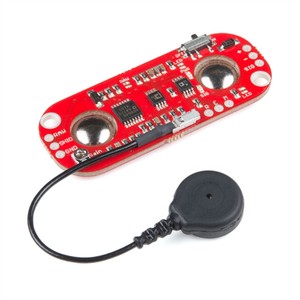
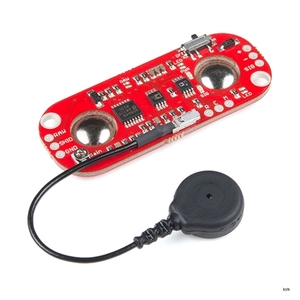
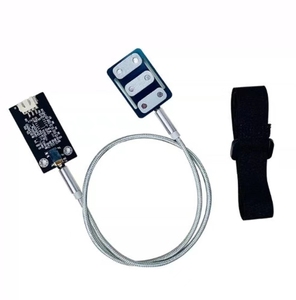
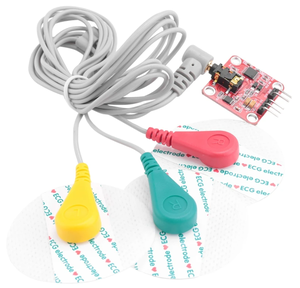
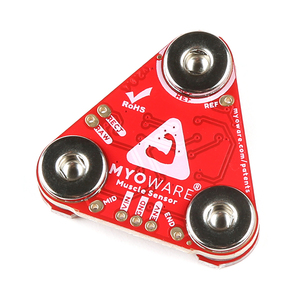
Our engineered muscle sensor modules (such as the SEN-13723, AD8232 adaptations, and MyoWare 2.0 compatible suites) incorporate multi-stage active filtering and high-precision instrumentation amplifiers. Key technical hallmarks include:
- High Input Impedance: Superior to 1010 Ohms, minimizing bio-interface loading attenuation across dry and wet electrode configurations.
- High Common-Mode Rejection Ratio (CMRR): Exceeding 110 dB to reject common-mode noise present on the human body surface.
- Adjustable Gain Matrix: Onboard precision potentiometers and software-configurable gain stages supporting overall amplification factors from 1,000x to 10,000x.
- Integrated Rectification & Envelope Extraction: Providing both raw analog sEMG waveforms for deep spectral analysis and integrated rectified envelope outputs ideal for microcontroller ADC units (Arduino, ESP32, STM32, Nordic nRF52 series).
2. Comparative Sourcing Analysis: EMG Electrodes vs. Optomyography (OMG) Sensors
When selecting muscle sensors from China manufacturers, procurement teams must evaluate the physical sensing modalities best suited to their end-user applications. Below is an authoritative technical comparison between traditional surface EMG and next-generation optical/mechanomyographic alternatives.
sEMG Surface Bio-Potentials
Direct bio-potential monitoring usingAg/AgCl gel or stainless-steel dry electrodes. Provides microsecond-level temporal precision for instantaneous muscle activation onset timing.
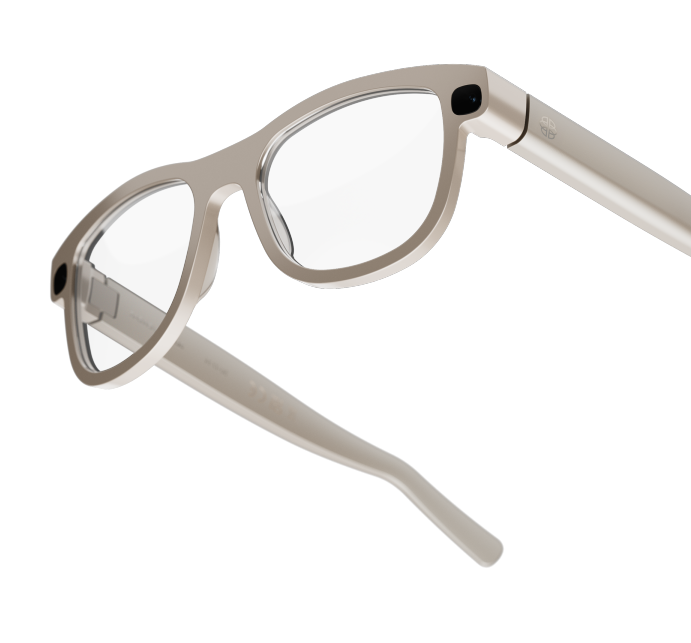
Optomyography (OMG) Systems
Patented optical sensor arrays measuring 3D muscle skin displacement without direct conductive skin contact. Immune to skin impedance drift, sweat saturation, and motion artifacts.

Hybrid Wearable Architectures
Combines 9-axis Inertial Measurement Units (IMU), altimeters, and muscle sensors to correlate muscle tension directly with biomechanical movement and posture.
3. Enterprise Manufacturing Strengths & China OEM Sourcing Advantages
As a leading specialized China wholesale supplier of bio-electric sensors, our manufacturing ecosystem in Shenzhen and Guangdong bridges the gap between theoretical biomedical engineering and cost-efficient high-volume production. Sourcing directly from our facilities ensures maximum supply chain stability, stringent quality control, and deep custom engineering support.
Key Enterprise Advantage Indicators:
- Full-Turnkey PCBA Capabilities: High-speed SMT surface placement lines capable of handling 0201 components, fine-pitch BGA packages, and specialized bio-compatible sensor housings under cleanroom standards.
- Rigorous Quality Testing Protocols: 100% automated optical inspection (AOI), functional circuit testing (FCT) using simulated bio-signals, and thermal cycle burn-in testing to guarantee minimal failure rates (<0.05%) in field deployments.
- Open-Source & SDK Compatibility: Sourced modules are pre-validated to work seamlessly with open-source suites, offering sample C/C++ libraries, Python scripts, and Unity XR plug-ins for rapid prototyping.
- Regulatory Compliance Ready: Manufactured in accordance with RoHS, CE mark, WEEE directives, and ISO 13485 quality management systems for medical and health monitoring equipment.
4. Sourcing & Industry Trends: SMM, XR, and Medical Bio-Sensing (2025–2030)
The global market for muscle sensors is undergoing a massive paradigm shift driven by three primary technological catalysts:
A. Extended Reality (XR) & Spatial Computing Gesture Interfaces
Traditional VR/AR hand tracking relies on optical cameras, which suffer from field-of-view occlusions and ambient light degradation. Wearable muscle sensor bands (utilizing forearm sEMG or optical OMG arrays) detect micro-finger twitches and subtle muscle contractions before actual physical movement occurs. This enables zero-latency interaction models in gaming, spatial interfaces, and industrial metaverse controls.
B. AI-Powered Pattern Recognition & Edge Kinematics
Modern wholesale muscle sensor hardware increasingly integrates low-power microcontroller units running tinyML machine learning models onboard. By training neural networks on multi-channel sEMG signals, devices can classify complex hand gestures, evaluate physical muscle fatigue index, detect gait abnormalities, and auto-calibrate for individual user skin impedance variations in real time.
C. Non-Contact & Dry-Electrode Ergonomics
Gel-based electrodes remain the standard for medical diagnostics, but long-term monitoring demands dry electrode or non-contact optical sensors. Wholesale buyers are aggressively transitioning toward textile-integrated dry electrodes, conductive silicone pads, and optomyographic (OMG) sensors embedded into smart apparel, eyewear, and athletic wearables.
5. Procurement Guide: How to Select the Ideal Muscle Sensor Module
When placing wholesale B2B orders or requesting custom OEM design modifications, engineering teams should reference the technical decision matrix below:
Technical Selection Criteria Checklist:
- Signal Output Format: Choose raw analog output for DSP research, rectified envelope output for low-cost microcontroller analog inputs, or digital I2C/SPI/UART streams for multi-sensor daisy chaining.
- Electrode Configuration: Single-channel differential modules (e.g., SEN-13723, MyoWare 2.0) for localized muscle group tracking; multi-channel arrays (4 to 8 channels) for complex hand gesture recognition or body composition analysis.
- Power Supply Requirements: Dual-rail supply (±3.3V to ±5V) vs. single-supply battery operation (3.7V Lithium-ion with onboard virtual ground generation).
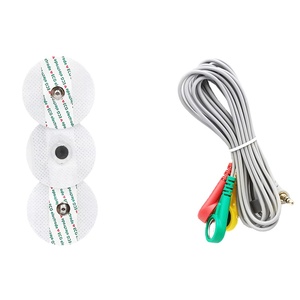
- Form Factor & Wearability: Snap-on electrode connectors for direct muscle attachment vs. remote ribbon cable leads for compact wearable enclosures.
6. Frequently Asked Questions (FAQ) for B2B Sourcing & Technical Integration
What is the Minimum Order Quantity (MOQ) for custom OEM muscle sensor PCBA manufacturing?
Our standard off-the-shelf muscle sensor modules have a low MOQ starting at 50 units for evaluation samples. For custom OEM/ODM PCB layouts, customized electrode connector configurations, or custom firmwares, our standard production MOQ is 500 to 1,000 units per batch.
How do your muscle sensors handle ambient 50Hz/60Hz electrical noise and motion artifacts?
Our hardware utilizes a multi-tier filtering architecture comprising high CMRR (>110dB) instrumentation amplifiers, active Right-Leg Drive (RLD) / reference ground restoration circuits, 3rd-order Butterworth high-pass filtering (cutoff at ~15Hz to strip motion artifacts), and 2nd-order low-pass active filtering (cutoff at ~500Hz).
Can we integrate these modules directly with microcontrollers like Arduino, ESP32, or Raspberry Pi?
Yes. All standard muscle sensor modules deliver a 0V to 3.3V / 0V to 5V analog voltage output scaled for direct connection to any analog-to-digital converter (ADC) pin. We provide sample sketch code, SDKs, and mathematical conversion routines for instant plug-and-play development.
What is the difference between wet conductive gel electrodes and dry electrode muscle sensing modules?
Wet Ag/AgCl electrodes provide low initial contact impedance and superior signal quality for short-term diagnostic tests. Dry electrode modules utilize ultra-high input impedance instrumentation amplifiers coupled with nickel-plated, gold-plated, or conductive rubber contacts, allowing continuous skin contact without skin irritation or gel drying over extended periods.
Do your body composition and muscle analyzer machines support custom SDK and cloud data syncing?
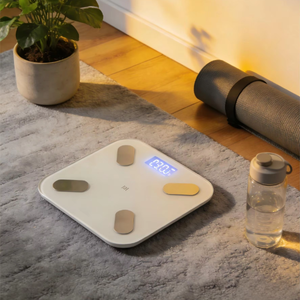
Yes, multi-segment body composition units (such as the U+300 and 4-electrode smart scale modules) feature Bluetooth 5.0, Wi-Fi, or RS232/USB interfaces. We supply comprehensive API documentation and SDKs for Android, iOS, Windows, and Web-based healthcare platforms.
What regulatory compliance certifications are available for export to the US and EU markets?
Our manufacturing facility operates under ISO 13485 quality management. Standard module products carry CE, FCC, and RoHS compliance certificates. We also offer full technical file compilation support for clients pursuing FDA 510(k) or EU MDR medical registrations.