Emteq Labs Blog & Scientific Updates
Explore the latest articles on optomyography (OCO™), facial expression sensing, XR biofeedback, and affective computing.
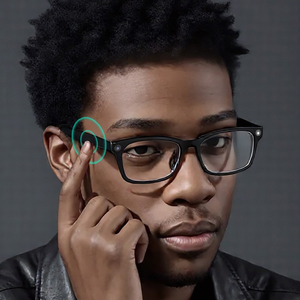
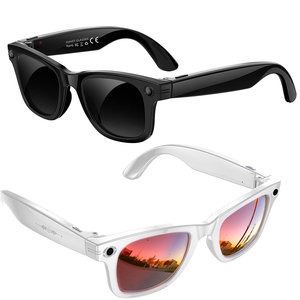
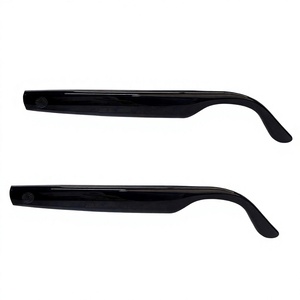
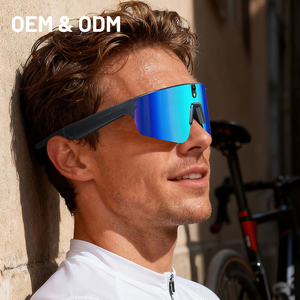
Featured Spatial Computing & Wearable AI Hardware
Explore our state-of-the-art product matrix engineered for research, enterprise workflows, tourism, and consumer spatial interactions.

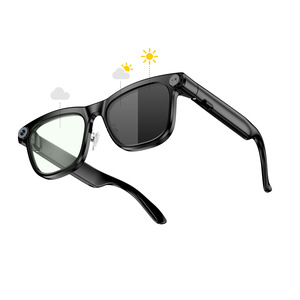

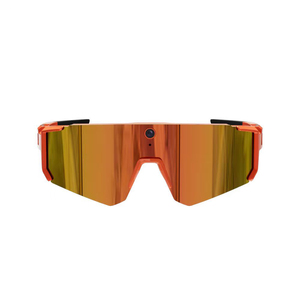
Global Spatial Computing Procurement & Sourcing Landscape
A technical whitepaper analysis on hardware convergence, OEM/ODM manufacturing ecosystems in China, and strategic component selection for enterprise procurement buyers.
1. Shift Towards Sensor Fusion Architectures
Modern B2B procurement strategies are pivoting away from single-function smart glasses toward unified spatial computing platforms. Decision-makers demand hardware that integrates non-contact bio-sensing (such as optomyography OMG), 9-axis Inertial Measurement Units (IMUs), and outward-facing scene cameras. This multi-sensor alignment enables spatial anchoring, emotional valence indexing, and precise contextual tracking in real time.
2. Micro-OLED & Waveguide Optical Sourcing
Optical engines represent up to 40% of the Bill of Materials (BOM) in spatial computing devices. Global buyers are prioritizing China-based suppliers with established supply chains for Micro-OLED display panels paired with Diffractive Surface Surface Waveguide optics. High-transmissivity (>85%), ultra-bright outdoor legibility (>3000 nits at engine level), and low optical distortion are now standard baseline requirements for enterprise RFQs.
3. Edge AI Processing & Privacy Compliance
With hardware deployed in clinical research, tourism, and industrial logistics, on-device artificial intelligence has become paramount. Enterprise procurement contracts mandate local execution of voice translation (140+ languages), object recognition, and facial muscle telemetry. Pre-processing sensor data at the hardware edge ensures adherence to global data protection regimes including GDPR, HIPAA, and ISO/IEC 27001 standards.
Future Technology Development Trends in Spatial Computing
Where the industry is heading: Breakthrough optical innovations, biological signal integration, and lightweight ergonomic paradigms over the next 3-5 years.
Non-Contact Optomyography
Transitioning from gel surface EMG to non-contact optical sensing (OCO™ OMG), capturing sub-millimeter skin movement for continuous emotion and expression analytics without skin irritation.
Spatial Multimodal LLMs
Direct integration of micro Vision-Language-Action (VLA) models into headwear silicon, allowing glasses to recognize contextual scenes and execute zero-latency translation and visual queries.
Ultra-Low-Power Photonics
Adoption of silicon photonics and micro-LED projection engines operating under 300mW total system power, enabling all-day 18-hour continuous wearing profiles on a standard 350mAh lipo battery.
Neuromorphic Eye Tracking
Replacing traditional frame-based eye cameras with event-based camera sensors (EVS) for 1000Hz foveated rendering tracking at less than 5% of traditional processing power loads.
Sub-40 Gram Form Factors
Advanced titanium-magnesium matrix frames combined with lightweight optical resin, bridging the ergonomic gap between standard corrective prescription glasses and spatial AR gear.
Why Choose Our China Manufacturing & R&D Facility
Bridging Western clinical-grade research innovation with China's ultra-scalable high-precision hardware mass production.
Patented Bio-Sensing & Sensor Architecture
Our operational capability integrates groundbreaking research patented technologies—including non-contact OCO™ Optomyography (OMG) sensors (Patents GB2561537, GB2604076, US11,003,899, US11,538,279). Unlike legacy EMG systems requiring conductive gel or facial camera setups that degrade in sunlight, our optical sensors measure three-dimensional skin dynamics continuously under real-world lighting conditions.
Turnkey OEM / ODM Mass Production
Spanning state-of-the-art cleanrooms and multi-line high-speed Surface Mount Technology (SMT) infrastructure in China, we deliver complete turn-key product cycles. From optical engine alignment, PCB micro-soldering, IP66 dust-and-water ingress testing, to automated sensor calibration, our plant executes volume orders exceeding 100,000 units per month while holding strict ISO9001 and ISO13485 certifications.
Open SDK & Machine Learning Platform
Hardware is only as strong as its software ecosystem. We supply enterprise partners with full SDK access (iOS, Android, Windows, Unity, Unreal Engine) providing raw 9-axis IMU streams, 3D facial muscle activation signals, valence scoring, and context event annotations. Integrate our pre-trained machine-learning pipelines directly into your proprietary healthcare, therapy, or XR applications.
Spatial Computing B2B Sourcing & Technical FAQ
Addressing key engineering, procurement, compliance, and customization inquiries from industrial clients.
Partner with China's Premier Spatial Computing Manufacturing Plant
Whether you require ready-to-deploy developer kits, clinical-grade emotion sensing platforms, or high-volume enterprise white-label production, our engineering team is ready to realize your hardware roadmap.