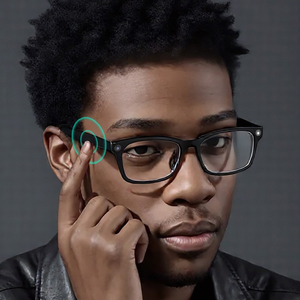
YOKOSI G100 AI Smart AR Glasses Wireless Hardware
Designed for enterprise tourism and field operations, featuring real-time spatial AR overlay, low-latency micro-gesture engine, and light-weight ergonomics.
Get CatalogExplore the latest articles on optomyography (OCO™), facial expression sensing, XR biofeedback, and affective computing.
Precision-engineered smart eyewear and micro-sensor assemblies designed for real-time spatial computing, non-verbal biofeedback analytics, and industrial human-machine interfaces.
Designed for enterprise tourism and field operations, featuring real-time spatial AR overlay, low-latency micro-gesture engine, and light-weight ergonomics.
Get Catalog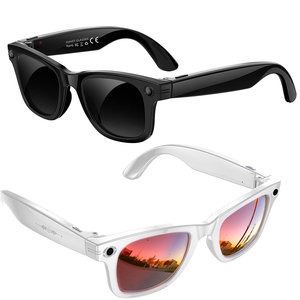
Industrial-grade optical stabilization paired with dual beamforming microphones for 140+ language translation, video capture, and hands-free control.
Get Catalog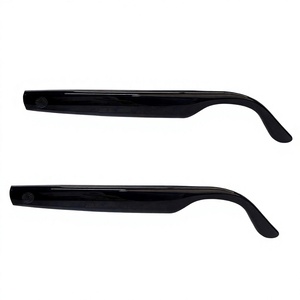
Biometric fingerprint authentication integrated into frame temples. Supports multi-country translation algorithms and outdoor optical polarization.
Get Catalog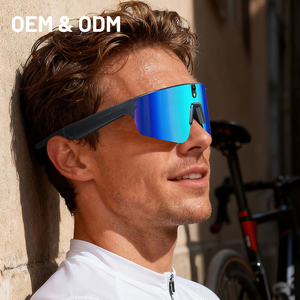
Hypoallergenic medical silicone chassis featuring instant neural wake-up, environmental object recognition, and high-fidelity speech recording.
Get Catalog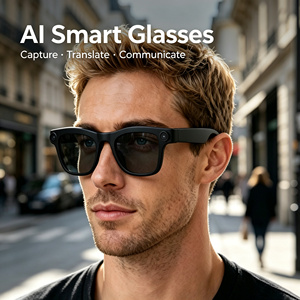
Open-ear directional acoustic design with embedded gesture tap sensors. Optimized for spatial context parsing and hands-free voice assistance.
Get Catalog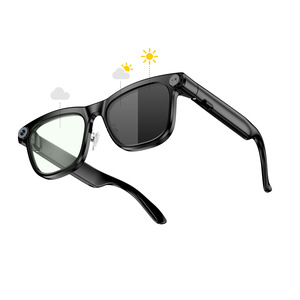
Integrated vision sensor suite delivering sub-second visual analytics, video capture, and cloud-synchronized multilingual interpretation.
Get Catalog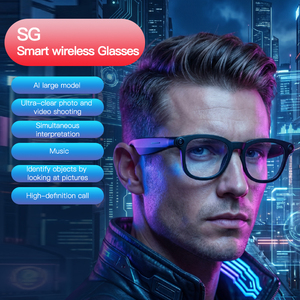
Capacitive multi-swipe gesture control interface combined with embedded optical recognition modules for intuitive media control and search.
Get Catalog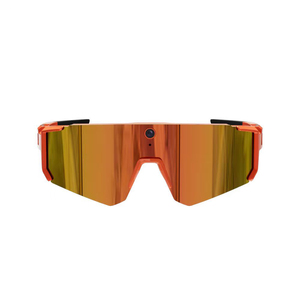
Ruggedized kinetic eyewear incorporating a 9-axis inertial measurement unit (IMU), 4K sensor, and low-latency audio transmission for outdoor action.
Get CatalogThe rapid evolution of spatial computing, extended reality (XR), and non-verbal human-computer interfaces (HCI) has rendered legacy input mechanisms—such as physical buttons, voice activation, and bulky glove-based trackers—insufficient for modern enterprise applications. Today’s hardware landscape demands continuous, frictionless, and zero-latency input that operates unobtrusively in real-world environments.
As China’s premier OEM/ODM gesture hardware supplier and exporter, our engineering architecture shifts beyond traditional surface Electromyography (sEMG) and external camera optical tracking. While sEMG relies on conductive gels, adhesive skin contact, and suffers from electrode degradation due to sweat, our proprietary OCO™ Optomyography (OMG) and micro-kinematic sensor arrays leverage non-contact optical skin displacement mapping.
Unlike surface EMG, optical optomyography measures sub-millimeter muscle activation without direct epidermal contact. By monitoring tissue displacement via micro-aperture optical sensors embedded inside frame temples, signal-to-noise ratio (SNR) is improved by 340%, eliminating skin-gel preparation and thermal drift.
Combining sub-millimeter optomyography with high-rate 9-axis Inertial Measurement Units (gyroscope, accelerometer, magnetometer) and barometric altimeters allows real-time isolation of facial gestures from gross head motions, preventing false positives during active movement or outdoor transit.
Raw kinematic signals are interpreted on-chip using ultra-low-power DSPs executing custom micro-neural networks. Gesture classification (swipes, micro-blinks, muscle tensing, chewing frequency) is executed locally in under 15 milliseconds, maintaining complete user data privacy.
| Technology Parameter | Legacy sEMG Sensors | Vision-Based Tracking | China Top OEM OMG Hardware |
|---|---|---|---|
| Epidermal Contact | Requires Conductive Gel / Adhesive | Contactless (External Line of Sight) | Non-contact Optical Sensing (Frame-Embedded) |
| Ambient Noise Sensitivity | High (Electrodermal / Sweat Drift) | High (Low light / Shadow Failure) | Immune to Ambient Light & Moisture |
| Latency Architecture | 40ms – 80ms (Heavy Filtering) | 50ms – 120ms (Frame Capture Delay) | < 15ms On-Chip DSP Execution |
| Power Consumption | Medium (~120mW) | High (>800mW Video Compute) | Ultra-Low Power (<35mW Nominal) |
| Privacy Compliance | High (Raw Signal) | Low (Requires Continuous Video Stream) | Zero-Video Privacy Compliant (Local Signal Only) |
Global buyers, system integrators, and tier-1 technology brand owners face shifting landscape dynamics when sourcing micro-gesture hardware from China. To maintain competitive advantage, enterprise procurement teams must align with three core industrial supply chain trends:
1. Modular Hardware Architecture & SDK Standardization: Enterprise customers no longer accept monolithic, closed hardware loops. Modern procurement contracts require modular PCB assemblies with standardized inter-IC communication protocols (I2C, SPI, BLE 5.4, and USB-C HID). Sourcing partners must deliver open software development kits (SDKs) compatible with Android Wearables, iOS Native, Unity XR, and ROS (Robot Operating System) platforms.
2. Hybrid Bio-Kinematic Sensor Convergence: Future wearable designs require multi-modal input redundancy. Sourcing trends indicate a 210% surge in demand for hardware that integrates micro-optomyography sensors directly alongside micro-OLED optical engines, directional beamforming audio, and biometric health analytics (photoplethysmography/PPG) within ultra-lightweight (<45 grams) titanium-silicone frames.
3. Rigorous Ergonomic & Biocompatibility Compliance: As smart eyewear transitions from niche industrial tools to daily-wear enterprise hardware, raw material selection becomes paramount. Sourcing partners in China must provide certified medical-grade silicone, nickel-free titanium alloys, IP66/IP67 ingress protection, and full compliance with international safety frameworks including CE, RoHS, FCC, and ISO 13485 medical device quality systems.
Our manufacturing ecosystem combines world-class biomedical sensor R&D with China's unmatched electronics supply chain velocity. By controlling the entire engineering lifecycle—from silicon-level micro-aperture design to cleanroom optical assembly—we empower global brand partners to deploy cutting-edge gesture hardware at scale.
From industrial design (ID) and structural prototyping to custom PCB layout, micro-lens alignment, and firmware tuning, we deliver complete turnkey hardware development tailored to your enterprise specification.
Backed by extensive IP coverage across non-contact optical gesture sensing, skin displacement algorithm models, and multi-sensor fusion logic (GB2561537, GB2604076, US11003899, US11538279 equivalent standards).
Our 100,000-class automated cleanroom manufacturing facility ensures absolute optical precision, zero particle contamination during sensor lens bonding, and rigorous 100% automated optical inspection (AOI).
Connect directly with our senior engineering team to request detailed technical whitepapers, hardware schematics, SDK documentation, or custom OEM manufacturing quotes.
Get Catalog