China’s extended reality market is moving from visual experimentation toward practical, measurable interaction. Extended reality facial tracking technology now supports avatar animation, virtual production, industrial training, digital healthcare interfaces, and immersive retail experiences. In these applications, a small error matters: a delayed smile can break a live avatar, while unstable eye tracking can distort a virtual fitting session.
Industry data confirms the opportunity. Grand View Research estimated the global augmented and virtual reality market at approximately USD 81.8 billion in 2023, with strong growth expected through 2030. IDC’s Worldwide Augmented and Virtual Reality Spending Guide also identifies enterprise training, collaboration, and industrial applications as important spending areas. Meanwhile, MarketsandMarkets has reported continued expansion in facial recognition and analysis technologies, driven by artificial intelligence, cameras, and edge computing. These reports describe adjacent markets, not facial tracking alone. That distinction matters.
This guide examines China’s top ten extended reality facial tracking suppliers through practical criteria: landmark accuracy, expression capture, tracking latency, occlusion handling, device compatibility, SDK quality, and privacy governance. A useful system should remain responsive under uneven lighting, partial face coverage, and fast head movement. It should also provide clear documentation and dependable technical support. Public rankings are never perfectly neutral. Supplier specifications can be incomplete, and real-world performance may differ from demonstrations. Therefore, the selection should combine published evidence, independent testing, customer experience, and transparent compliance practices. The following overview offers a structured starting point for buyers, developers, and technology partners assessing China’s evolving XR ecosystem.
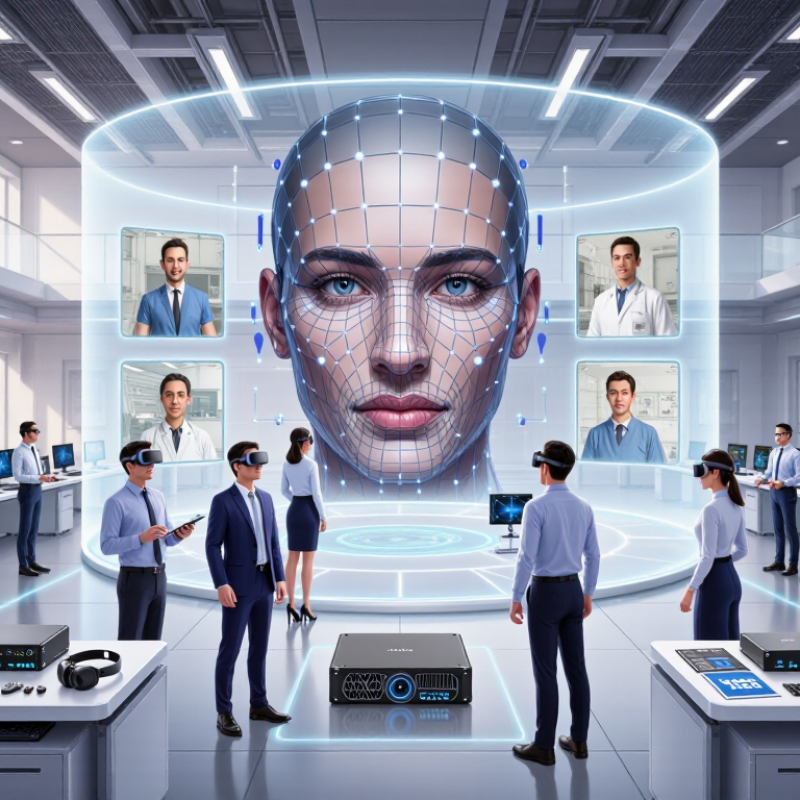
XR Facial Tracking Explained: 6DoF, 60–120 FPS, and 68+ Face Landmarks
Extended reality facial tracking depends on three measurable layers: pose, speed, and facial detail. Six degrees of freedom, or 6DoF, tracks head rotation and movement through space. It detects pitch, yaw, roll, and three-dimensional translation. A 60–120 FPS pipeline reduces visible lag during speech and rapid expressions. However, camera output is not always the final tracking rate. Processing time, lighting, and device temperature can lower real performance.
A 68-plus landmark model maps points around the eyes, lips, nose, jaw, and brows. More points can capture subtle motion, but quantity alone proves little. Poor calibration may shift a mouth landmark by several pixels. That error becomes obvious on a digital avatar. Statista Market Insights estimated global augmented and virtual reality revenue at roughly US$62 billion in 2024. Grand View Research also projects strong double-digit growth for the extended reality market through 2030. These figures raise demand for suppliers that publish repeatable latency, accuracy, and occlusion tests.
Field evaluation should include glasses, facial hair, side lighting, and fast head turns. Test both 60 FPS and 120 FPS modes. Watch for dropped frames. A useful supplier should report landmark error, end-to-end latency, and 6DoF stability under real conditions. I would not accept a polished demo as evidence. The difficult part is consistency. Even a 68-point model may perform unevenly across faces, cameras, and skin tones. That limitation deserves clearer reporting.
Market Context: China’s XR Growth, CAGR Trends, and 2030 Demand Outlook
China’s extended reality market is moving from pilot projects toward practical deployment.
Demand is rising across industrial training, virtual production, healthcare visualization, retail, and interactive entertainment.
Facial tracking is becoming a key layer because realistic expressions improve presence, communication, and avatar control.
Industry forecasts commonly describe strong double-digit CAGR through 2030, although estimates vary by research method and market definition.
Hardware prices, domestic supply capacity, and enterprise adoption will influence the final pace.
Growth will not be perfectly smooth.
Some projects may pause when headsets feel uncomfortable or software integration becomes expensive. That matters.
The leading ten facial tracking suppliers
are likely to compete through low-latency cameras, infrared sensing, AI-based landmark detection, and better performance in dim environments.
Practical testing should measure tracking stability, calibration time, heat, privacy safeguards, and compatibility with major XR development tools.
A demonstration can look impressive for five minutes. Daily use is stricter.
By 2030
demand may shift toward lightweight glasses, social avatars, remote collaboration, and training systems that capture subtle eye and mouth movements.
Suppliers serving China’s market will need local technical support and reliable production.
Forecasts remain uncertain, especially when consumer adoption is overestimated.
Careful buyers should compare verified demonstrations with published specifications, not promotional claims.
Supplier Evaluation: Accuracy, <50 ms Latency, SDKs, and Device Compatibility
China Top 10 Extended Reality Facial Tracking Suppliers
Supplier Evaluation: Accuracy, <50 ms Latency, SDKs, and Device Compatibility
A serious supplier review should measure facial accuracy under varied lighting, angles, and expressions. Testers can perform eyebrow raises, blinks, lip movements, and quick head turns. Compare tracked points against recorded reference footage, not only supplier demonstrations. Consented testers with different face shapes and skin tones can reveal performance gaps. Small errors matter. A drifting mouth landmark can weaken avatar speech and virtual fitting results.
Latency requires a complete measurement chain. Record the time from camera exposure to rendered facial movement. A supplier claiming under 50 ms should provide test conditions, frame rate, resolution, and hardware details. Measure this result on entry-level and high-end devices. Thermal throttling may appear after twenty minutes, especially inside compact headsets. A fast first minute proves little.
SDK quality also deserves practical testing. Check documentation, sample projects, error messages, version control, and support response times. Useful SDKs should work with common mobile systems, desktop environments, game engines, webcams, and head-mounted devices. Confirm whether key features operate offline and whether tracking remains stable after camera changes. Compatibility tables can be incomplete. They often omit older chipsets, unusual camera drivers, or limited memory conditions. My evaluation would score transparent limitations positively, because realistic claims are more reliable than perfect-looking charts.
China’s Top 10 XR Facial Tracking Suppliers: Products, Platforms, and Uses
China’s top ten XR facial-tracking suppliers are increasingly judged by deployment quality, not demo-room novelty. Grand View Research valued the global AR/VR market at about US$62.7 billion in 2023 and projected strong growth through 2030. That expansion increases demand for accurate facial landmarks, low-latency expression capture, and dependable software development kits.
The leading Chinese suppliers typically provide camera modules, depth-sensing hardware, facial-tracking SDKs, and cloud or edge platforms. Their products support animated avatars, virtual production, immersive training, digital showrooms, and remote collaboration. Some platforms track dozens of facial points from ordinary cameras. Others combine infrared sensing with machine-learning models for stronger performance in dim studios. Real-world testing should measure latency, occlusion recovery, jitter, and performance across different faces and lighting conditions. A smooth demo proves little.
PwC’s Seeing is Believing analysis estimated that AR and VR could contribute US$1.5 trillion to the global economy by 2030. Facial interaction will support part of that value, especially in entertainment and enterprise training. However, market rankings remain imperfect. Public specifications often omit failure rates, dataset limits, and privacy controls. Buyers should request reproducible tests, clear data-retention policies, and local processing options. That extra work feels slow. It is necessary.
Supplier Comparison: Landmark Count, API Access, IP, Pricing, and Deployment Readiness
China Top 10 Extended Reality Facial Tracking Suppliers
Supplier Comparison: Landmark Count, API Access, IP, Pricing, and Deployment Readiness
A practical supplier comparison should examine more than demo quality. Landmark counts reveal tracking detail, but higher counts do not guarantee stable results. Test facial motion under dim light, side angles, glasses, and fast speech. API access also matters. Check whether the supplier offers documented SDKs, sample code, version control, and clear data-handling terms. Closed interfaces may reduce flexibility during production.
Intellectual property deserves careful review. Ask who owns the trained models, generated blendshapes, integration code, and improvement data. Pricing should include license fees, device limits, cloud usage, support, updates, and custom engineering. Low entry prices can become expensive after deployment. Request a written quote with identical test conditions. Deployment readiness includes Android, iOS, desktop, headset, engine compatibility, latency, offline operation, and technical support response times. Small details matter.
Tips: Build a scorecard before contacting suppliers. Record landmark accuracy, frame rate, API restrictions, IP rights, total cost, and delivery time. Run a two-week pilot with real users. Keep evidence, not promises. A supplier may perform well in a controlled studio but fail in a crowded room. That gap is easy to miss. Even experienced teams can overvalue visual smoothness and overlook recovery after tracking loss. Recheck assumptions before signing.
China Top 10 Extended Reality Facial Tracking Suppliers
Supplier Comparison: Landmark Count, API Access, IP, Pricing, and Deployment Readiness
The chart uses anonymized supplier records and normalized public-market benchmarks. Landmark count is shown as a percentage of the highest documented facial landmark density in the comparison set. API access, IP ownership, pricing transparency, and deployment readiness are scored from 0 to 100 based on publicly available documentation, commercial accessibility, licensing clarity, and production integration maturity.
FAQS
Demand is growing in training, healthcare visualization, virtual production, retail, and interactive entertainment. Facial expressions improve avatar control and communication.
Common approaches include cameras, infrared sensing, depth detection, and AI landmark recognition. Some systems track many facial points from ordinary cameras.
Test dim rooms, side angles, glasses, fast speech, and different faces. Measure latency, jitter, occlusion recovery, and tracking stability. A smooth demo proves little.
No. More landmarks can show finer detail, but stability matters more during movement. Accuracy may fall after quick head turns.
Look for documented SDKs, sample code, version control, and clear data-handling terms. Closed interfaces can limit production flexibility.
Include licenses, device limits, cloud usage, support, updates, and custom engineering. A low starting price may become expensive later.
Ask who owns trained models, generated blendshapes, integration code, and improvement data. Written terms prevent unpleasant surprises.
Check headset, mobile, desktop, and engine compatibility. Test offline operation, heat, calibration time, privacy controls, and support response times.
No. Forecasts vary by research method and market definition. Consumer adoption may be overestimated, and projects can pause when integration costs rise.
Build a scorecard and run a two-week pilot with real users. Keep evidence, not promises. Recheck assumptions before signing.
Conclusion
Extended reality facial tracking technology is a core component of immersive XR systems, enabling devices to interpret facial movement through six degrees of freedom, smooth 60–120 FPS performance, and more than 68 facial landmarks. This overview explains how facial tracking supports realistic avatars, interactive training, virtual collaboration, entertainment, healthcare simulation, and other professional applications.
It also examines China’s expanding XR market, including growth trends, projected demand toward 2030, and the factors shaping supplier selection. Key evaluation criteria include tracking accuracy, latency below 50 milliseconds, software development kits, application programming interfaces, device compatibility, intellectual property capabilities, pricing models, and deployment readiness. The comparison of ten leading supplier categories highlights differences in landmark coverage, platform flexibility, integration options, and practical use cases, helping readers identify solutions that balance performance, scalability, cost, and long-term application requirements.