Emteq Labs Blog & Scientific Updates
Explore the latest articles on optomyography (OCO™), facial expression sensing, XR biofeedback, and affective computing.
2026 Best Wearable Mental Health Monitoring Sensors
Mental health is becoming a measurable public health priority, not merely a private concern. The World Health Organization reported that nearly one in eight people worldwide lived with a mental disorder in 2019. It also estimated that depression and anxiety cost the global economy about US$1 trillion annually through lost productivity. These figures explain why clinicians, researchers, and technology companies are examining continuous digital signals.
Wearable mental health monitoring sensors can track heart-rate variability, sleep duration, skin temperature, electrodermal activity, and movement. A wrist device may record a restless night, elevated pulse, and reduced daytime activity before a user recognizes a pattern. Industry analyses from Grand View Research and Fortune Business Insights continue to project strong growth across wearable technology and remote monitoring markets. Meanwhile, Deloitte’s digital health research shows increasing consumer interest in connected health tools, although trust and data protection remain decisive barriers.
The field is promising, but not settled. These sensors measure physiological proxies, not emotions or diagnoses. A high heart rate might reflect anxiety, exercise, caffeine, or an uncomfortable meeting. Clinical validation also remains uneven across age groups, skin tones, cultures, and medical conditions. The 2023 World Health Organization guidance on digital health emphasizes evidence, safety, equity, and responsible governance. Those principles should guide the 2026 sensor landscape. The best products will combine accurate hardware, transparent algorithms, human oversight, and clear consent. Some claims still move faster than the evidence. That deserves scrutiny.
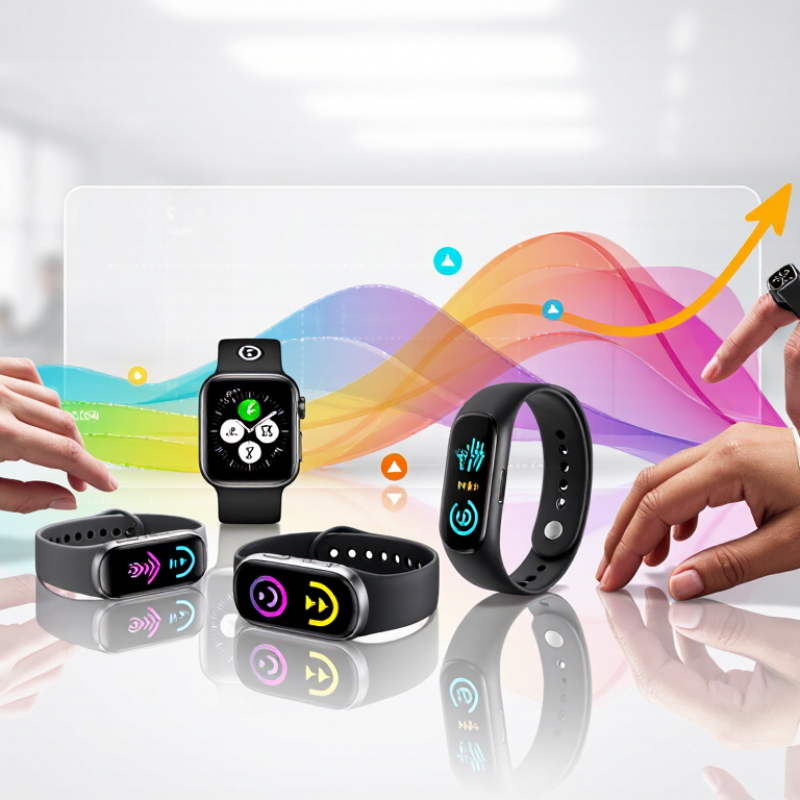
What Wearable Mental Health Monitoring Sensors Are
2026 Best Wearable Mental Health Monitoring Sensors
Wearable mental health monitoring sensors measure body signals linked with stress, sleep, and emotional strain. They do not directly measure thoughts or diagnose mental illness. The World Health Organization’s World Mental Health Report 2022 estimates that nearly one in eight people globally live with a mental disorder. This scale increases interest in continuous, less intrusive monitoring.
Photoplethysmography tracks heart rate and heart-rate variability through reflected light. Electrodermal activity sensors detect tiny changes in skin conductance caused by sweating. Accelerometers record movement, restlessness, and sleep patterns. Skin-temperature sensors can add useful context. Some advanced devices combine these signals with electrocardiography or brainwave measurements. The strongest systems compare several signals instead of trusting one number.
Not a diagnosis.
A 2024 review in Sensors reported that multimodal wearable data can support stress recognition, but accuracy changes across users and environments. Deloitte’s 2024 Digital Consumer Trends research also identifies health tracking as a leading reason people use connected wearables. Still, poor sleep, exercise, caffeine, and warm rooms can distort readings. Personal experience matters here. A racing heart may reflect anxiety, stairs, or an uncomfortable meeting. Data needs careful interpretation, secure storage, and professional oversight. The label “mental health sensor” sounds more precise than the technology currently is.
How These Sensors Detect Mental Health Signals
Wearable mental health sensors detect patterns, not emotions directly. They read heart rate, heart-rate variability, skin temperature, motion, respiration, and electrodermal activity. These signals can change during stress, poor sleep, or emotional strain. A rising pulse with sweaty skin may suggest arousal. It does not prove anxiety.
The World Health Organization’s World Mental Health Report 2022 estimated that nearly one in eight people lived with a mental disorder in 2019. The same report noted a 25% global rise in anxiety and depression during the first pandemic year. This context explains the demand for continuous monitoring. Sensors collect small signals throughout the day, then algorithms compare them with a person’s usual baseline. A sudden nighttime heart-rate increase may appear beside fragmented sleep and reduced movement. That combination deserves attention.
The data still has limits. A quiet wrist can mean calm, or poor sensor contact. A high pulse can follow stairs, caffeine, pain, or fear. Research reviews in digital health also warn that wearable measurements vary across skin types, body movement, device placement, and algorithm design. Users should treat these readings as prompts for reflection, not clinical diagnoses. Privacy matters too, because intimate physiological patterns can reveal daily routines and vulnerable moments. The technology is promising, but not perfectly understood.
Key Sensor Types and Their Monitoring Functions
2026 Best Wearable Mental Health Monitoring Sensors
Key Sensor Types and Their Monitoring Functions
Wearable mental health monitoring depends on several sensor types, not one magic device. Optical heart-rate sensors track pulse and heart-rate variability. These signals may reflect stress, recovery, or poor sleep. Electrodermal activity sensors measure tiny changes in skin conductance caused by sweating. They can identify arousal, but anxiety is not the only explanation. Accelerometers and gyroscopes capture movement, restlessness, and sleep patterns. Skin-temperature sensors add context during illness, exercise, or emotional strain.
The World Health Organization reported that nearly one in eight people lived with a mental disorder in 2019. This scale increases interest in earlier, non-invasive monitoring. IDC reported approximately 538 million wearable devices shipped globally in 2024. However, more devices do not guarantee better mental health insights. Sensor readings can change with caffeine, medication, heat, or loose contact. Individual baselines matter more than isolated alerts. That point is often overlooked.
Tips: Choose wearables combining heart rate, motion, sleep, and skin-response data. Check calibration after exercise. Review weekly patterns, not single readings. Keep a private symptom journal beside the sensor data. If results conflict, question the measurement before questioning yourself. Current systems remain imperfect, and reflective human judgment still matters.
2026 Best Wearable Mental Health Monitoring Sensors — Key Sensor Types and Their Monitoring Functions
Representative sampling frequencies commonly used in wearable sensing. Higher-frequency signals capture rapid physiological changes, while lower-frequency signals are suitable for slower trends.
ECG and PPG support heart-rate and heart-rate-variability analysis. Accelerometers identify movement, sleep, and activity context. EDA reflects changes in skin conductance associated with sympathetic arousal, while skin-temperature sensors track slower thermal trends. Pulse-oximetry sensors estimate blood oxygen saturation and pulse rate. Sampling rates vary by device, operating mode, and power-management settings.
How Data Is Interpreted for Mental Health Insights
Mental health sensors collect signals such as heart rate, skin temperature, movement, breathing, and sleep patterns. These signals do not directly measure anxiety or depression. They provide clues about changes in the body. Interpretation requires a personal baseline, because a late shift, illness, or intense workout can distort the readings. A sudden rise in nighttime heart rate may reflect stress, but it may also follow caffeine or a warm room. Numbers can mislead.
Tips: Review trends across several days, not one unusual reading. Compare sensor data with mood notes, sleep quality, meals, and daily events. Use validated questionnaires when possible, and discuss persistent concerns with a qualified health professional. Keep the device fitted consistently. Small gaps matter.
Reliable interpretation combines algorithms with human judgment. A useful system should explain confidence levels and identify missing data. It should avoid claiming that a pattern proves a mental health condition. Privacy also matters; users should understand what is collected, how long it is stored, and who can access it. In practice, interpretation is imperfect. Skin contact changes, battery loss, and individual physiology can weaken accuracy. I would treat wearable insights as conversation starters, not clinical verdicts. The most meaningful signal may appear when repeated data matches lived experience over time.
2026 Best Wearable Mental Health Monitoring Sensors - How Data Is Interpreted for Mental Health Insights
| Sensor or Data Stream | Primary Physiological Signal | Typical Wearable Measurement | How the Data Is Interpreted | Potential Mental Health Insight | Evidence Quality for Individual Use | Important Limitations |
|---|---|---|---|---|---|---|
| Optical Heart-Rate Sensor | Changes in blood volume detected through photoplethysmography (PPG) | Heart rate, resting heart rate, and pulse waveform; commonly sampled from several times per second to continuous intervals depending on activity | Algorithms identify pulse peaks and calculate heart rate. Repeated measurements are compared with the person’s own baseline rather than a single universal threshold. | May help identify changes in physiological arousal, recovery, sleep-related rest, or possible stress periods. | Moderate for physiological trends; indirect for mental health | Motion, loose fit, skin contact, temperature, medication, illness, and physical activity can change readings. Heart rate alone cannot identify anxiety or depression. |
| Electrocardiography (ECG) | Electrical activity of the heart | Single-lead or limited-lead ECG recordings, often used for short spot checks or selected periods | R-wave timing is used to estimate beat-to-beat intervals. Clean recordings may support heart-rate-variability calculations such as RMSSD. | Can contribute to assessment of autonomic regulation, stress reactivity, and recovery when interpreted with context and repeated observations. | Moderate for heart-rhythm measures; limited for clinical mental health conclusions | Stress, sleep loss, breathing pattern, exercise, caffeine, illness, and cardiac conditions affect results. ECG-derived HRV is not a standalone diagnostic marker. |
| Heart-Rate-Variability Analysis | Variation in time between successive heartbeats | Time-domain measures such as RMSSD and SDNN; frequency-domain measures may also be calculated from suitable recordings | Values are evaluated against an individual baseline, recording quality, posture, breathing, and time of day. Trends are generally more useful than isolated values. | May indicate changes in recovery, autonomic balance, sleep quality, or response to sustained stress. | Moderate for trend monitoring; low specificity for mental health conditions | HRV is affected by age, fitness, respiration, alcohol, medication, illness, menstrual cycle, and measurement duration. Higher is not always better. |
| Skin Temperature Sensor | Temperature at or near the skin surface | Continuous or periodic relative temperature readings, usually interpreted as deviations from a personal baseline | Algorithms examine nighttime trends, abrupt changes, and relationships with sleep, activity, environment, and other physiological signals. | May provide context for sleep disruption, illness, circadian changes, or stress-related physiological shifts. | Limited for direct mental health interpretation | Ambient temperature, device position, bedding, fever, menstrual-cycle changes, and skin contact strongly influence readings. It is not equivalent to core body temperature. |
| Electrodermal Activity (EDA/GSR) | Changes in skin conductance associated with sweat-gland activity | Tonic skin conductance and phasic responses, often expressed as peaks or changes per unit of time | Short increases may be classified as sympathetic arousal events after motion and signal-quality checks. Interpretation requires activity and environmental context. | May help identify periods of arousal or stress reactivity and support biofeedback or self-awareness exercises. | Moderate for arousal detection; low specificity for emotional cause | EDA cannot distinguish anxiety, excitement, pain, heat, physical effort, or surprise without contextual data. Sensor placement and contact pressure matter. |
| Respiration Sensor or Derived Breathing Rate | Breathing frequency and, when available, breathing regularity | Breaths per minute estimated from chest motion, impedance, PPG modulation, or another sensor signal | Data are aggregated across sleep, rest, and activity. Sudden changes are interpreted alongside heart rate, movement, and sleep stage estimates. | May reveal changes associated with relaxation, sleep disruption, exercise recovery, or acute physiological arousal. | Moderate under resting conditions; lower during movement | Speech, posture, exercise, respiratory illness, nasal obstruction, and sensor placement affect accuracy. Breathing rate does not establish a mental health diagnosis. |
| Accelerometer and Gyroscope | Body movement, orientation, and activity intensity | Step count, activity duration, sedentary time, movement regularity, and sleep-related motion | Algorithms classify movement patterns and create daily or weekly behavioral profiles. Meaning is strongest when compared with the person’s usual routine. | May highlight reduced activity, irregular routines, nighttime restlessness, or behavioral changes that warrant personal reflection. | Moderate for activity patterns; indirect for mental health | Wear location, mobility limitations, occupation, intentional rest, and device non-wear can distort results. Low activity has many possible causes. |
| Sleep-Monitoring Sensor Fusion | Movement, heart rate, pulse waveform, and sometimes oxygen or temperature signals | Estimated sleep duration, sleep timing, awakenings, sleep regularity, and sleep-wake periods | Models combine multiple signals to estimate sleep stages and continuity. Long-term regularity is usually more informative than one night. | May identify sleep disruption, irregular schedules, insufficient sleep, or changes that can accompany stress and mood symptoms. | Moderate for sleep-wake timing; lower for precise sleep stages | Consumer wearables do not replace polysomnography. Alcohol, illness, medication, shift work, and device fit can affect estimates. |
| Blood-Oxygen Saturation (SpO₂) | Estimated percentage of oxygenated hemoglobin in peripheral blood | Intermittent or sleep-focused optical readings, commonly reported as a percentage | Repeated low or unusual readings may be flagged for medical follow-up, but only after checking signal quality and measurement conditions. | May add context to sleep quality or breathing concerns that can affect daytime energy and mood. | Moderate for trend screening under suitable conditions; not a mental health measure | Cold skin, movement, poor circulation, nail products, skin contact, altitude, and device limitations affect accuracy. Abnormal values require clinical evaluation. |
| Continuous Glucose Data | Interstitial glucose concentration | Glucose trend, variability, time in range, and response to meals or activity when a validated continuous glucose monitor is used | Patterns are reviewed with meals, exercise, sleep, medication, and symptoms. The data are primarily metabolic, not psychological. | May show how sleep, stress, illness, or routine changes coincide with glucose patterns in people for whom monitoring is clinically appropriate. | High for diabetes-related monitoring when clinically indicated; indirect for mental health | Sensor lag, calibration, medication, diet, and individual physiology affect results. It should not be used to infer emotional states or diagnose mental illness. |
| Voice and Speech Features | Acoustic and linguistic characteristics of spoken communication | Speaking rate, pauses, pitch variation, energy, articulation, and selected language features | Models compare repeated samples with an individual baseline while attempting to remove effects from microphone quality, language, accent, and context. | Research systems may explore changes associated with mood, fatigue, cognitive load, or emotional state. | Limited for unsupervised individual interpretation | Privacy, consent, culture, language, background noise, illness, and social context strongly affect results. Voice features are not diagnostic by themselves. |
| Self-Report and Ecological Momentary Assessment | Subjective mood, stress, sleep quality, energy, and symptoms | Brief in-the-moment ratings, validated questionnaires, notes, and event tags delivered through a mobile interface | Self-reported experiences are synchronized with sensor data to distinguish physiological change from the person’s perceived emotional state. | Provides essential context for identifying personal triggers, coping responses, symptom patterns, and meaningful changes over time. | High for personal context when collected consistently; still not a diagnosis alone | Recall bias, response burden, skipped entries, wording effects, and temporary mood can influence results. Sensitive data require strong privacy controls. |
| Multimodal Sensor Fusion | Combined physiological, behavioral, sleep, and self-report signals | Personal baselines, deviations, trends, correlations, confidence scores, and contextual event summaries | Algorithms first assess data quality, normalize signals to the individual, detect persistent changes, and combine evidence only when multiple streams agree. | Can support earlier conversations about sustained stress, sleep disruption, reduced activity, or changes in daily functioning. | Moderate for pattern awareness; clinical value depends on validation and professional oversight | Correlation does not prove causation. Missing data, algorithmic bias, false alerts, and overinterpretation can cause harm. Outputs should support—not replace—clinical assessment. |
Interpretation principle: Wearable sensors measure physiological or behavioral proxies rather than thoughts, emotions, or psychiatric diagnoses. The most reliable approach combines validated measurements, personal baselines, repeated trends, self-report, context, and qualified professional assessment.
Safety, Privacy, Accuracy, and Future Developments
2026 Best Wearable Mental Health Monitoring Sensors
Safety begins with the body, not the dashboard. In practical evaluations, comfortable sensors cause fewer interruptions and more reliable daily data. A loose wrist device can distort heart-rate variability readings. Tight straps may irritate skin during sleep. Devices should limit electrical output, manage heat, and detect damaged contact surfaces. Users also need clear warnings when readings appear uncertain. Mental health signals are not diagnoses.
Privacy deserves equal attention. Sensitive data should be processed on the device whenever possible. If cloud storage is necessary, encryption, short retention periods, and explicit consent should be standard. Users should know who can access stress patterns, sleep records, and location-linked measurements. Silent data sharing is unacceptable. Yet privacy notices are often too long. That weakness needs fixing.
Accuracy depends on context. Heart rate, skin conductance, temperature, breathing, and movement can suggest stress, but caffeine, exercise, illness, or a crowded train can create similar patterns. Independent clinical testing should include different ages, skin tones, disabilities, and daily environments. Future sensors may combine several signals with personal baselines and explainable alerts. They may also connect with professional care without replacing it. Even advanced systems will make mistakes. A false alarm at 3 a.m. can increase anxiety, not reduce it. Feedback controls, easy data deletion, and human review should remain essential.
FAQS
They measure heart rate, heart-rate variability, skin temperature, movement, breathing, and skin conductance. They detect body patterns, not emotions directly. Numbers can mislead.
No. A fast pulse may follow fear, exercise, caffeine, pain, or a crowded train. Sensor readings should prompt reflection, not confirm a condition.
Algorithms compare new readings with your usual patterns. A late work shift or intense workout can change results. One unusual night proves very little.
Check trends across several days. Compare readings with sleep, meals, mood notes, and daily events. Small gaps matter. I might misread one difficult day.
Loose contact can distort heart-rate variability. Sweat, movement, skin differences, battery loss, and device placement also matter. A quiet wrist may mean poor contact.
Repeated patterns can help you describe sleep disruption or physical stress. Bring clear records to a qualified health professional. The device should support care, not replace it.
Users should know what data is collected, stored, and shared. Strong encryption, short retention, explicit consent, and easy deletion are important. Silent sharing is unacceptable.
It should show confidence levels and identify missing data. It should provide calm, understandable alerts. A false alarm at 3 a.m. can increase anxiety. Human review still matters.
Conclusion
Wearable mental health monitoring sensors are compact technologies designed to collect physiological and behavioral signals that may reflect changes in stress, mood, sleep, and emotional well-being. Wearable mental health monitoring sensors can track indicators such as heart rate patterns, skin conductance, body temperature, movement, breathing, and sleep quality. By combining these signals with personal context and long-term trends, digital systems can identify possible patterns associated with mental strain or reduced well-being.
Sensor data must be interpreted carefully because physiological changes can result from exercise, illness, medication, environment, or ordinary daily activity. These tools are intended to support self-awareness and professional assessment, not replace clinical diagnosis or emergency care. Secure data storage, informed consent, transparent data use, and user control are essential for protecting privacy. Accuracy can vary among individuals and situations, so future developments should focus on better personalization, reliable validation, lower power use, and responsible integration with healthcare services.

Blog Tags: